
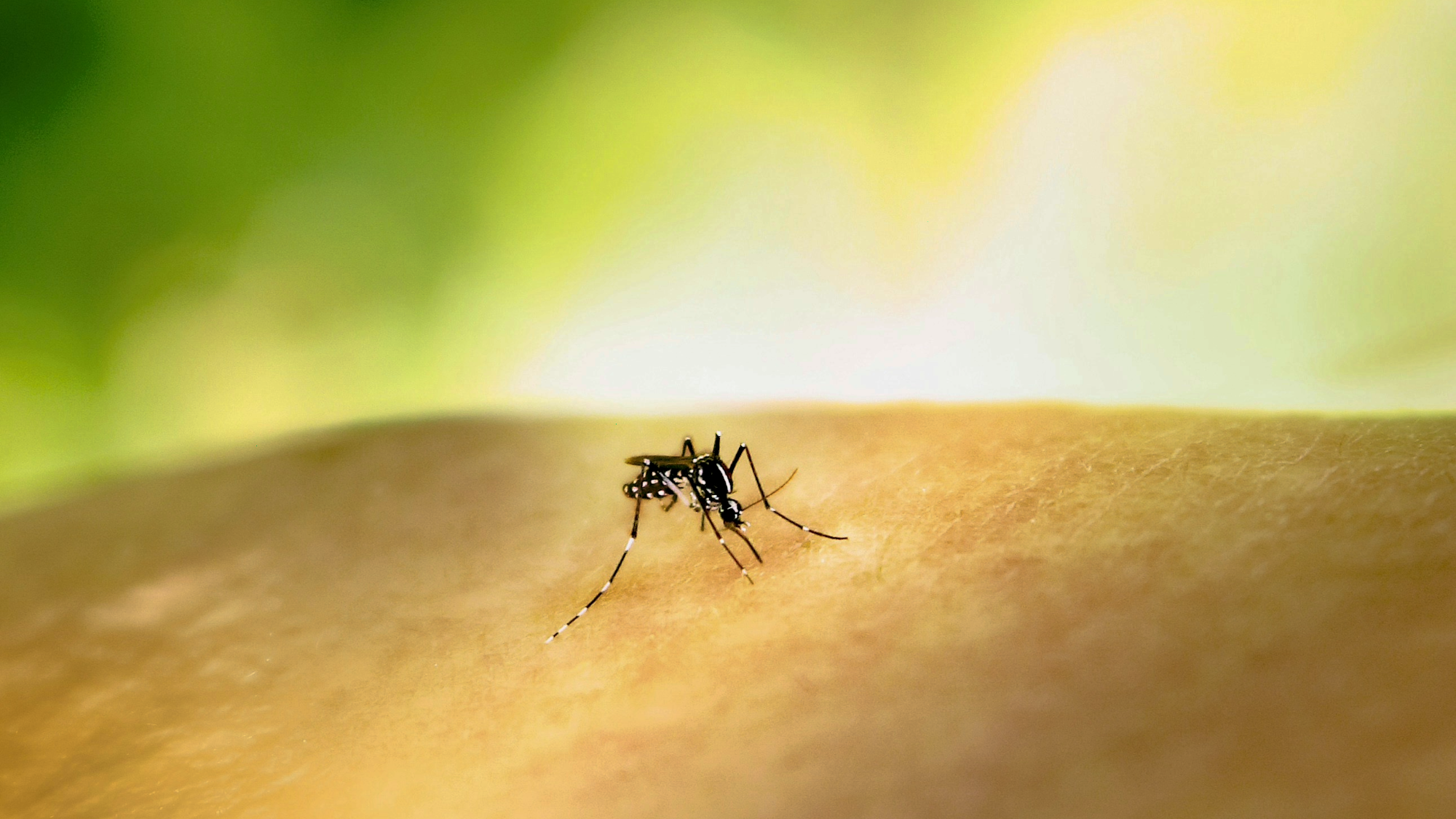
Arboviruses need mosquitoes to pass from one person to another. But… if these viruses can damage human cells, why do they not also destroy the cells of the mosquitoes that carry them?
A study led by the Molecular Virology Group at the Department of Medicine and Life Sciences, Pompeu Fabra University (MELIS-UPF), directed by Juana Díez, suggests that, inside mosquito cells, the virus can limit the production of viral proteins. In other words, it can “turn down the volume” of its own activity.
Key concepts:
- What is an arbovirus? An arbovirus is a virus transmitted by arthropods, such as mosquitoes or ticks. Examples include dengue, chikungunya and West Nile virus.
- What does RNA “translation” mean? Translation is the process by which the cell reads the information in RNA and produces proteins. During an infection, some viruses use this process to produce their own viral proteins.
Turning down the volume of viral activity
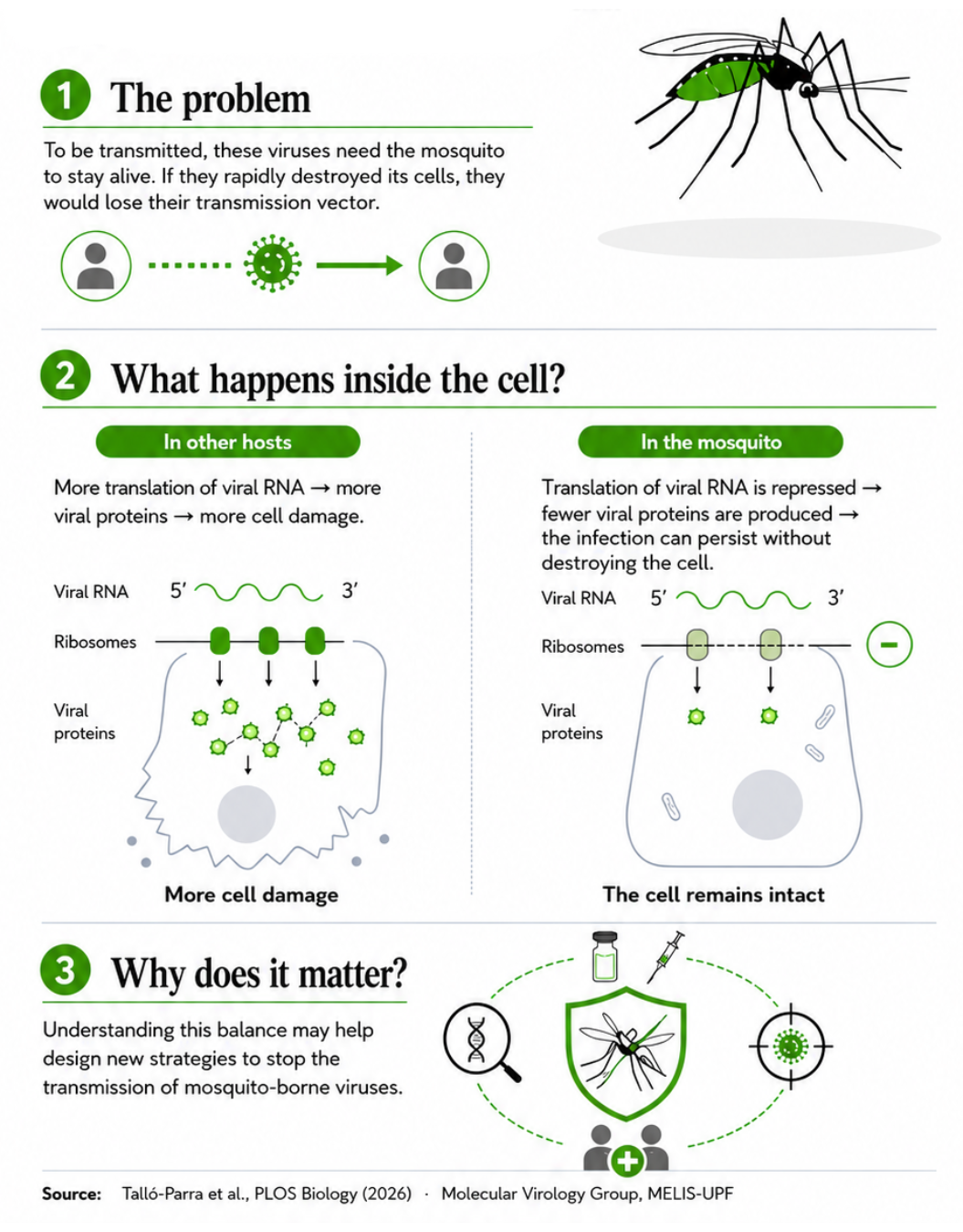
The work, published in PLOS Biology, shows that in mosquito cells the virus can accumulate viral RNA, but does not necessarily translate it into large amounts of proteins. In other words: the virus remains present, but its activity is partially controlled. This process is known as translational repression.
If the virus rapidly destroyed the mosquito’s cells, it would also lose its vehicle for transmission. This is why the virus uses translational repression, allowing it to maintain a persistent infection and remain inside the insect without causing immediate damage.
Talló-Parra M, Puig-Torrents M, Pérez-Vilaró G, Ribó Pons S, Díez J. Translational repression of viral RNAs supports persistent arbovirus infection in mosquitoes. PLOS Biology (2026).