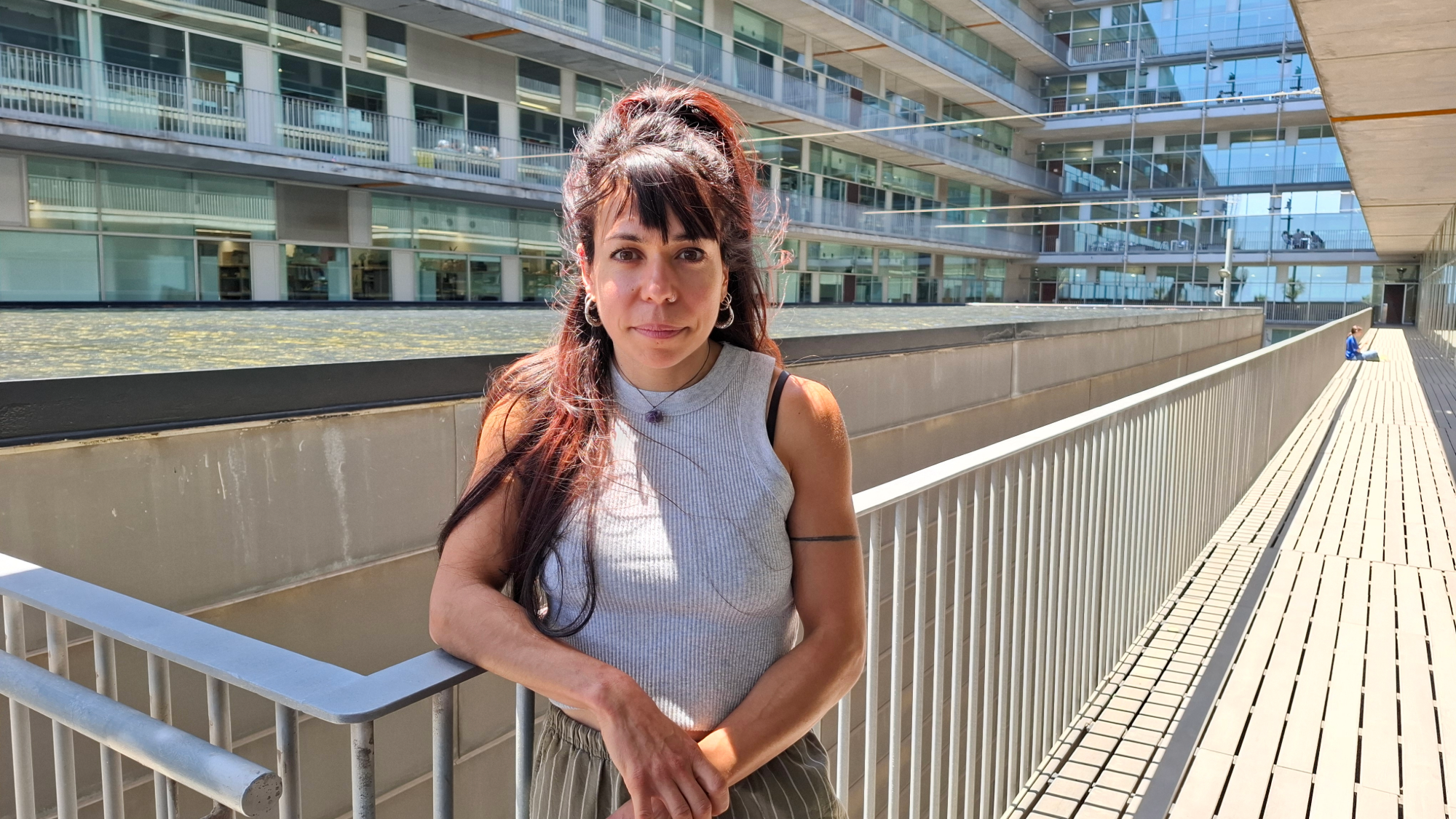
The researcher studies how distributed brain circuits integrate environmental information, previous experience and internal state to generate adaptive decisions and flexible behaviours. Her latest project, recognised with one of the L’Oréal-UNESCO “For Women in Science” awards, aims to understand how the brain decides whether to remain in a safe environment or explore one that may pose a potential threat.
We make decisions constantly. Some are almost automatic, while others require us to weigh up opportunities, risks and previous experiences. How does the brain perform this calculation? Which neural circuits are involved? And what happens when these mechanisms give rise to maladaptive behaviours?
These are some of the questions investigated by Sara Mederos, Principal Investigator and co-head, together with Manuel Valero, of the Neural Computation Laboratory at the Hospital del Mar Research Institute (HMRIB). Mederos trained at the Cajal Institute in Madrid before continuing her career at the Sainsbury Wellcome Centre for Neural Circuits and Behaviour in London, where she studied the mechanisms that enable the brain to suppress innate defensive responses.
How would you explain your laboratory’s research to someone who works in science but not in neuroscience?
We aim to understand the mechanisms that make decision-making, learning and memory possible. To do so, we record the activity of neuronal and glial populations while learning and brain plasticity take place.
We want to understand how the activity of different cell types relates to behaviour and what computational dynamics and processes emerge within neural circuits. Ultimately, we study how the brain transforms and represents environmental stimuli in order to generate decisions and actions.
To achieve this, we combine experimental and computational approaches. We use mouse models performing relatively simple behavioural tasks that nevertheless allow us to investigate much more complex mechanisms involved in memory, learning and decision-making. We then integrate all the information obtained to understand how different cell populations coordinate their activity.
How can you observe what is happening in the brain while the animal is making a decision?
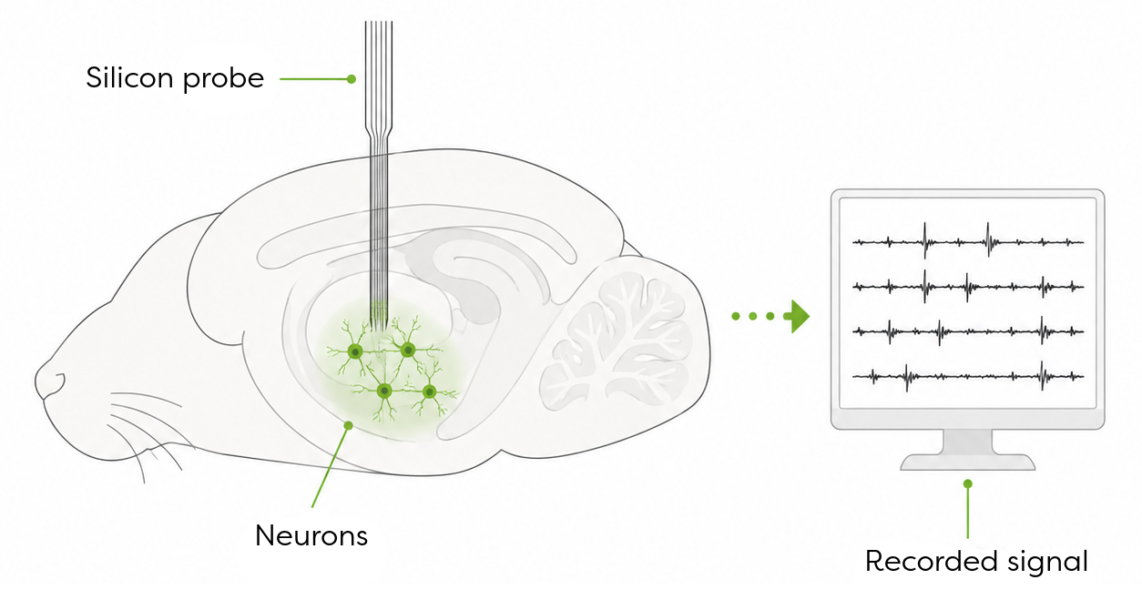
We implant multi-channel silicon probes into mouse models, allowing us to record circuit activity across different regions of the brain.
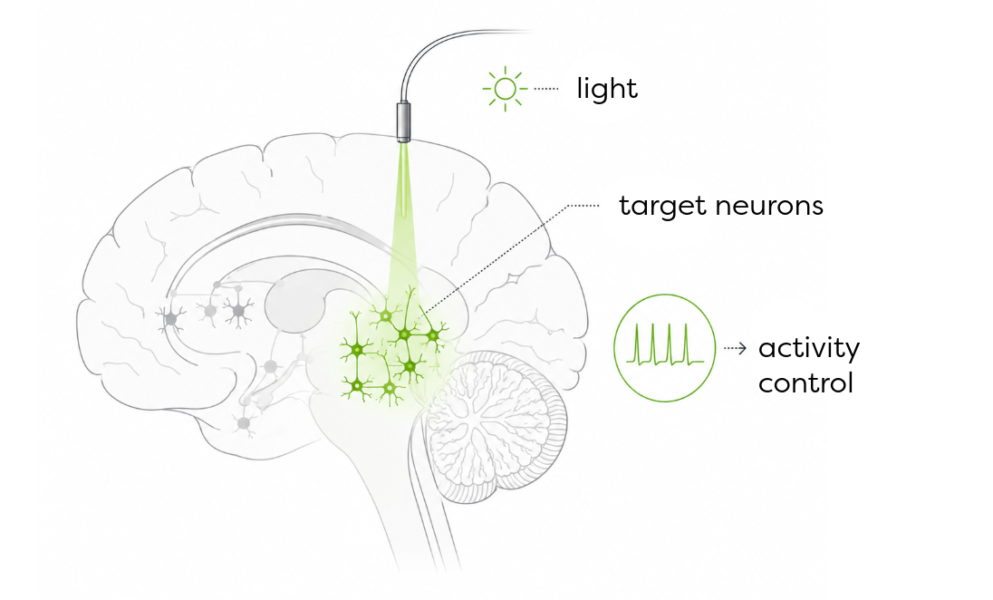
In some experiments, we also implant optical fibres. These fibres can be used to activate specific cells using light and directly manipulate their activity through optogenetics. We can also use genetically encoded sensors expressed in specific cell populations to measure changes in calcium levels or in molecules released by the brain.
We then use algorithms to separate the recorded signals and assign them to individual neurons. This allows us to record activity from hundreds or even thousands of neurons and relate it to the different events occurring during behaviour.
In this way, we try to understand the neural code that emerges when learning takes place, behaviour changes or an animal makes a decision.
It is an inherently multidisciplinary endeavour. Our team includes researchers with backgrounds in engineering, physics, biology, psychology, data analysis and other fields.
Your award-winning project investigates how the brain decides whether to remain in a safe place or explore a potentially threatening environment. Why is understanding this decision important?
We are constantly making decisions and evaluating risk. For instance, when considering a new job that offers exciting opportunities but less stability, or deciding whether to embark on a journey that is appealing but also carries some uncertainty. The brain has to weigh up these different options and determine which one is most appropriate in a given situation.
To do this, it must integrate a vast amount of information: previous experiences, internal state, context and the potential consequences of each possible action.
Our goal is to understand how this information is represented across different brain regions, how alternative options are evaluated and what ultimately causes the brain to favour one decision over another.
When these mechanisms become dysregulated, they can repeatedly lead to maladaptive decisions or even contribute to conditions such as anxiety. Understanding the underlying circuits could therefore have important translational and clinical implications in the future.
I imagine that to study this, you need to recreate situations in the laboratory where an animal has to make a decision. How do you do that?
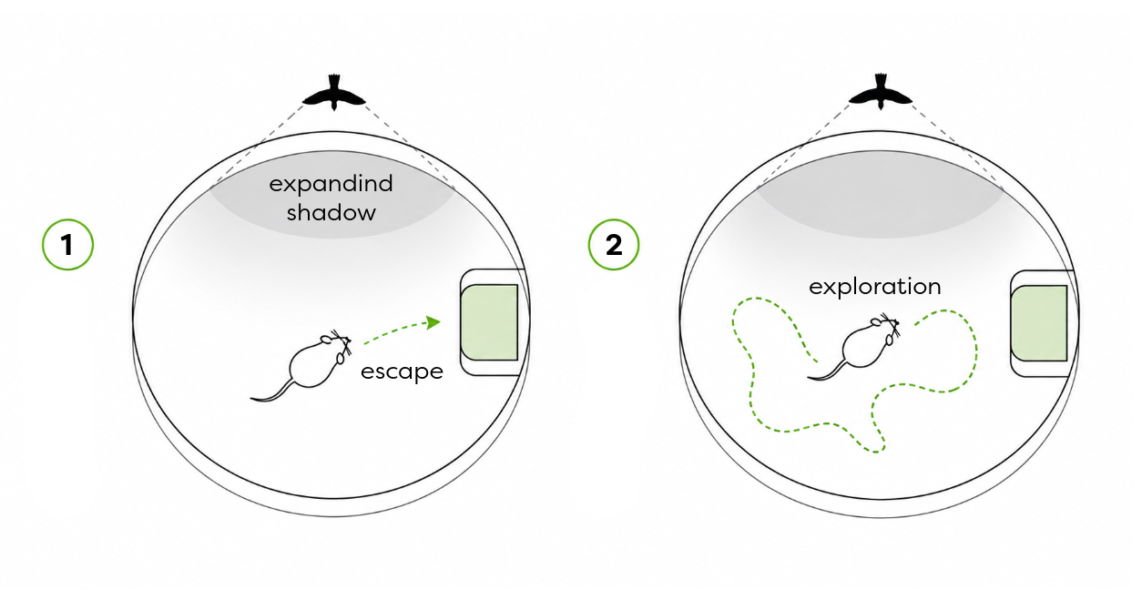
We use relatively simple behavioural paradigms in mice that model decision-making, escape and exploratory behaviours. In one of these tasks, the animal is presented with an expanding shadow overhead that mimics the approach of an aerial predator.
This is an innate aversive stimulus, since birds are natural predators of mice. Initially, the animal interprets the shadow as a threat and responds by fleeing.
Over time, however, it learns to adapt this response. It integrates the information that, in that particular context, the shadow does not actually represent an approaching predator. As a result, it can stop escaping and continue exploring its surroundings, searching for food or paying attention to other relevant stimuli.
While this learning process unfolds, we record neuronal activity and the activity of other cell types across different brain regions. This enables us to study how their dynamics change as the animal updates the available information and modifies its behaviour.
During your time in London, you studied how the brain learns to suppress innate defensive responses. What did you discover?
We found that contextual information and previous learning provide an instruction originating from the cerebral cortex. However, the plasticity associated with this learning is also integrated within more evolutionarily ancient subcortical structures directly involved in defensive responses.
You can think of these structures as something like a switch controlling escape behaviour. Once the brain has accumulated enough information to conclude that a stimulus is no longer dangerous, these subcortical structures can modify their activity and suppress the escape response.
We now want to move beyond this relatively simple model towards more complex situations in which there is a genuine conflict between two alternatives: one that is safer and another that may offer a benefit but also carries greater risk.
We have identified several candidate regions that may participate in this process. The prefrontal cortex could contribute information about internal state and context, while subcortical structures such as the habenula may integrate signals related to both defensive and rewarding stimuli.
Other structures, including the hippocampus and the basal ganglia, may also provide information about spatial context or available actions.
The brain operates as a highly distributed network. That is why we want to adopt a multiregional approach that allows us to understand how these different areas work together to perform the computations that ultimately lead to a decision.
Will the project also take biological sex into account?
It is not the main focus of the project, but it is an important variable that we intend to include. We will work with sufficiently large cohorts of male and female mice to determine whether there are differences or distinct underlying mechanisms.
For many years, neuroscience – like many other research fields – relied predominantly on studies using male animals. We want to incorporate biological sex into the experimental design and analyse it just as we would any other variable that could influence the results.
You have recently started a new stage at the Hospital del Mar Research Institute. What opportunities do you see within an environment such as the PRBB?
The PRBB is a particularly stimulating environment because it brings together such a broad scientific community. Within the Hospital del Mar Research Institute there is already extensive communication between research groups and the translational side of the institute, together with a strong willingness to collaborate.
What does receiving the L’Oréal-UNESCO For Women in Science award mean for your laboratory and for your own career?
First and foremost, it brings considerable visibility to the research we are carrying out. In the longer term, I hope it may also help us secure further funding and raise the profile of neuroscience, a field of enormous importance but one where obtaining resources can sometimes be more challenging than in areas such as cancer research.
For the laboratory, it provides an excellent opportunity to showcase the work we are doing. Professionally, it also helps strengthen my scientific independence and move me closer to the long-term stability that I am still working towards.
I also think it is very important that the award highlights women who are striving to reach leadership positions. Achieving these roles is not always easy, partly because of the challenges associated with balancing professional and personal life.
At doctoral and postdoctoral stages there are many women pursuing research careers, yet their representation declines substantially in leadership positions and in more permanent posts. Making women in these roles more visible can help other girls and women see that reaching them is possible.