The earliest evidence of the use of animals for scientific purposes dates back to the 6th–5th centuries B.C. in Ancient Greece. Since then, the use of animals has contributed to the advancement of medical and scientific knowledge, while also sparking an ethical debate that remains relevant today: Can we advance scientific knowledge while at the same time ensuring the well-being of the animals used in research?
In this context, in 1954, Charles Hume, founder of the Universities Federation for Animal Welfare, commissioned zoologist William Russell and microbiologist Rex Burch to conduct a study on more humane techniques for animal research. From that work emerged the 3R principle, published in 1959 in the book The Principles of Humane Experimental Technique. This proposal links animal welfare to scientific quality and establishes three objectives that still guide animal research today: replacement, reduction, and refinement.
The 3Rs Principle: Replace, Reduce, and Refine
Replacement
The first question to ask before conducting research is whether we can answer the research question without using animals. Replacement, therefore, involves seeking methods that can substitute for animals, such as cell and tissue cultures, organoids, computational models, or studies involving humans, including clinical, epidemiological, and volunteer studies.
But even though scientific and technological advances are making more and more alternatives to animal models available, it is necessary to evaluate each of these alternatives to determine whether it is appropriate for the research question.
Reduction
A good experimental design is one that, when using animals, yields reliable results while using the fewest possible individuals. Therefore, before conducting research, it is necessary to estimate how many animals are needed and review previous studies to avoid unnecessary experiments.
Furthermore, imaging techniques now make it possible to track changes in a single individual over time and obtain more information. However, we must consider the potential for additional suffering resulting from prolonging procedures and the cumulative effects of these procedures over time.
Refinement
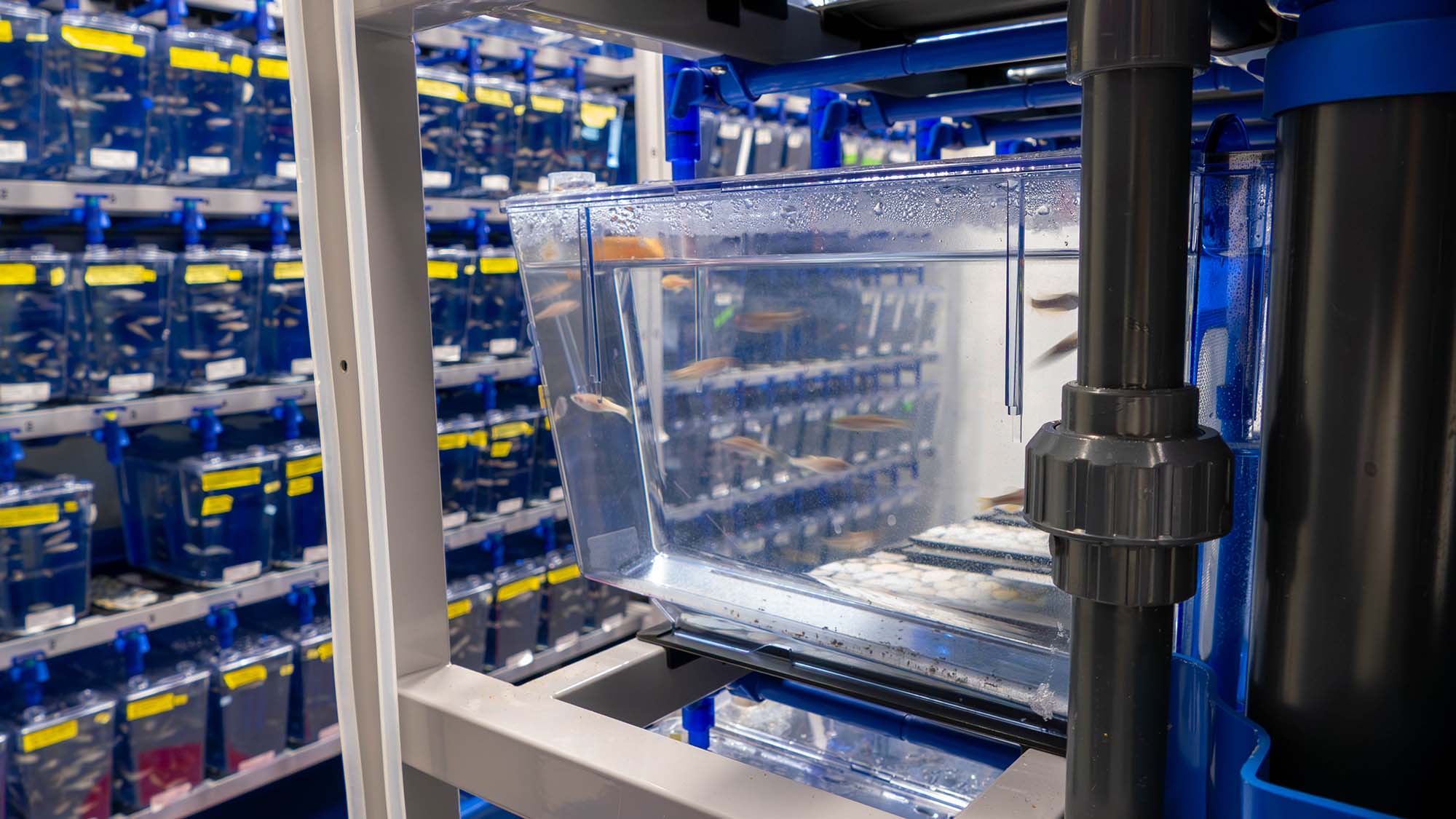
Improving animal welfare and minimizing their suffering involves paying attention to both living conditions and the experimental procedures themselves. This includes veterinary care, the proper use of anesthesia and analgesia, as well as staff training. Environmental enrichment is also important, as it facilitates species-specific behaviors, for example, by providing materials that allow rodents to build nests. These measures improve the quality of research, since if an animal is stressed or in pain, the results may be compromised.
From proposal to practice
After their publication in 1959, it took a couple of decades for the 3Rs to gain widespread acceptance. During the 1960s and 1970s, initiatives were launched to improve care, anesthesia, and pain assessment. But it wasn’t until the 1980s that the incorporation of this principle into research and regulation accelerated.
Today, applying the 3Rs is a legal requirement in the European Union, as set forth in Directive 2010/63/EU on the protection of animals used for scientific purposes. This regulation requires the use of appropriate alternatives whenever possible and, when it is necessary to use animals, to reduce their number and minimize their suffering. Furthermore, before a project is authorized, an assessment is conducted to determine how it applies the 3Rs, and the facilities where the research is conducted are also subject to authorization and oversight.
In addition to these requirements, there are voluntary external evaluation initiatives, such as accreditation by AAALAC International, which reviews animal care and use programs and promotes the application of the 3Rs. The PRBB MARS renewed this accreditation in 2026 following a review of its supporting documentation, an on-site visit by external experts, an evaluation by the Accreditation Council, and the implementation and verification of the required improvements.
Beyond the 3Rs
The 3Rs provide a framework for protecting the welfare of animals used in research, but ethical reflection does not stop there. Several authors propose expanding it to include a fourth or even a fifth R.
Among the 4R proposals, some authors suggest incorporating responsibility, which emphasizes researchers’ commitment to the consequences of their decisions and to protecting animal welfare throughout the experimental process. Others propose reproducibility. That is, that the same team or other teams be able to replicate the studies, even over time, and obtain similar results.
This involves designing studies well and communicating methods and results transparently.
However, there are also 5R proposals that add, in addition to responsibility, respect for living beings, regardless of their complexity. They focus on invertebrates, which have often received less ethical consideration and regarding which there is still debate about their capacity to suffer. Given this uncertainty, they advocate applying the precautionary principle and taking measures to prevent or, at least, reduce potential suffering.
These proposals show that, more than 60 years after their formulation, the 3Rs continue to spark reflection and debate. The ethical framework they established serves as a starting point for further developing alternatives and reviewing how we conduct research involving animals, with a commitment to improving their well-being.