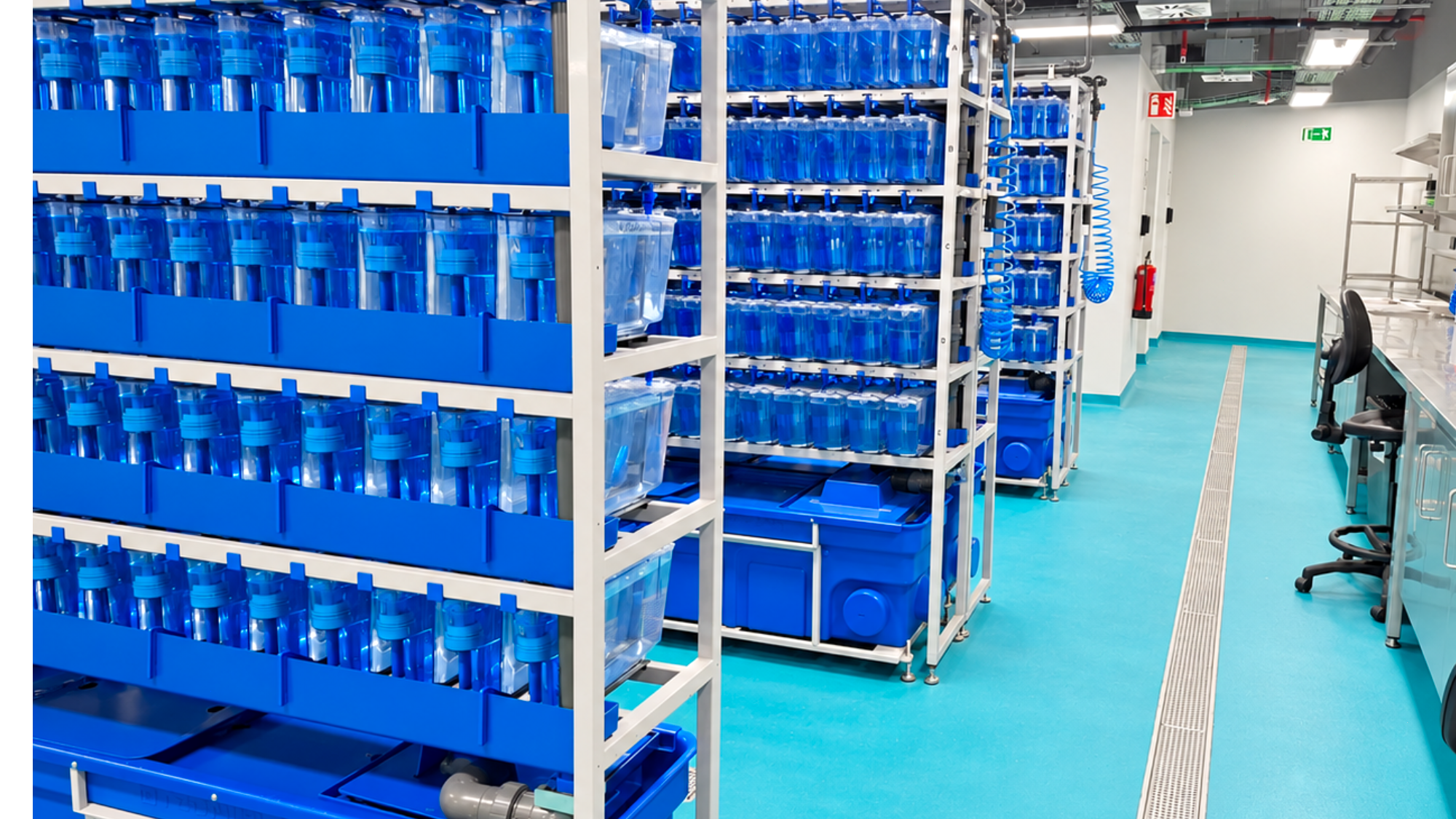
In an aquatic animal facility, water is a life-support system. Any change in temperature, oxygenation or other parameters can quickly affect the animals and interfere with experimental results. That is why the renovation of the aquatic area at PRBB MARS goes far beyond refurbishing the facilities.
The Barcelona Biomedical Research Park (PRBB) has opened the new facilities following a complete overhaul of the area, which has been in operation since 2007. The project has received support from Barcelona City Council and the Government of Catalonia, with an investment of more than €2 million. The service has also adopted the new name PRBB MARS, which stands for Murine and Aquatic Research Service.
The opening coincides with confirmation from AAALAC International that the PRBB’s animal care and use programme retains its Full Accreditation status, an international recognition of the quality of its management and its commitment to animal welfare.
Stable conditions for more robust research
“Stable water conditions are essential for aquatic animals. Automation and equipment redundancy allow us to maintain more consistent conditions, better protect the animals and reduce factors that could interfere with experimental results,” explains Laura Aranda, deputy head of PRBB MARS and the facility’s veterinary supervisor.
The fish life-support equipment has been installed in separate plant rooms to reduce noise and vibrations and create a quieter environment for zebrafish. The frog systems, meanwhile, are virtually inaudible.
The new area has capacity for 1.400 zebrafish maintenance tanks and 180 genotyping tanks, which could accommodate more than 42.000 animals. The 24 frog tanks could also house almost 300 animals.
A comprehensive service for research with aquatic models
PRBB MARS has an independent quarantine area that allows new lines to be introduced without compromising existing colonies, some of which are unique or extremely difficult to recover.
Researchers also have access to a separate experimental laboratory, away from the animal housing rooms, where they can work with the animals without disrupting animal care.
The facility cultures rotifers and brine shrimp (Artemia) to provide live feed for fish from the earliest stages of development. This diet supports larval growth and the survival of particularly delicate genetic lines, while also making experiments easier to plan.
With its new facilities, PRBB MARS offers research groups a comprehensive service with specialist staff, preventative maintenance and monitoring 365 days a year.
“We want research teams to be able to carry out their projects under reliable, stable and safe conditions,” says Joan Antoni Fernández, director of PRBB MARS.ciones fiables, estables y seguras», afirma Joan Antoni Fernández, director de PRBB MARS.