DNA carries the genetic information that allows cells to function and traits to be passed from one generation to the next. But this information is not static. Throughout life, our genome accumulates changes known as mutations: some harmless, others linked to disease. Understanding how and why these mutations arise is central to fields ranging from evolutionary biology to cancer research.
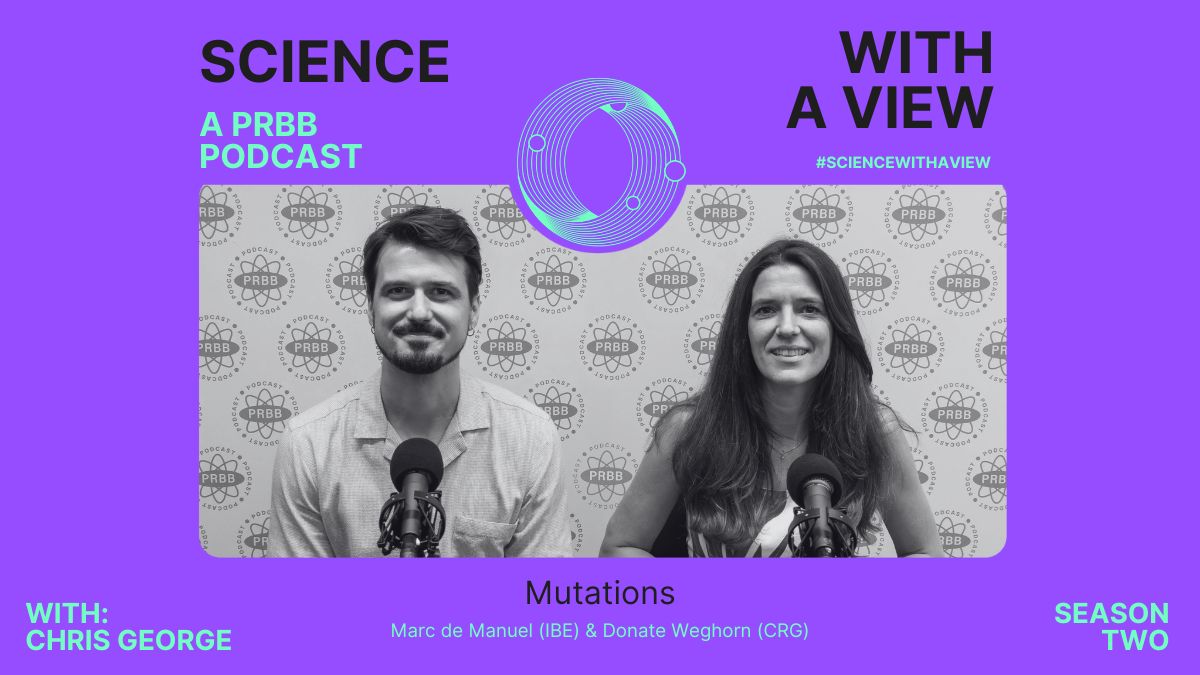
In the third episode of season two of Science With A View, we explore this topic with Marc de Manuel PI at the Mutation Dynamics group from the Institute of Evolutionary Biology (IBE: CSIC-UPF) and Donate Weghorn Computational Biology and Health Genomics group leader at the Centre for Genomic Regulation (CRG). Marc studies how mutations emerge in germline and somatic cells, including why mutation rates differ between the sexes. Donate develops computational models to predict where and how often mutations occur across the genome. Together, they examine how mutations shape evolution and contribute to diseases such as cancer.
Technological advances are accelerating discoveries in the field. High-precision sequencing methods, including duplex sequencing, now allow researchers to detect rare mutations and study previously inaccessible systems, bringing new insight into how genetic changes accumulate over time.
The episode also explores the challenges of academic careers. What does it mean to build a research group under fixed-term contracts? How do early-stage principal investigators manage funding pressure and publication demands? In the ‘Voice of the PRBB’ section, our community reflects on whether current evaluation systems reward the right qualities and how scientific careers could become more sustainable.
Listen now to this episode of ‘Science With A View’ and let us know in the comments: Do you think academia values the right things when promoting researchers?