
Skip to content
  • CAT
  • ESP
  • ENG
  • About us
  • Contact
El·lipse
  • instagram
  • twitter
  • flickr
  • linkdin
  • facebook
  • youtube
  • Research
  • Public engagement
  • Scientific life
  • Community
  • About us
  • Contact
  • instagram
  • twitter
  • flickr
  • linkdin
  • facebook
  • youtube
  • CAT
  • ESP
  • ENG

Public engagement

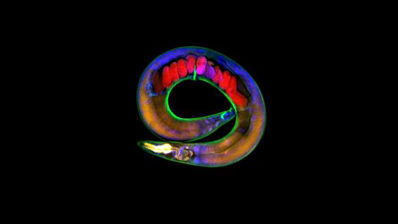
C.elegans is a 1mm worm that shares 35% of genes with humans and is widely used in research as a model system. Photo by Adam Klosin, CRG.
14.09.2014

An elegant worm

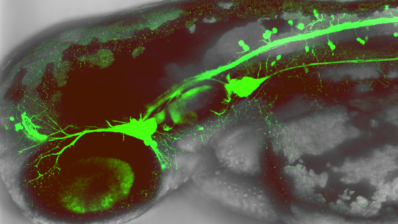
48h old zebrafish embryo displaying fluorescent sensory in neurons.
05.03.2014

Zebrafish, a transparent window to our biology

Schematic of data servers for genomic data.
15.09.2013

“Bioinformatics for Dummies”

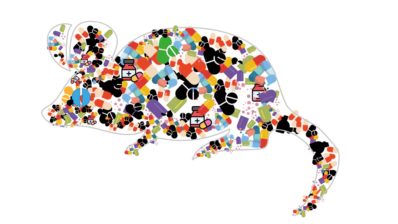
The use of animals, mostly rodents, is nowadays still esential for the development of new drugs to improve human health. Image by Rita Casas/PRBB. CC BY-NC-SA.
13.09.2013

Animals in biomedical research

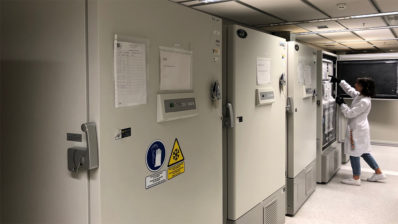
MARBiobanc stores the biological samples that volunteers donate for research.
29.05.2013

What is a biobank?

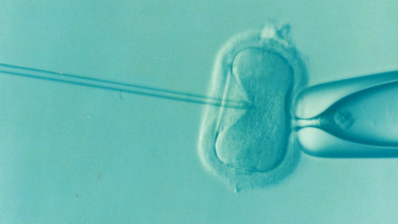
In vitro fertilization (Picture by DrKontogianniIVF from Pixabay).
05.02.2013

“The miracle of life”

Photo by JD Mason on Unsplash
01.02.2013

“Living with Alzheimer’s. Love is not forgotten”

Signal transduction in the cell is still a topic of intense research (Image from Skeeze at Pixabay).
21.05.2012

Signal transduction: How the cellular communication network works

There are hundreds of scientific journals, where researchers try to publish their work to share it with the scientific community.
28.03.2012

The art of publishing a scientific article

The fruit fly was chosen to be the first multicellular organism to have its genome fully sequenced back in 2000 (Image by the Oregon State University at Flickr).
08.02.2011

Of flies and men

Sometimes DNA mutations cause subtle changes in how a protein works, but others lead to changes in the way a cell behaves (Image by Gerald, from Pixabay).
11.06.2010

SNPs: variation on a theme

The brain: the right hemisphere records visual and spatial memories, such as drawings, while the left hemisphere registers verbal memory, for example wors or numbers. Image from Pixabay.
16.03.2010

Studying memory

El·lipse is published by the PRBB Communications and Corporate Relations Area.

Dr Aiguader, 88, 08003 Barcelona, Spain

For any suggestions or collaborations please contact us at ellipse@prbb.org

  • Read past print editions
  • About El·lipse
  • About the PRBB
  • Legal disclaimer
  • instagram
  • twitter
  • flickr
  • linkdin
  • facebook
  • youtube
© 2025 El·lipse, PRBB
  • Home
  • News
  • Our picks
This website uses cookies that provide us with personal information, such as data associated with your browsing. If you click on I AGREE, both we and our Partners can install cookies or access non-sensitive information on your device in order to facilitate the reproduction of content, provide features on social networks, create profiles and compile statistics on traffic and usability in our website. You can get MORE INFORMATION by accessing our COOKIES POLICY. I agree More information
Privacy & Cookies Policy
Necessary Always Enabled

Subscribe to our mailing list
Want to be the first to know everything that goes on at the biggest biomedical research hub in Southern Europe? Subscribe to the el·lipse newsletter!

We will send you an email with the latest news.

See you soon!

*Required field

Field is not valid
You have to authorize data treatment

At any time, you can exercise the rights of access, rectification, opposition, portability, limitation to treatment and deletion of the data subject to treatment by clicking on the links "Update data" and "Unsubscribe", sending a letter indicating the right exercised to the postal address indicated at the bottom or to the following email address ellipse@prbb.org