
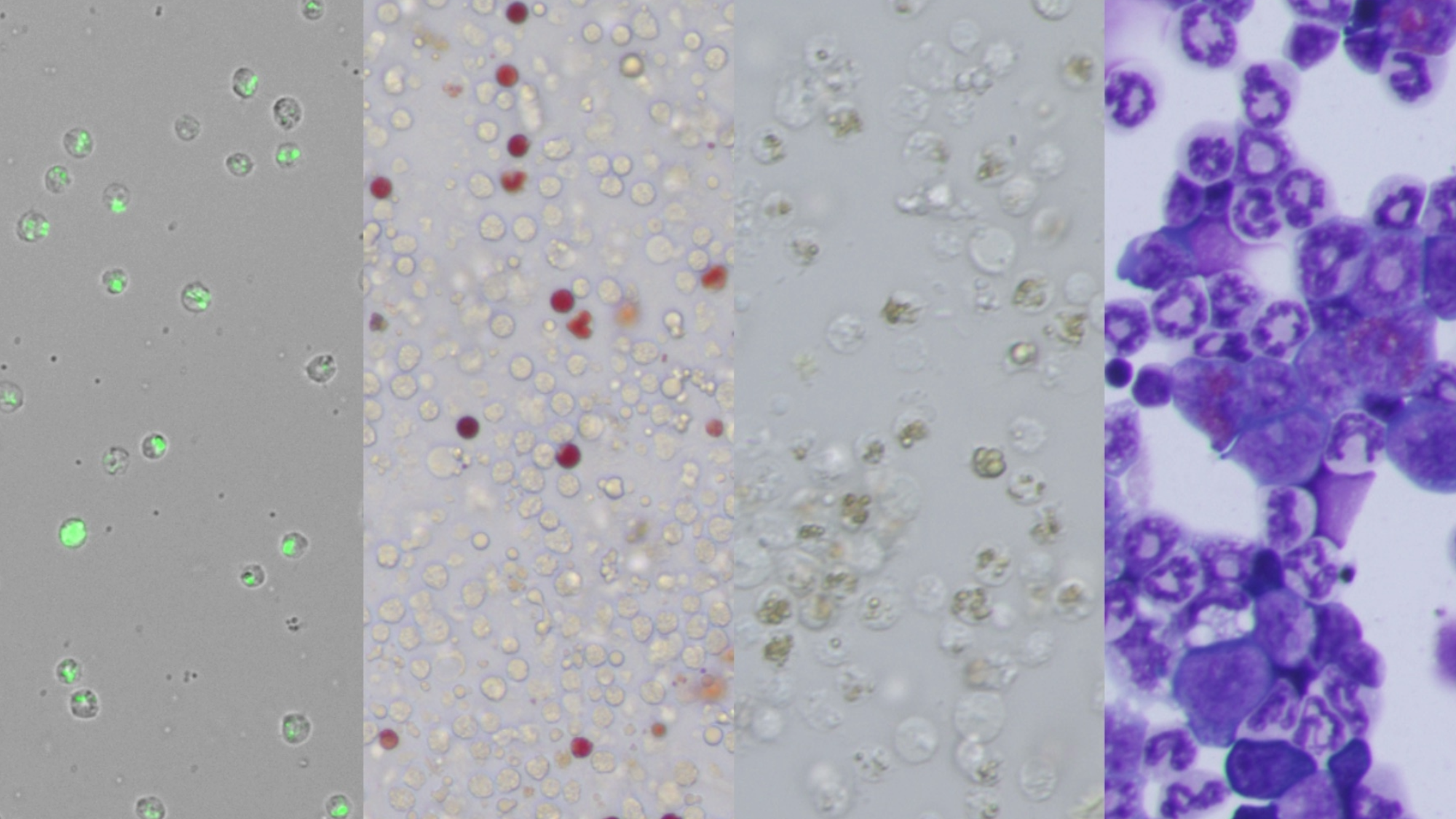
The immune system is one of the key innovations of animal life. But part of the genetic programme behind it may be much older than animals themselves.
A study led by Kyoto University and the Institute of Evolutionary Biology (IBE, CSIC-UPF) has reconstructed the evolutionary history of blood cell lineages by comparing which genes are active in very distant organisms, from mammals and zebrafish to sponges and unicellular relatives of animals.

The results, published in PNAS, suggest that evolution did not invent animal immunity from scratch. Instead, it reused and reorganised older cellular programmes into new functions.
Key ideas
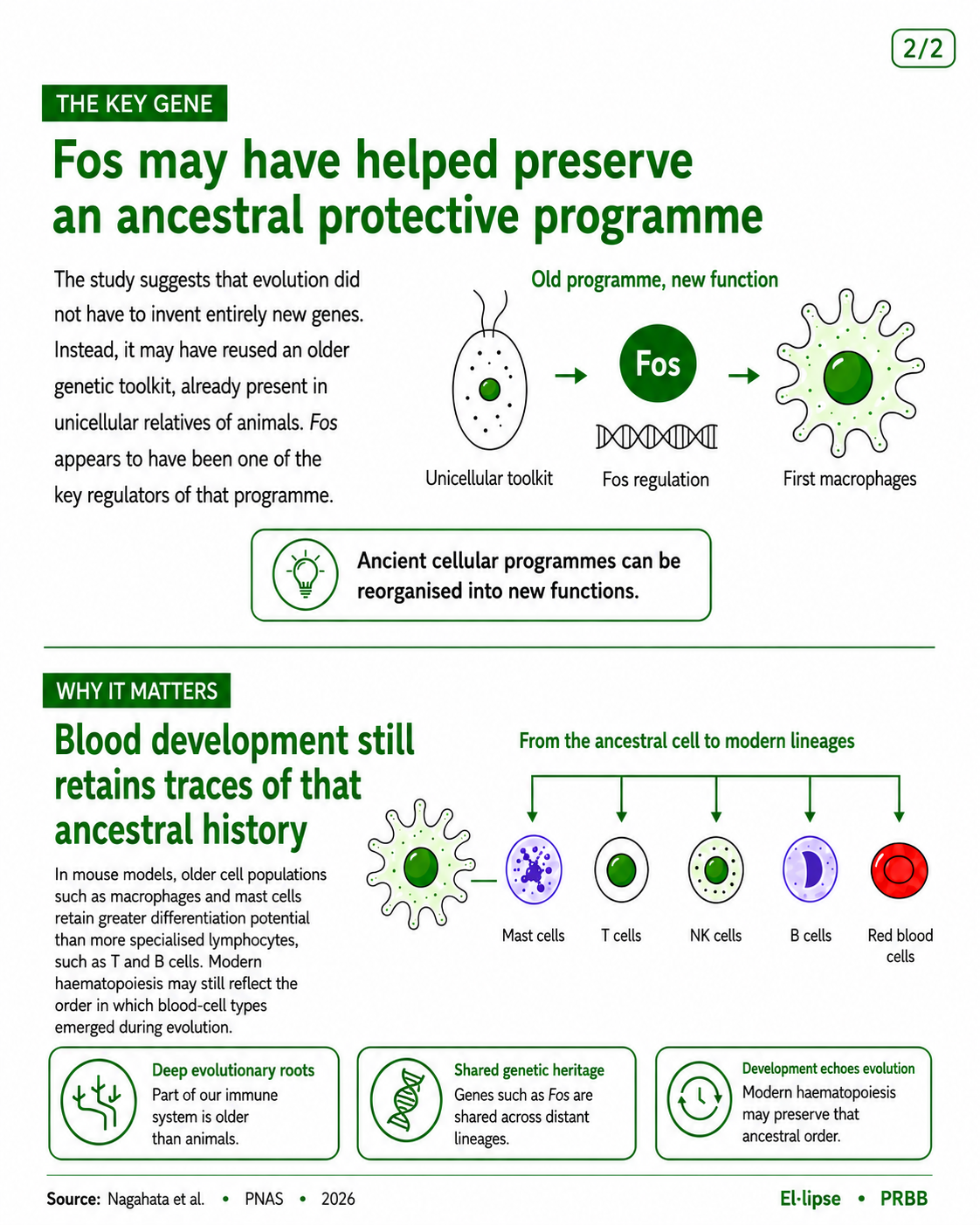
- The first blood cells were probably macrophage-like
The study suggests that the earliest blood cells were mobile, defensive cells similar to modern macrophages. - This programme may be older than animals
The first immune-like blood cells may have appeared around 700 million years ago, during the transition towards multicellular life. - Fos appears to be a key gene
The gene Fos may have helped regulate this ancient protective programme, reusing genetic tools already present in unicellular ancestors. - Blood development still carries evolutionary traces
Modern haematopoiesis may still reflect the order in which blood-cell types emerged during evolution.
Nagahata Y, Nishimura Y, Kaitani R, Leong JCK, Oda-Ishii I, Kohtsuka H, Abe S, Ishida T, Carmona-Rivas M, Najle SR, Casacuberta E, Ikuta K, Miura T, Ogasawara M, Irie N, Satou Y, Ruiz-Trillo I, Kawamoto H. Animals have expanded the evolutionary legacy of unicellular ancestors in blood cells. PNAS (2026).