Why do some people develop an allergy while others do not? The answer is partly related to the ability of the immune system to learn to tolerate substances that do not represent a real threat, such as some foods, pollen or other elements present in the environment.
An international study led by the Hospital del Mar Research Institute (HMRIB) now adds a new piece to this puzzle. The work, published in Journal of Experimental Medicine, focuses on immunoglobulin D (IgD), a type of antibody that is still little studied and could help maintain the balance of the nasopharyngeal mucosa, the area connecting the nose and throat.
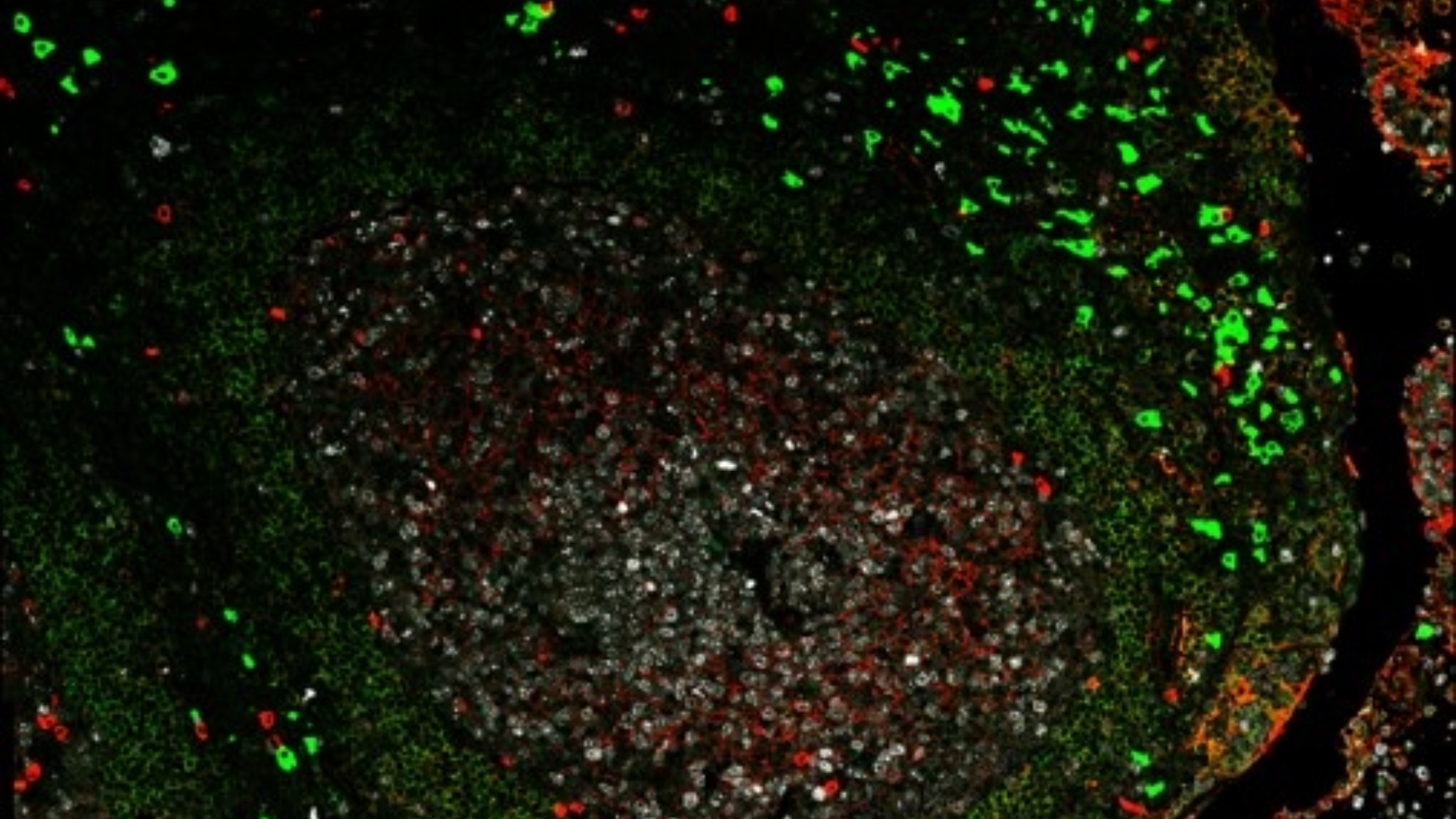
For the first time, the team has identified the cells that give rise to these antibodies: specific memory B cells, known as IgD memory cells, which can become IgD-producing plasma cells. The researchers have also located their origin in the tonsils, a strategic site because it is one of the first areas where the body comes into contact with antigens arriving through the air or through food.
This location could be key to understanding how the immune system decides what it should tolerate and what it should react to. According to the authors, if this mechanism fails, it may favour inflammatory responses such as allergies.
The study also analysed patients with different primary immunodeficiencies and shows that IgD production depends on several regulatory signals in the immune system. When these signals fail, IgD can disappear; when other pathways are altered, it can accumulate in excess.
Although this pathway still needs to be validated in further studies, the results open the door to exploring future therapeutic strategies based on IgD. The HMRIB team is already preparing studies in in vivo models to analyse whether this antibody could help modulate the response to allergens and, potentially, other inflammation-related diseases.
Read the full news story on the Hospital del Mar Research Institute website.
Roser Tachó-Piñot, Habib Bashour, Martyna Filipska, Celia Corral-Vazquez, Mauricio Guzman, Xavi Marcos-Fa, Donata Martinuzzi, Hannah Honner, Pablo Canales Herrerias, Sonia Tejedor Vaquero, Alba Sáez Gordón, Julia Perera-Bel, Jorge Domínguez Barragán, Berta Arcos-Ribas, Leire de Campos-Mata, Andrei Slabodkin, Maria Chernigovskaya, Maria Luisa Rodríguez de la Concepción, Jose Gutierrez-Marcos, Ana García-García, Andres Nascimento Osorio, Mariona Pascal, Jordi Yagüe, Manel Juan, Juan Ignacio Aróstegui, Rafael Hijano Esqué, Albert Sánchez Font, Stephan Ehl, Bodo Grimbacher, Marta Rizzi, Laura Dotta, Kang Chen, Raffaele Badolato, Laia Alsina, Saurabh Mehandru, Charlotte Cunningham-Rundles, Jorge Carrillo, Giuliana Magri, Victor Greiff, Andrea Cerutti; IgD from atypical-like memory B cells and plasma cells targets commensal and environmental antigens. J Exp Med 4 May 2026; 223 (5): e20251752. doi:https://doi.org/10.1084/jem.20251752