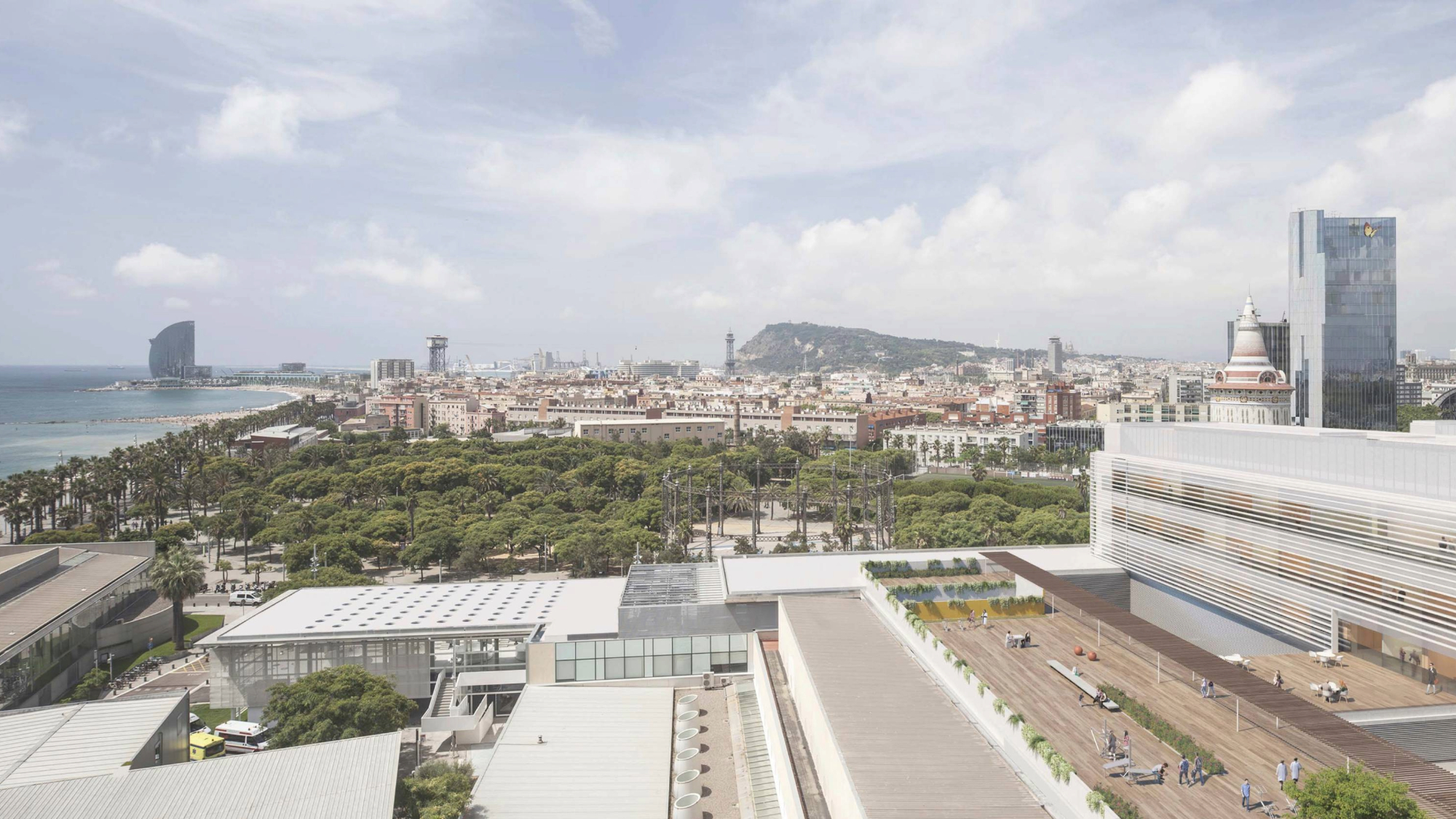
On 16 March 2026, the second phase of the Hospital del Mar expansion plan was officially inaugurated. This is not simply a new building with more square metres, but a transformation project that is intended to improve the experience of professionals and patients alike, while creating an infrastructure better prepared for the present and the future.
The expansion project was launched in 2008, but was halted for years because of the economic crisis and was not resumed until late 2015. The plan consists of three phases that will allow the hospital to improve continuously, step by step and without interrupting patient care. In the words of Marga Esteve, chair of the board of the Hospital del Mar Consortium, this expansion should allow the centre to remain ‘a top-level reference centre, the kind of hospital the city deserves’. Esteve also says that the hospital expansion is ‘a golden opportunity to make the most of this moment of change and rethink what we want care to look like, as well as research and the training of future professionals’.
The first phase: the first major leap forward
The first phase was inaugurated in May 2017 and marked a major step forward for the centre. The expansion made it possible to add a new obstetrics and gynaecology area with seven delivery rooms and two operating theatres, new day hospitals and consulting rooms with 73 care points, a new Emergency Department with 51 care points, and an advanced radiotherapy service with two state-of-the-art linear accelerators and a brachytherapy suite.
The second phase takes shape: new spaces for more complex care
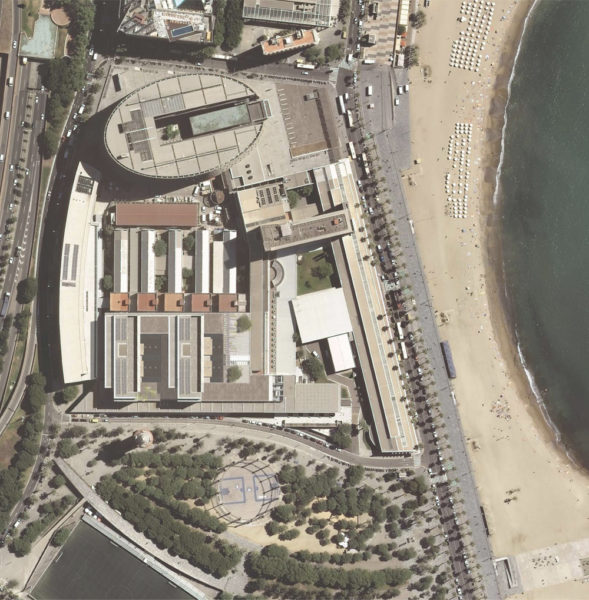
The second phase began in July 2022 and has had a final budget of more than 161 million euros, covering design, construction and equipment, partly financed through the REACT-EU programme under the European Regional Development Fund (ERDF). This new stage has added nearly 31,000 m², bringing the hospital close to 100,000 m² of built space.
A significant part of this expansion had already been operating for months before the official ceremony. In March 2024, the new Emergency Department came into service, growing from around 2,600 m² to 5,200 m², with 72 new care points and consultation areas for Paediatrics, Psychiatry, Surgery, and Orthopaedic Surgery and Traumatology. Three new inpatient floors also came into use, with a net increase of 75 beds, for Paediatrics and Newborns, Obstetrics and Gynaecology, and surgical specialities.
These new units do not only provide greater capacity. The rooms have natural light and were co-designed with patients and professionals, while also taking into account lessons learned from the COVID-19 pandemic, with more flexible and adaptable circuits. They also feature an artistic intervention by Perico Pastor, integrated into the bathrooms through twelve original works donated by the painter to the hospital.
Alongside these improvements and new facilities, the official inauguration of the second phase also presented new high-complexity spaces that complete this rollout. These include four new operating theatres, two of them hybrid, equipped with robotic C-arm angiography systems and an MRI scanner integrated into one of them, designed for highly complex surgery and robotic surgery. The new Endoscopy area, whose surface has increased elevenfold, and the Pain Unit, which has grown from 228 m² to more than 1,500 m², have also been added.
These spaces are joined by the new location of the Pathology Service, now larger and better prepared to incorporate digitalisation and automation technologies, and the refurbished Pharmacy Service, which now exceeds 3,000 m² and has adopted robotic systems and comprehensive management software that automates processes from storage to dispensing.
A new Intensive Care Unit with 19 beds has also come into service, directly linked to the hospital’s expanding care capacity and to the need for spaces better connected to the new surgical and emergency circuits. For Dr Víctor Pérez, Director of Medical and Care Services at Hospital del Mar, this expansion updates the centre and places it ‘firmly in the 21st century’, in line with the care challenges of one of the most complex areas of Barcelona.
A unique project, also in terms of sustainability
The building also stands out for the way it has been constructed. The works lasted two and a half years and were carried out by a joint venture made up of Acciona, Agefred Group, Serom and Villa-Reyes. In order to maintain the hospital’s normal activity, the project relied heavily on modular and prefabricated elements, to the point that the hospital describes it as one of the largest prefabricated structures of this kind in Europe and the tallest multi-level prefabricated structure in Spain.
As Elisabet Izquierdo, Director of General Services, explains, this is a unique infrastructure project because it has had to be developed in phases on top of a fully operational hospital, requiring constant and highly demanding coordination between technical and care teams. According to Izquierdo, ‘the project brings together innovative construction solutions, sustainability, human-centred design and advanced technology to guarantee quality care and the hospital’s future projection’.
This was complemented by methodologies such as LEAN and BIM, more than 40,000 m³ of earth excavated and more than one million cubic metres of groundwater pumped out. At some stages, more than 400 people were working on the site.
The expansion has also sought to strengthen the building’s sustainability, with 1,600 m² of photovoltaic panels, connection to the Districlima network, LED lighting, a double-skin facade to improve solar control and climate regulation, and 2,700 m² of terraces and green spaces. According to the hospital, these measures make it possible to reduce its carbon footprint by more than 2,000 tonnes of CO₂ per year and have contributed to achieving LEED Gold certification.
The third phase: what is still to come
The transformation and expansion of Hospital del Mar does not end here. Preliminary planning work for the third phase is already underway. On 29 November 2024, Barcelona City Council approved the Special Urban Development and Improvement Plan that will make it possible to build an additional 48,000 m² in a twin building to the one now inaugurated, bringing the total to 140,000 m².
According to the current plan, this third phase will add a net increase of 86 beds across six inpatient units, reaching a final total of 544 beds, and seven new operating rooms, bringing the total to 24. It will also include a new surgical ICU, an expansion of outpatient clinics, the restructuring and expansion of the Radiology Service, and a new Radiopharmacy unit. The estimated budget is more than 180 million euros, and the aim is to complete the works by 2032.
Beyond the figures, the expansion of Hospital del Mar reflects a new way of understanding care in a centre with a long history and under great care pressure. It is not only about gaining space, but about creating more efficient circuits, spaces better adapted to high-complexity care, and a more dignified and functional experience for patients, families and professionals. With the second phase already under way and the third in preparation, the new Hospital del Mar is less a finished building than a hospital being built step by step, with present and future medicine in mind.