LimbNET is a new open-access online platform developed by researchers at the European Molecular Biology Laboratory – Barcelona (EMBL Barcelona) that will allow scientists to simulate and explore how genes choreograph the development of limbs.
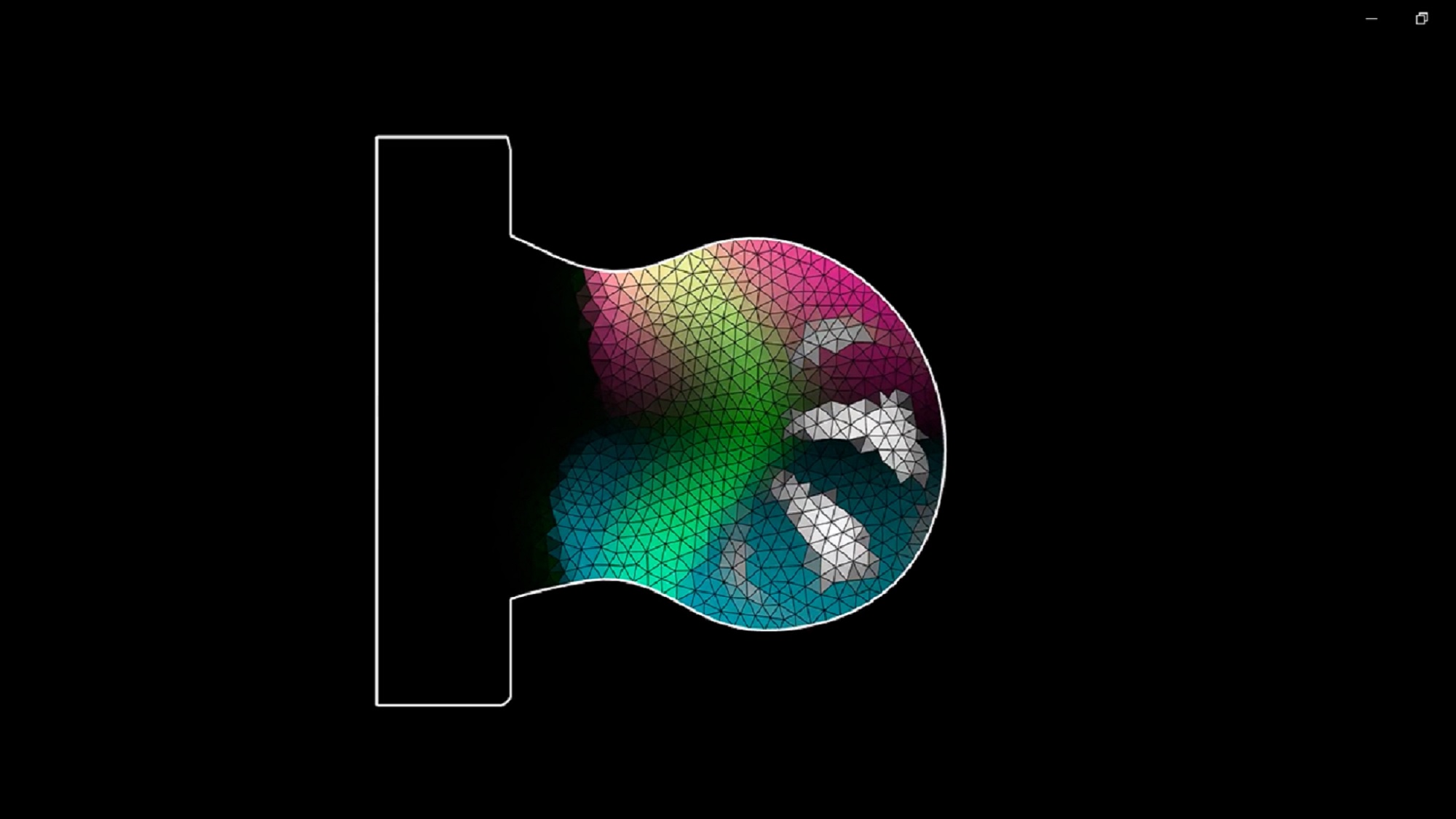
The platform consists of morphomovies: short films of the spatio-temporal evolution of 2D gene expression patterns during mouse limbs formation.
Scientists can view existing molecular morphomovies, create new ones from imaging data (e.g., acquired from whole-mount in situ experiments), or simulate computational models of spatio-temporal interactions between different genes.
Unlike traditional static publications, it allows for interactive, dynamic models that can be explored, tested, and extended so that researchers can compare each others’ hypotheses. This shift promotes transparency, reproducibility, and collaborative knowledge building in the limb development community.
The platform is browser-based, requiring no installation, and it is accessible even to those with minimal modelling experience. This lowers barriers for interdisciplinary collaboration, especially between experimental and computational researchers.
Ultimately, LimbNET is expected to democratize access to modelling tools, encourage community dialogue, and support the evolution of limb developmental models as new data emerge.
Antoni Matyjaszkiewicz and James Sharpe have just published a paper outlining the platform. We talk about it with Sharpe, director of EMBL Barcelona and leader of the initiative.
Where did the idea of LimbNET come from?
Our lab has been building computer simulations of limb development for more than a decade, but our software was only usable by researchers within the group, and those who had some level of expertise of mathematical modelling. The idea of LimbNET came from our realisation that we would like to encourage the experimental community to be able to access and use computer modelling to help their research. We therefore conceived of a computer modelling platform that would require minimal mathematical expertise, and would be accessible through a normal browser without having to install any specialised software.
Who manages the platform and who can add new data?
For the foreseeable future, the platform will be maintained by the Sharpe lab. If other groups wish to join in and help with the maintenance we would be happy for this extra support.
Anyone in the world with an interest in limb development can have an account in the system, and can log in and add either new data (e.g. gene expression patterns) or new hypotheses or ideas, in the form of mathematical models. But equally importantly, researchers can use the system without adding any new data of their own – they can access the models that are already there, and re-run them, explore them, change parameters and see how it affects the predictions of the models.
Are all the data in the platform previously published?
The system hosts both published and unpublished data. Each user has their own private space, where they can upload and explore their own data and models without making them public. Any user can then make their data or models fully public when they are ready to – either before or after publishing.
What makes LimbNET special?
We are not aware of any other platform with quite the characteristics of this system. The unique feature is the equal focus given both to the data side (digitising, curating, and mapping into dynamic trajectories) and also the modelling side (defining mathematical models, but also the numerical solvers to simulate the models).
How has the community reacted so far?
Within the limb development community, building computer models is not yet a mainstream activity. Our own lab has published a handful of models, but the goal of LimbNET is to help the full community to expand the range of models that are available. We hope there will be a positive-feedback effect: the more models exist, the more valuable this approach will be to the experimentalist community, and so this will encourage more engagement with modelling.
Importantly, the value of the models will be clearest when they suggest specific new experiments – there should be a smooth feedback interaction between experiments and models – at the level of the community, rather than only at the level of individual labs.
Within the limb development community, building computer models is not yet a mainstream activity. With LimbNET we hope to help expand the range of models available
In some senses, LimbNET is itself a big experiment. But we are very optimistic that over the next 2-3 years LimbNET can start to have a positive and unique impact in the field of limb development.
Matyjaszkiewicz, A., Sharpe, J. LimbNET: collaborative platform for simulating spatial patterns of gene networks in limb development. Mol Syst Biol (2025). https://doi.org/10.1038/s44320-025-00128-y