A new artificial intelligence tool makes it possible to identify how different families of interneurons cooperate to create the brain’s internal orientation system, which we use to represent the environment and learn to move in it.
The researchers used genetically modified mice, in which each family of neurons expressed a different light-sensitive protein. They selectively activated these neural clusters (more than 7,000 neurons in the hippocampus and the cerebral cortex) and recorded their activity while the mice performed a navigational task. Subsequently, these data were used to train an artificial intelligence tool capable of distinguishing the different neuronal families based on the activity recorded in the brain.
The analysis shows that these neuronal families fulfill specific and complementary functions: some regulate the accuracy of the map, others its stability, and others allow it to be adapted to changes in the environment.
The tool is available in open access and can already be applied to the study of other regions of the brain. Thus, it may be useful to understand how the functioning of neural circuits is altered in diseases such as Alzheimer’s, epilepsy, major depression or Down syndrome, and help move towards more specific therapeutic strategies for such diseases.
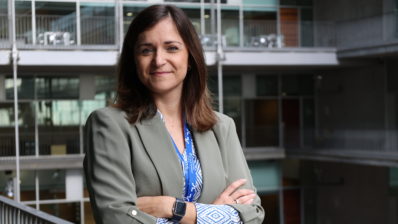
The study has been led by Manuel Valero, head of the Neural Computing Laboratory of the Hospital del Mar Research Institute, who has collaborated with teams from New York University (NYU), the Institute of Neurosciences of Alicante (INA) and the Cardenal Herrera-CEU University.
Valero, M.; Abad-Pérez, P.; Gallardo, A.; Picco, M.; García-Hernández, R.; Brotons, J.; Martínez-Félix, A.; Machold, R.; Rudy, B.; Buzsáki, G.; et al. Cooperative actions of interneuron families support the hippocampal spatial code. Science 2025, 389(6764), eadv5638. https://doi.org/10.1126/science.adv5638