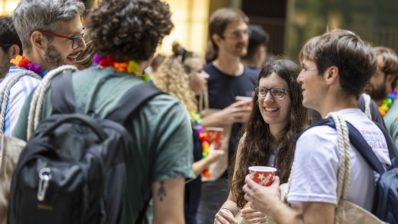
At the PRBB, science doesn’t happen in isolated bubbles. It happens under one roof, in a building that brings together seven research centres and 1,700 people with a daily mix of disciplines, career stages and nationalities that makes collaboration feel almost inevitable.
That “shared ecosystem” is not only about being physically close. It’s also about the small structures that make a big building work as a community: shared spaces and technological platforms, joint activities and inter-centre groups where people align on how we do research. When the PRBB wants to change something, it often follows the same logic: residents spot an issue, talk to the right allies, and the idea becomes a concrete improvement.
This is where PRBB’s Equality, Diversity and Inclusion (EDI) Committee plays a key role. Its mission is to support the Park and its centres in being diverse, equitable, inclusive and respectful organisations. Over the last years, the committee has promoted initiatives such as the #BeRespectful anti-discrimination campaign and a survey on perceived discrimination and equal opportunities, helping centres identify challenges and act on them with real data. In 2025, the PRBB centres also signed a joint commitment to Equality, Diversity and Inclusion, reinforcing that this is not only a “nice idea”, but an institutional responsibility.
We discuss all of this because sometimes the best stories start with a detail that seems minor. In this case, it was the names on a seminar room door and a proposal to change those names: Marie Curie to Maria Skłodowska-Curie, and Rita Levi to Rita Levi-Montalcini.
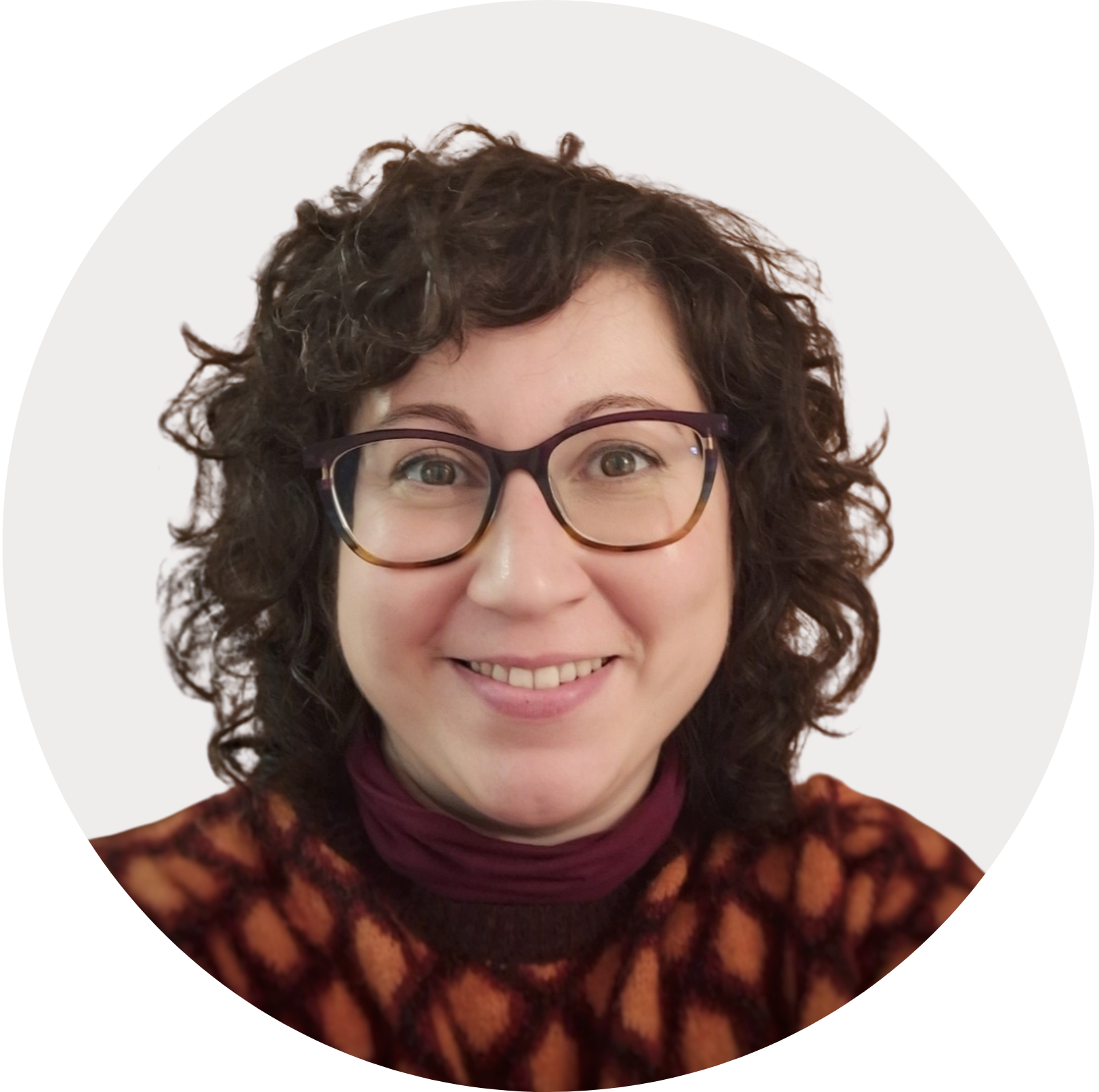
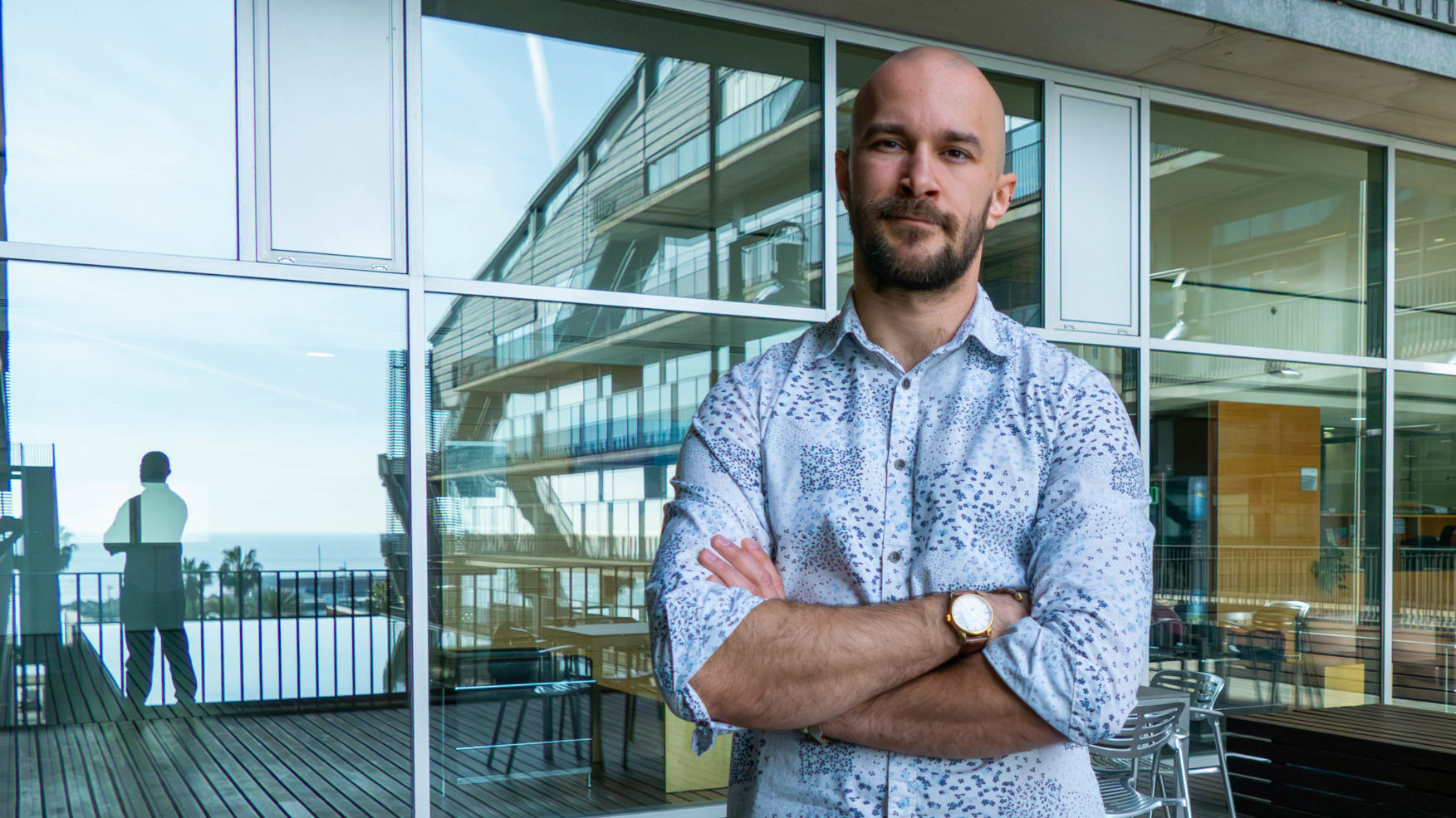
We talked with Patryk Poliński, a Postdoctoral Fellow at EMBL Barcelona, connected to both the Trivedi Group and the Dayton Group, about the “label on the door”, but also about his current research. He was the person proposing the change of the seminar PRBB rooms, a small change with a big effect on recognition, identity and scientific culture.
That same concept, “small things with big effects”, is also present in Patryk’s research. He works on the exposome: how external exposures (like air pollution or tobacco smoking) and internal exposures (like cancer or pathogens) shape biology — from early development models to organoids, and even the dialogue between neuroendocrine cancers and the nervous system.
“A shared ecosystem makes collaboration feel normal”
Patryk Poliński, a Postdoctoral Fellow at EMBL Barcelona
What are you working on at EMBL Barcelona right now?
My research focuses on understanding how the exposome — the collection of exposures both external (e.g., air pollution, tobacco smoke) and internal (e.g., cancer, pathogens) — reshapes biological systems. In particular, I investigate the molecular mechanisms underlying these effects, including post-translational regulation of cellular responses. Within the framework of the exposome, I investigate how such exposures influence organismal and ecosystem-level function.
Experimentally, this work spans modelling the impact of exposures both in the context of embryonic development as well as cancer using in vitro models (jointly with the Trivedi lab and the Dayton lab). Recently, I was awarded the Exposome Ambassador Fellowship by ISGlobal. Currently, I am particularly excited about exploring the feedback loop between neuroendocrine cancers and their influence on the nervous system
If you had to explain your project to a PRBB colleague from a totally different field, what would you say?
I study how certain cancers interact with neurons, and how this unexpected dialogue can rewire neuronal function in ways we’re only beginning to understand.
You’ve worked across big research environments at PRBB: CRG and EMBL. What makes a good scientific culture for you?
For me, a good scientific culture has three pillars: intellectual freedom, psychological safety, and a sense of shared responsibility.
When we feel comfortable expressing our ideas without judgment, when people truly listen, and when we collaborate, something even greater emerges.
The most inspiring aspect of a shared ecosystem like PRBB is the spirit of collaboration. Each institute brings its own unique expertise, and through active exchange, we’re able to advance science more effectively. This culture of openness is a significant advantage in itself.[IF8] It becomes normal for people from different countries, fields, and career stages to meet, collaborate, and see themselves as part of a shared community instead of isolated islands.
For me, a good scientific culture has three pillars: intellectual freedom, psychological safety, and a sense of shared responsibility.
Patryk Poliński, a Postdoctoral Fellow at EMBL Barcelona
You were the person behind the change of seminar room names at the PRBB. Could you tell us what is changing, exactly?
On the surface, we are changing the names of two seminar rooms: Marie Curie to Maria Skłodowska-Curie, and Rita Levi to Rita Levi-Montalcini. But what is really changing is our awareness. People are learning that behind these names, there is a real story and struggle.
Instead of choosing the shortest or easiest-to-pronounce version, we are choosing to respect that struggle. By learning their history, using their full names, and acknowledging their identity and wishes, we create a very powerful human connection that goes far beyond the physical labels or the booking system.
Some people can say: “It’s just a label.” What would you answer? Why do full names matter?
In theory, it is “just a label”, a word on a door. But words carry meaning, that is why we use them.
If we use only part of a person’s name, we ignore their explicit wishes and the history behind that name. In these two cases, we risk erasing the parts of their stories that make them whole and unique, things that shaped them while resisting clear discrimination.
How did you move from idea to approval?
Once my mind was made up, the process itself was quite straightforward. I wrote a detailed email to James Sharpe, Head of EMBL Barcelona, and Laura Marín Pedrera, Head of Admin at EMBL Barcelona, explaining the historical context and why I felt the change mattered.
They helped me shape a clear proposal, supported me in sending it to all PRBB institute directors, and after their signatures we sent a joint letter to PRBB Director General Jordi Camí, who approved the change very quickly.
What has the reaction been like so far?
The reaction has been overwhelmingly positive, both inside PRBB and on social media.
Sometimes people comment that, because Maria Skłodowska-Curie was Polish, like me, I am “making a national case”. My feeling is different: everyone here is open-minded, but we all come from different backgrounds and have different knowledge. Once I explain the historical context, people immediately see the importance.
Maria was born in partitioned Poland under Russian rule, at a time when learning the Polish language and culture was oppressed, and women were not allowed to study. To access education, she joined the “Flying University”, a self-organised secret institution that changed location and often held classes at night to avoid punishment. Later, in France, even after two Nobel Prizes in two different fields, she was still rejected by the French Academy of Sciences in 1911. She refused to let these things define her; she did not drop her surname to fit social expectations and signed her Nobel documents with both surnames to highlight her full identity.
For me, she was simply an extraordinary person, and using her full name is a small but concrete way of respecting that. These conversations show how a “small” change can open the door to much bigger reflections.
What advice would you give to someone who wants to change something towards a more equitable, diverse and inclusive work environment?
Start small, concrete, and specific: one policy, one label, one practice.
Do your homework, talk to the people who might be affected, and then look for allies who have responsibility or visibility. You are never truly alone, even if it feels like it at times. You do not need to fix everything at once; often, one well-argued and realistic change is enough to start shifting how people think about equity and inclusion.
That “start small” approach is also very aligned with how PRBB’s EDI Committee works: combining awareness, concrete tools (campaigns, policies, surveys) and community conversations to improve daily life in research spaces.
Could you mention a mentor (or colleague) who shaped your way of doing science?
This is both an easy and a difficult question. Science is not only about experiments; it is a way of looking at the world, thinking critically, and asking questions.
Many women shaped my path: my mother, my first academic mentor in Poland, and my first international supervisor. Each of them influenced how I do science and how I try to support others, and they continue to do so today.