You could almost say that Olga Valverde came to the study of addiction by chance. She wanted to get right into the lab and experiment. However, the only research group with experimental work at the University of Cadiz, where she did her medical studies, was the pharmacology group, which did research on analgesia and addictions. So, she got there to do her undergraduate thesis on abstinence and opiates. Since then, Valverde has been moving between studies on opiate and cannabinoid addiction, the analgesic effects of these compounds and the mechanisms of depression because, as she explains, these three pathologies form the three sides of the same triangle.
Since 2007, Valverde has led the Neurobiology of Behaviour group (GReNeC-Neurobio) at the Department of Medicine and Life Sciences (MELIS-UPF) at Universitat Pompeu Fabra. Her group studies the neurobiological basis of some neuropsychiatric disorders in order to understand their pathophysiology and find new therapeutic targets. “Our scientific objective is to elucidate what happens in the nervous system to cause these disorders to develop, to pave the way for other teams to design more translational or clinical studies”, says Valverde.
The team mainly studies cocaine addiction, foetal alcohol syndrome and peripartum depression.
At the moment, they have three open lines of research: cocaine addiction, foetal alcohol syndrome and peripartum depression. And, although in the case of peripartum depression they are starting a collaboration with a clinical group, their expertise is focused on basic neurobiological research and behavioural studies.
Thanks to the team’s experience with animal models, they are working in the VICT3R project. This aims to look at using virtual control groups in some animal studies, initially in the field of toxicology, but they also want to explore new areas, such as studies in the academic environment. The consortium is mainly composed of toxicology and bioinformatics experts and the participation of experimental teams is small.
Variety is the key to success
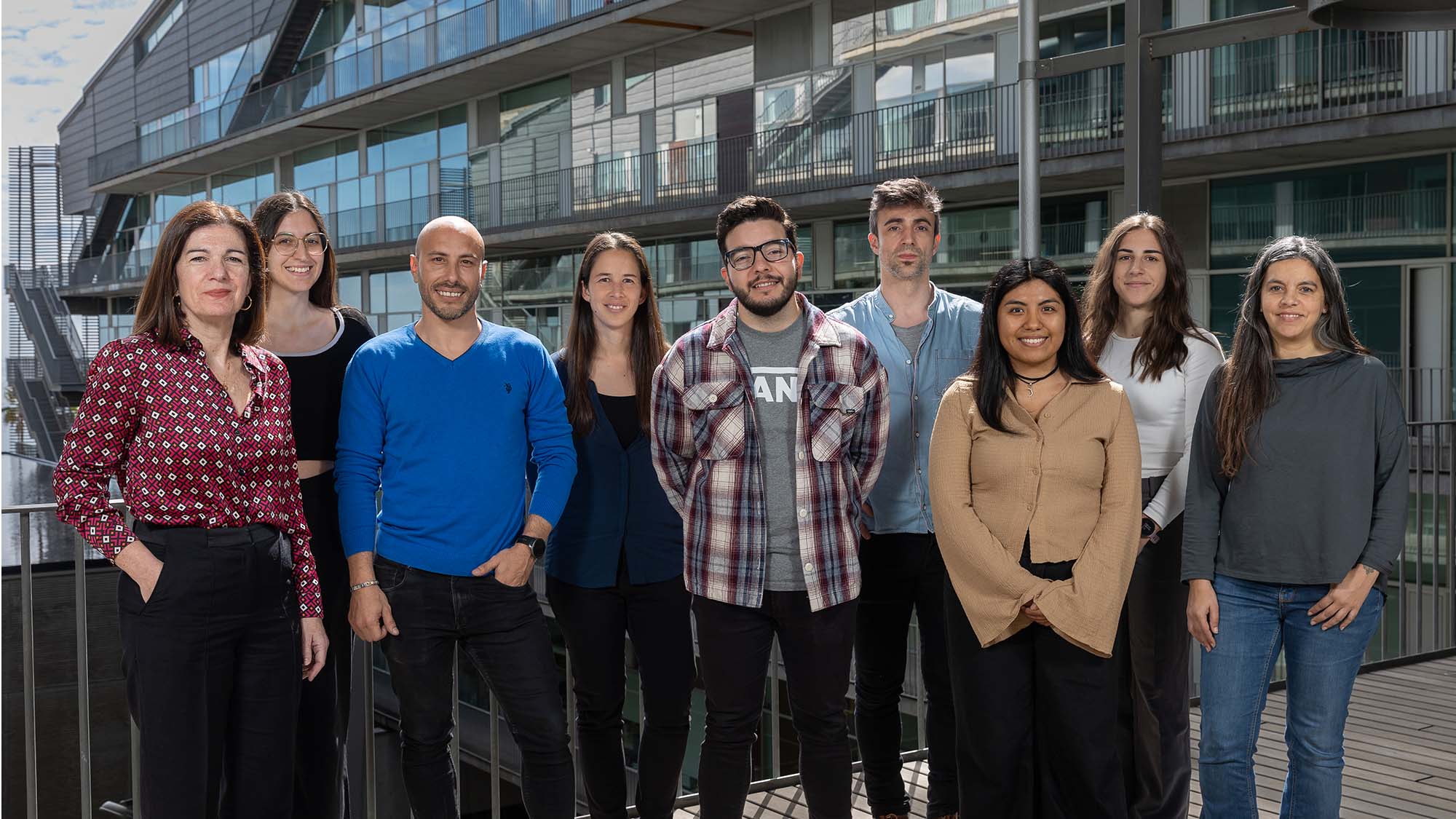
The GReNeC-Neurobio team is currently formed by nine people: three postdocs, four PhD students and two technicians, one full-time and one part-time. Each of them comes from a different field: some studied biology, others pharmacy, and some psychology.
No two days are the same in the group, despite the fairly organised routine they maintain. Experimental work means that they have to adapt every day. What they don’t miss is their Thursday group meeting, where they update each other on projects, present articles and brainstorm ideas.
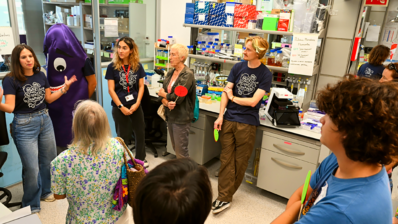
Nor do they miss opportunities to disseminate their knowledge, something they do individually or as a group and when the workload allows them to do so. Open days, talks at schools, Coffee Sessions, a recent TEDx talk or their participation in Rin4′, the UPF competition to explain doctoral theses in four minutes, are some of the initiatives in which the members of the lab have participated.
One to modulate them all: the endocannabinoid system
The three lines of research in which they are engaged are united by a clear common thread: the endocannabinoid system. This highly complex system is a brain modulator responsible for controlling motivation, mood, plasticity and memory, among other phenomena. The behavioural neurobiology group specifically studies the involvement of the endocannabinoid system in the mechanisms of different diseases and its potential as a therapeutic target.
To do this, they have developed mouse models for each of their research lines. Both PhD students and postdocs often spend their mornings doing behavioural work in the PRBB animal facility. They work on mice because they offer better prospects for experimental work. They carry out both neurobiological and pharmacological studies to address targets of interest.
One of the difficulties is gaining the complicity of the pharmaceutical industry in addiction research. “It is a real obstacle course. Although we try to collaborate with pharmaceutical companies that can provide us with some products and pharmaceutical drugs, sometimes they don’t want to be involved in addiction-related research.”
From the animal facilities to lab bench work
In addition to mouse models, they also work with ex vivo samples of animal brain regions. The aim is to study targets of interest such as components of the endocannabinoid system, among others, at the molecular level. Thanks to the combination of behavioural and molecular methodologies, they have shown, for example, that cannabidiol, a substance found in marijuana, but without addictive effect, has beneficial effects in foetal alcohol syndrome and in the control of cocaine consumption.
One of the great challenges is to evaluate how alterations in cellular metabolism participate in the genesis of neuropsychiatric disorders. According to Valverde, “many of the alterations that occur in the brain have a cellular metabolic basis that is not completely clear”.
Peripartum depression, the great unknown
They came to the study of peripartum depression through addictions. One of the most typical comorbidities of addictions is depression and Olga Valverde’s team has a mouse model in which they study the effects of depression. They induce it in mice by means of a maternal separation procedure, since stress at an early age affects brain development and produces negative consequences that persist over time.
Valverde’s lab is now using this same model to study the impact of maternal separation on the mother as a model of peripartum depression. In fact, this is a very prevalent type of depression, which, at the same time, seems to have different pathophysiological mechanisms from other depressive disorders. It appears during pregnancy or up to four weeks after giving birth.
Depressions and addictions are pathologies that need a gender approach.
Olga Valverde
In this case, they observe how depression affects both mothers and their offspring. The model has led to a project funded by La Marató, in collaboration with Rafael de la Torre, Toni Pascual and Daniel Bergé Baquero of the Hospital del Mar. Bergé has several mother-child pairs that are very useful for studying the consequences of maternal depression on the health of the newborn.
In this project, Valverde wants to look at the role of the endocannabinoid system in the mechanism of peripartum depression with the hypothesis that the endocannabinoid system modulates other neurotransmitter systems and other modulators involved in this disorder, such as the oxytocin system or GABA. They hope that this project will allow progress in the physiopathology of this disorder that mainly affects women and their children.
The high complexity of the endocannabinoid system as a neuromodulator means that it is involved in the mechanisms of various behavioural conditions. Addictions and peripartum depression are just two of those studied by the GReNeC-Neurobio. The work of Valverde and her team is to understand at the molecular level how they work, in order to help develop strategies for their prevention or treatment.