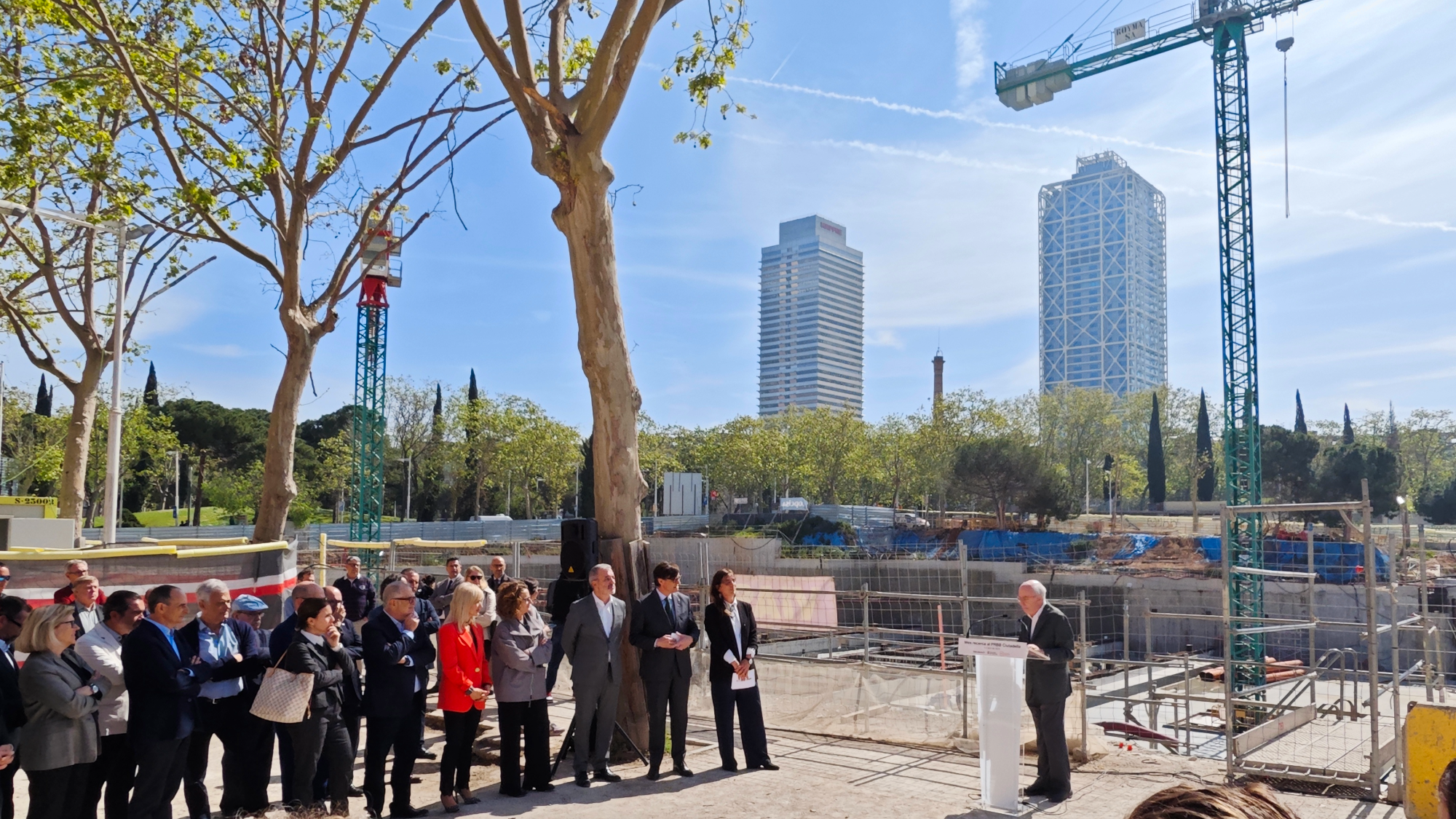
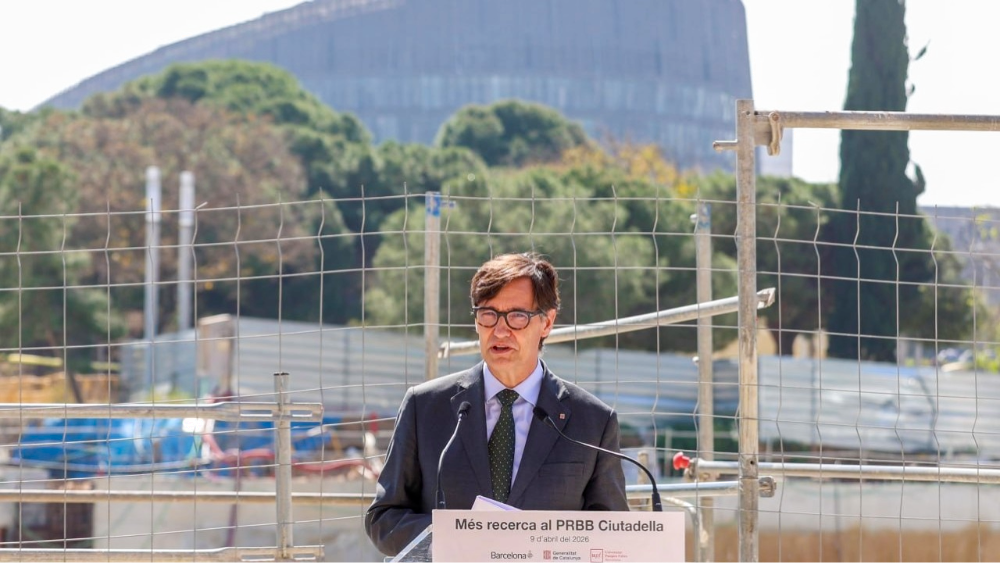
Today, Thursday 9 April, the institutional event was held to mark the construction of the future PRBB Ciutadella building on the site of the former Mercat del Peix. The event included speeches by the President of the Government of Catalonia, Salvador Illa; the Minister for Research and Universities, Núria Montserrat; the Mayor of Barcelona, Jaume Collboni; and the Director General of the Barcelona Biomedical Research Park Consortium, Jordi Camí.
“We are a pro-science government, making a firm commitment to science and explicitly championing it in order to move the country forward. We are part of the talent circuit, and we are creating talent from Catalonia.”
Salvador Illa, President of the Government of Catalonia
“PRBB Ciutadella is a strategic infrastructure that allows us to make a leap in scale as a country, bringing together talent, technology and knowledge in a single space to accelerate scientific transfer to society.”
Núria Montserrat, Minister for Research and Universities
The new building, which will be managed by the Barcelona Biomedical Research Park Consortium (PRBB), will form part of the Ciutadella of Knowledge project, a scientific and urban initiative that will transform the area around Ciutadella Park into a hub for research, innovation and higher education. Altogether, the Mercat del Peix complex will bring together three research buildings and a total surface area of around 46,000 square metres, with capacity for more than 1,200 researchers.
The building will host five top-level CERCA centres (Research Centres of Catalonia). IRB Barcelona (Institute for Research in Biomedicine) will move there in full and will occupy 60% of the facilities; IBEC (Institute for Bioengineering of Catalonia) will relocate several of its groups, occupying 25% of the space. Groups and services from other CERCA centres will also be present, including ICN2 (Catalan Institute of Nanoscience and Nanotechnology), CRG (Centre for Genomic Regulation) and ICFO (Institute of Photonic Sciences).
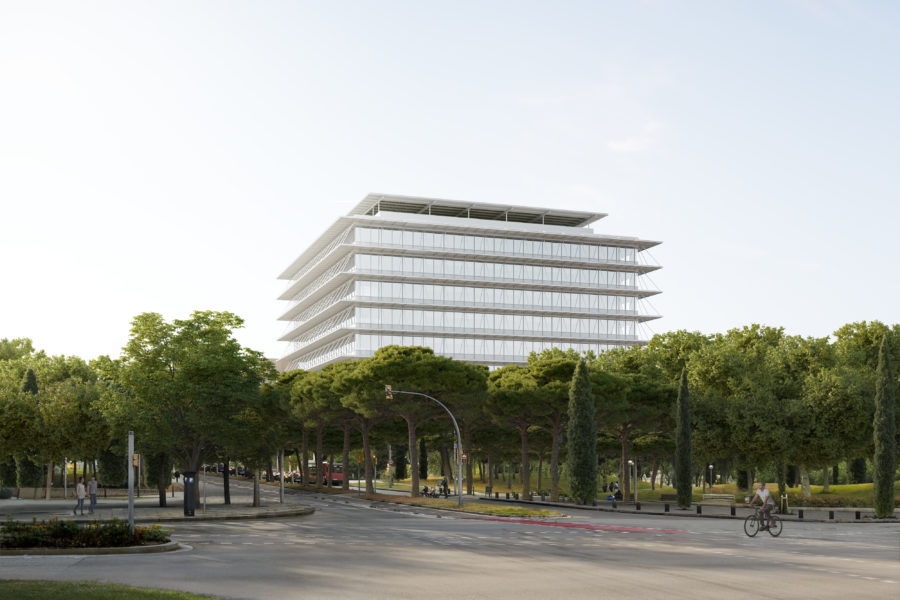
PRBB Ciutadella is being created with a clear purpose: to become a new space for precision medicine and interdisciplinary research. Designed by the Barcelona-based studio Barozzi Veiga, the new facility will have around 24,700 square metres and will host nearly 950 researchers. The architectural project is based on a highly distinctive, almost cubic volume: a building around 45 metres high, 52 metres wide and 49 metres deep, with 9 floors and a technical basement. Barozzi Veiga’s proposal features an unclad façade with three-metre-deep overhangs, designed to combine architectural identity, sustainability and Mediterranean building tradition. The structure will be made of concrete and steel.
One of the most significant features of the future PRBB Ciutadella building will be its internal flexibility. The 11,000 m² allocated to laboratories have been designed around modules measuring between 3 and 4 metres, a solution that will allow research groups to grow, split or be reconfigured over time without the need for structural works. This adaptability reflects the intention to create a building that can evolve alongside research and the changing needs of the teams that will occupy it.
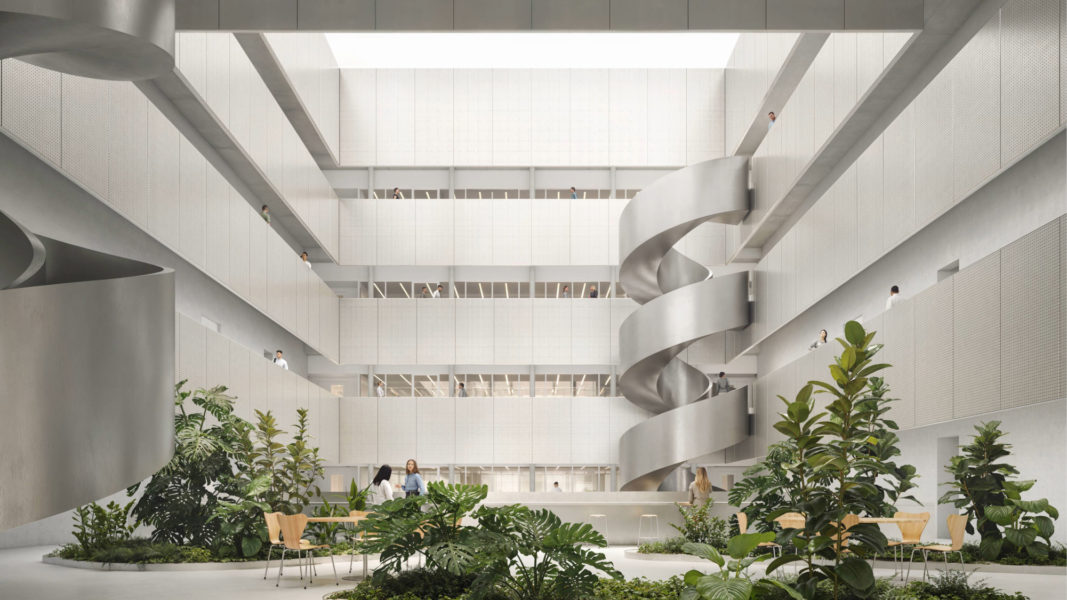
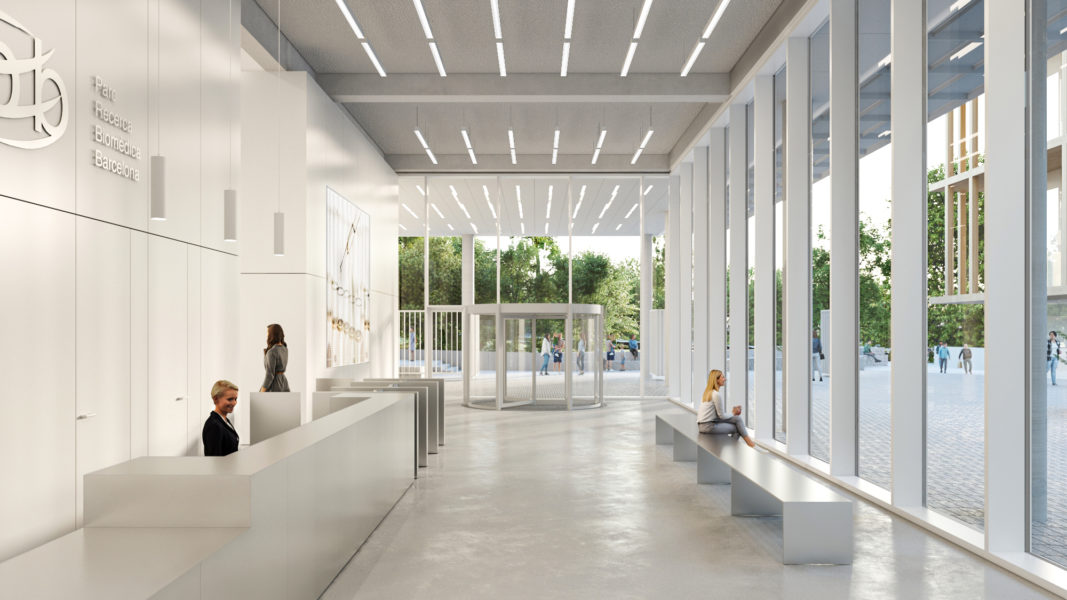
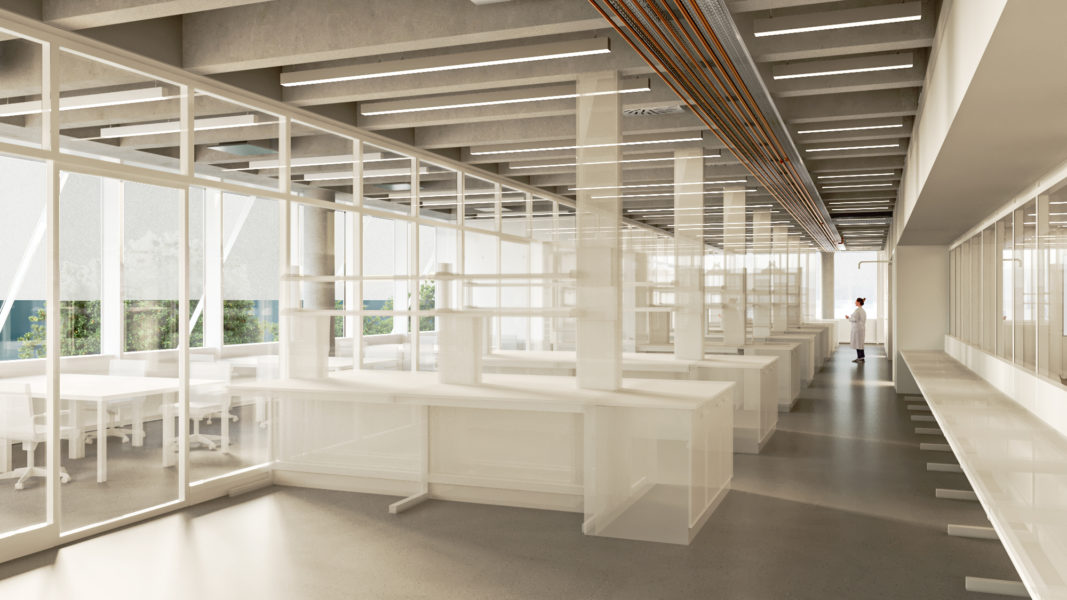
From an architectural point of view, PRBB Ciutadella has been conceived as an open and permeable building, closely connected to the surroundings of Ciutadella Park and the former Mercat del Peix. The ground floor will extend the public space into the building, creating a thoroughfare between Wellington Avenue and Trias Fargas Street, while the interior will be organised around a large central atrium designed to encourage interaction between researchers from different disciplines working there. From the third floor upwards, two large loggias opening towards the sea and the university will complement these spaces.
“With the new research and innovation complex at the former Mercat del Peix, not only are we doubling the current critical mass of the scientific community on the seafront, but we are also creating the ideal space for genuine cross-fertilisation. Physical proximity between engineers, biologists and clinicians is what will allow us to accelerate research and turn it into real solutions for patients.”
Jordi Camí, director of the PRBB
The new PRBB Ciutadella building will not stand alone. It will be accompanied by the future Universitat Pompeu Fabra (UPF) building dedicated to the well-being of society, the new headquarters of the Institute of Evolutionary Biology (IBE: CSIC-UPF), as well as a new underground car park promoted by B:SM.
The works have been awarded to the joint venture UTE PRBB Ciutadella, made up of Calaf Constructora, Serom, Agefred, Sogesa and Suris, with a contract value of €77.5 million excluding VAT. The works are expected to be completed in 2028.
The project is supported by the Government of Catalonia, which has authorised a multiannual investment totalling €104 million for works, furniture and equipment. Of this amount, €60 million will be channelled as a loan to the PRBB Consortium, and €44 million will come directly from the Department of Research and Universities for the period 2025–2029. Barcelona City Council is contributing the land surface rights for 75 years and is also supporting the initial investments.
Beyond the figures, PRBB Ciutadella represents an expansion of the model that the Park has been building over the last two decades: a shared space where infrastructure, services and proximity between centres make more and better research possible. Coinciding with the PRBB’s 20th anniversary this year, the start of these works also positions the Park for the next twenty years, with more space, greater critical mass, and new opportunities for shared research. Today, that future has become a little more visible.