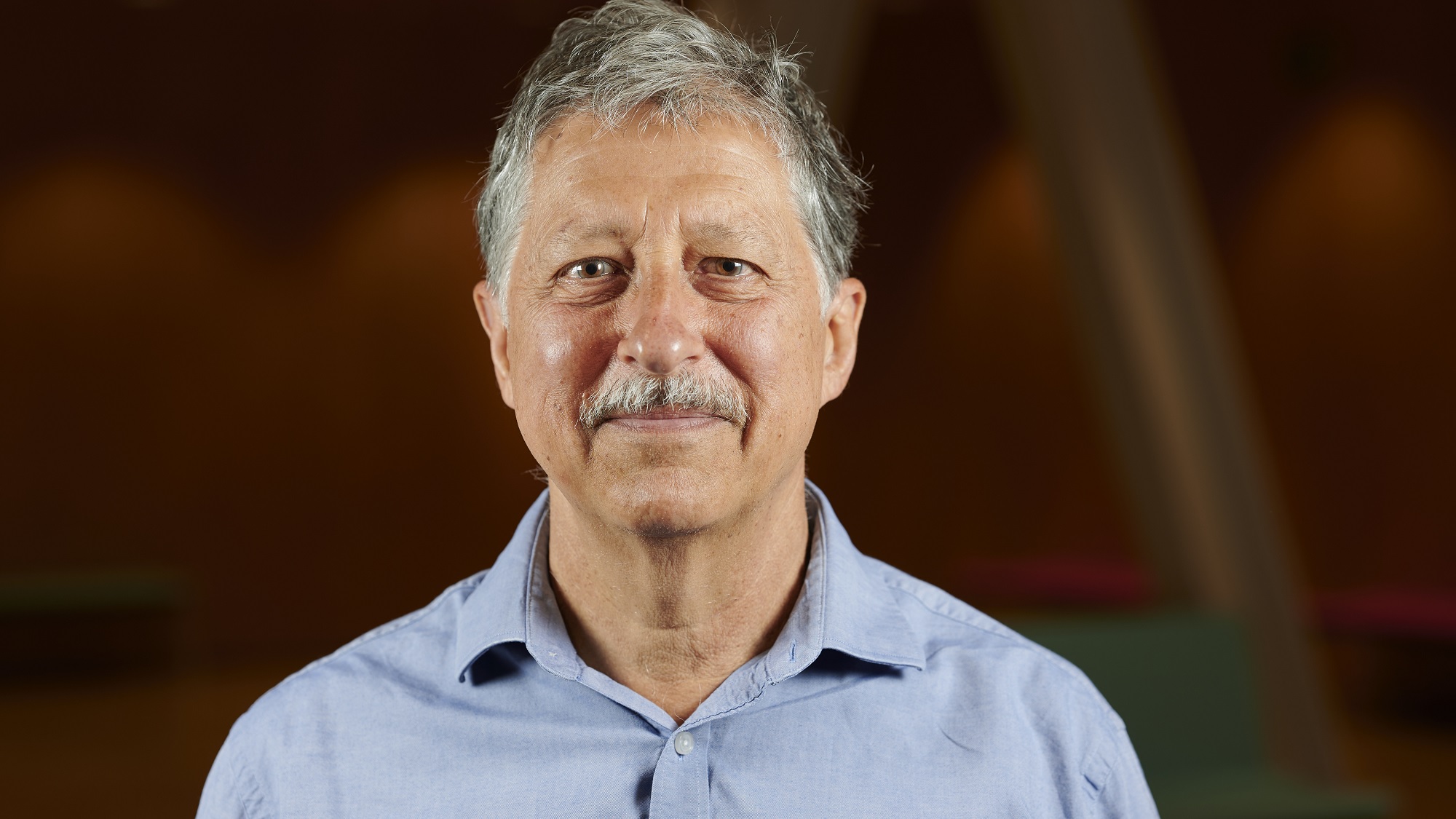
We talk to Manolis Kogevinas, an environmental epidemiologist at the Barcelona Institute for Global Health (ISGlobal) and one of the promoters of the ongoing “Declaration of the global scientific community: Defending science, knowledge and public interest in the face of political suppression”, launched on April 2nd by the SPHERA consortium.
In the face of an increase in the politicization of science he is sending a call for action, within the scientific community and beyond.
Recent political changes in the US have spearheaded the release of this declaration – what is there to lose?
While recent developments in the U.S. prompted the timing of the declaration, the underlying issues are global. We have seen examples of science suppression, disinformation campaigns, and the politicization of scientific evidence across a wide range of countries—whether in relation to climate change, environmental protections, pandemic responses, or gender and reproductive health. The risk is not only to science as an institution, but to democratic society itself.
When scientific knowledge is bypassed or distorted, policymaking loses its reference to evidence, and the public loses trust in both science and institutions. What we stand to lose is immense: public health, environmental stability, informed citizenship, and the capacity to respond to major global challenges.
Given the wide scope of challenges – from underfunding to anti-scientific rhetoric – how does SPHERA prioritize which battles to fight?
SPHERA is a network of research centres and we have limited capacity to respond. There is a need for wider mobilization in defence of science and this is what we try to achieve. Our priorities are guided by three principles: urgency, harm, and opportunity for impact. We do not see these as separate battles, but as interconnected threats to the same core value: the public’s right to knowledge. At SPHERA, our role is to foster global dialogue, as far as possible amplify the voices of scientists who face suppression, and create networks of discussion and action.
How do you think the scientific community has responded so far to these threats and why?
The response has been mixed. Many scientists are worried, some are speaking out, and a few are taking bold action—but far too many remain silent, often due to fear of backlash, institutional pressures, or a sense of powerlessness. There is also a longstanding culture in science that avoids politics, which in today’s environment can inadvertently serve those who seek to silence evidence-based discourse.
There is also a longstanding culture in science that avoids politics; today, this can inadvertently serve those who seek to silence evidence-based discourse.
Manolis Kogevinas (ISGlobal)
Moving forward, we need to build alliances that go beyond academia—working with journalists, educators, civil society, and legal experts. We must support scientists who speak out, defend institutions that protect research integrity such as Harvard, and make science more transparent and inclusive.
Who do you believe are the stakeholders who can do something about this?
There are many stakeholders—governments, universities, funding bodies, scientific societies, scientific journals, media platforms, and civil society. Each has a distinct role. Funders and institutions must guarantee academic freedom and protect researchers from political interference. Scientific societies must advocate publicly and clearly. Governments must ensure transparency and respect for evidence.
To reach these actors, we must frame this not as a partisan issue, but as a democratic one. Everyone benefits from a society where decisions are informed by evidence, and where science can be conducted freely and ethically. Appealing to shared values—public health, future generations, justice—can help bridge divides.
“Everyone – from governments, scientific societies or the media to civil society – must play their part, because everyone benefits from a society where decisions are informed by evidence”
Manolis Kogevinas (ISGlobal)
What is the role of civil society and how can it be engaged – especially in regards to scepticism and misinformation?
Civil society is essential. Science does not exist in a vacuum—it must be accountable to, and in dialogue with, the public. My research is funded by public money, so I must give back to society. To engage effectively, we scientists need to listen. We need to understand the concerns behind scepticism – whether they arise from economic insecurity, cultural alienation, or perhaps past abuses of authority. Effective engagement means co-creating knowledge with communities, supporting science education at all levels, and building relationships with trusted local voices. We must also work with artists, communicators, and educators to translate complex issues into meaningful public conversations. When people see science aligned with their lived experiences and values, trust can be rebuilt.
In your view, how do we achieve a resilient scientific ecosystem?
A resilient scientific ecosystem is one where evidence can be generated, shared, and acted upon without fear of censorship or retaliation. It is politically independent, but socially engaged—responsive to public needs and accountable to ethical standards. It is diverse, both in who does the science and in whose voices are heard. And it is international, because the major challenges we face—climate, pandemics, planetary health—do not stop at borders.
Does this look like science fiction? Unfortunately, it does in the current political context of major countries, but it should not be and I am sure we can rebuild a new “social contract” between science and society and achieve what should be the norm rather than the exception. International networks like SPHERA can play a vital role in promoting solidarity and mutual learning across systems. All this is not easy and our institutes should make a very serious and constant effort to realign priorities. So, I am very happy that El·lipse raises these issues!