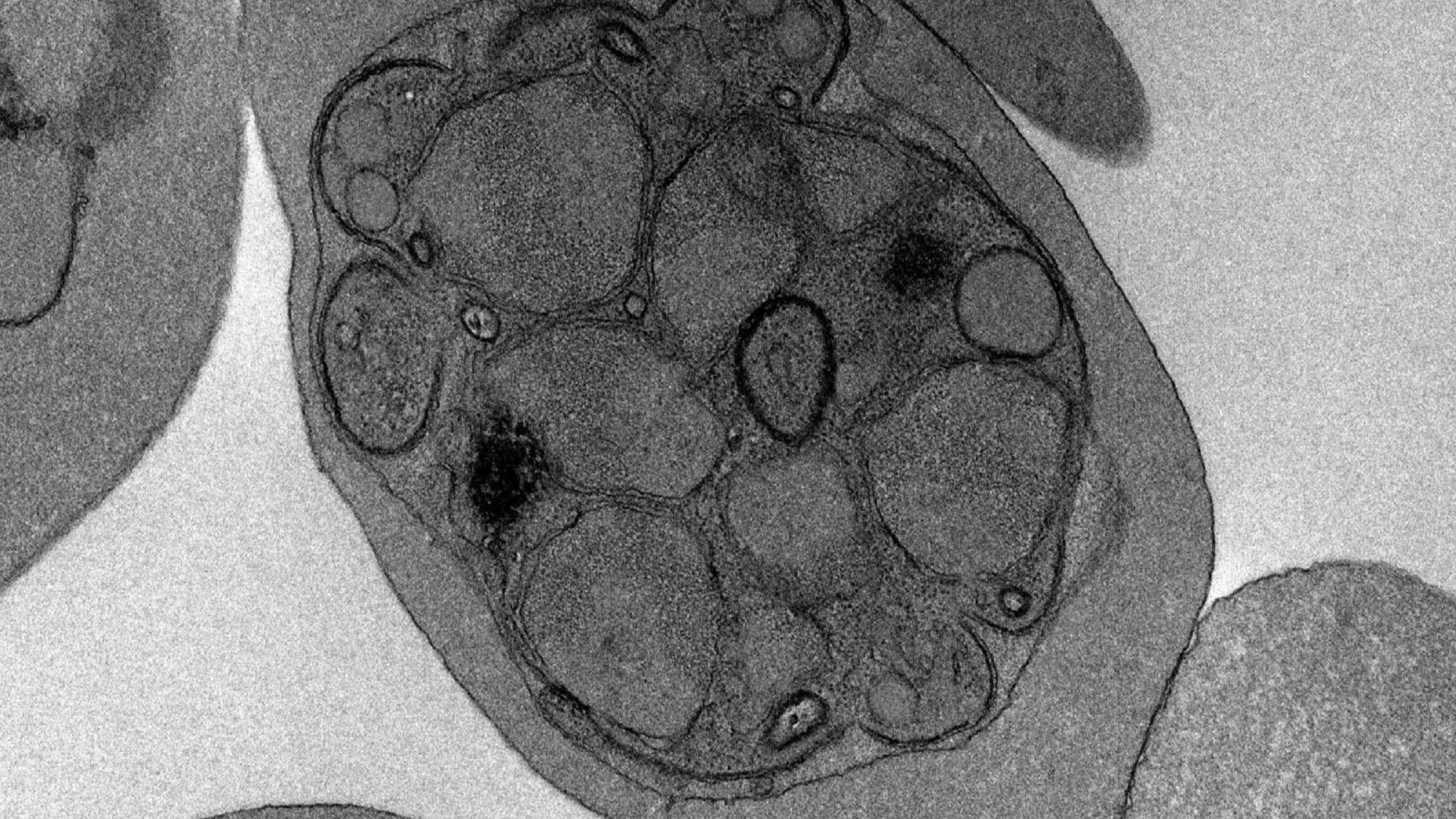
This image of the week, taken with an electronmicroscope, shows the ultrastructure of PfGNA1-disrupted Plasmodium falciparum. Taken by Maria Pia Alberione, a PhD student at the Barcelona Institute for Global Health (ISGlobal), the image is part of a recent study that has found a potential new and safe way to attack the malaria parasites by targeting one of their key metabolic steps.
One of the challenges when dealing with malaria is the fact that the Plasmodium parasites that cause the disease are eukaryotic organisms, just like us. This means it’s hard to find drugs that are lethal to them but safe for humans, as is the case with antibiotics which attack only bacteria.
But the ISGlobal team, led by Luis Izquierdo, found a weak point in a metabolic pathway the parasite relies on to anchor critical proteins to its surface and help maintain its structure. In particular, they saw that the PfGNA1 enzyme, which is essential for this pathway, is structurally very different from its equivalent in humans. And when they disrupted the PfGNA1 gene in the parasite, they saw a dramatic loss of these anchor proteins, which led to an arrest of the parasite development, preventing their escape from red blood cells and effectively blocking further invasion.
These results hint to PfGNA1 as a potential target for future drugs that could affect the parasite, without attacking the human proteins.
Alberione MP, Avalos-Padilla Y, Rangel GW et al. Hexosamine Biosynthesis Disruption Impairs GPI Production and Arrests Plasmodium falciparum Growth at Schizont Stages. Plos Pathogens. Doi: 10.1371/journal.ppat.1012832