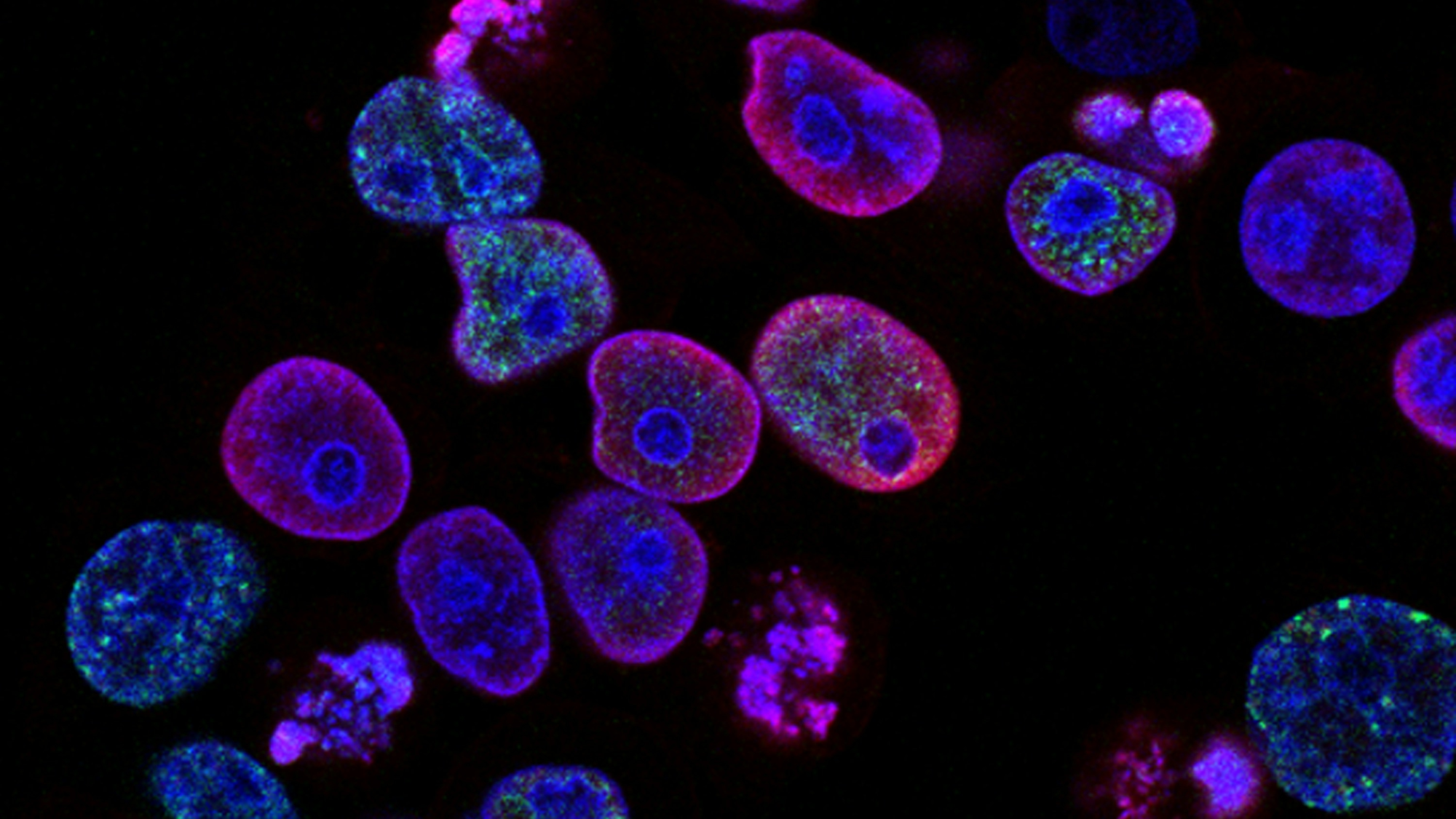
All the cells in our body contain practically the same genes. But a neuron is very different from a blood cell. The key is not only which genes we have, but also which ones are activated in each cell, when they are activated and how strongly.
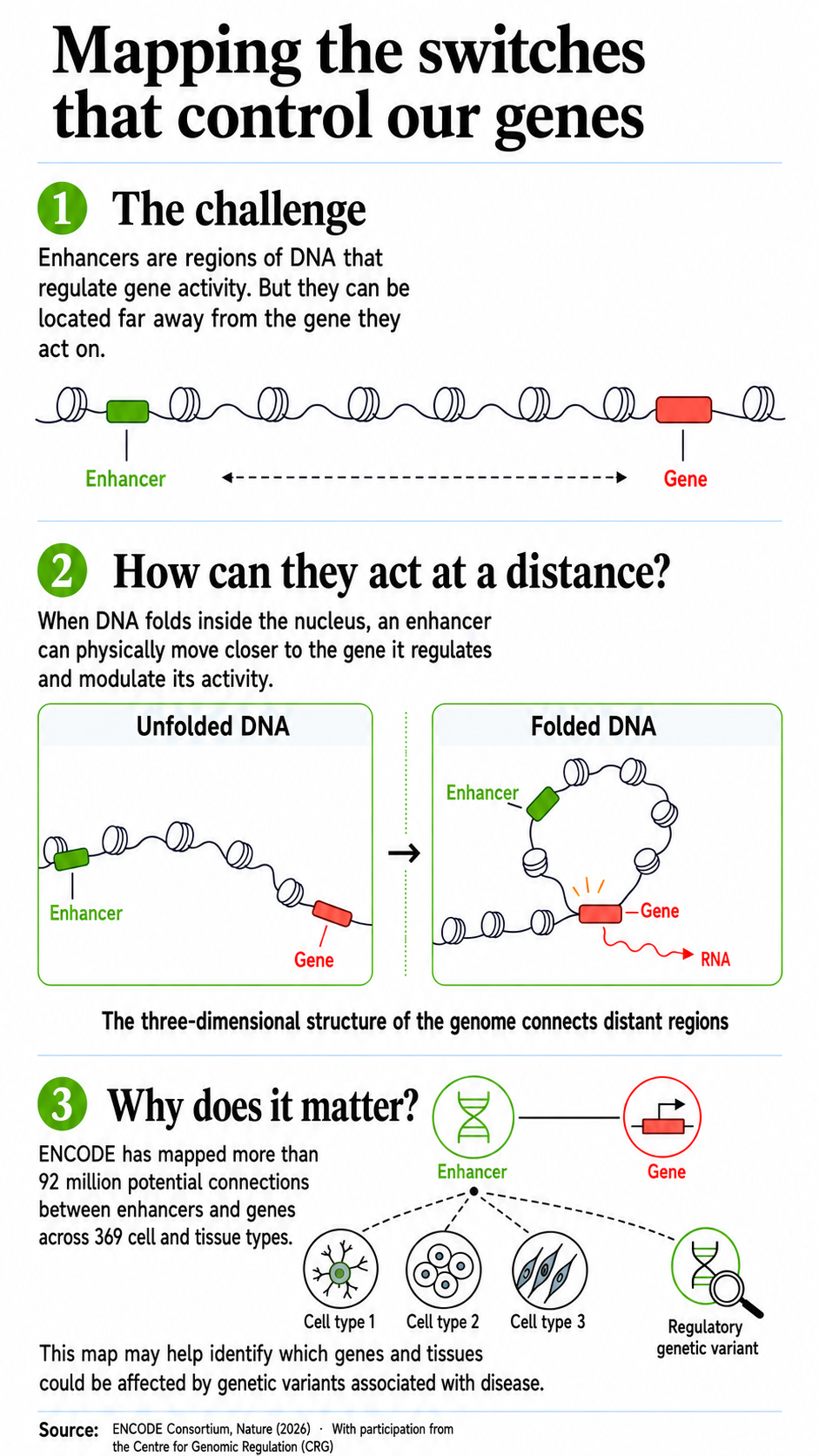
Much of this control depends on enhancers, regions of DNA that act as switches for gene activity. These elements may be located far away from the gene they regulate within the genome sequence. However, when DNA folds, they can come physically closer to that gene and promote its activation.
Now, an international team from the ENCODE consortium, with participation from the Centre for Genomic Regulation (CRG), has produced a map of more than 92 million possible connections between enhancers and genes. The study, published in Nature, analysed 1.458 samples corresponding to 369 cell types and tissues.
From genetic variants to affected genes
The new atlas may help interpret genetic variants related to disease. Many of these variants are not located inside genes, but in regulatory regions. Knowing which gene a region acts on and in which tissue makes it possible to more precisely narrow down the biological mechanisms that may be altered.
Ramil Nurtdinov and Roderic Guigó, researchers at the CRG, participated in the ENCODE working group that conducted the study. The CRG team contributed EPIraction, a method that compares different cell types to identify tissue-specific connections between enhancers and genes.
The map therefore brings us closer to a central question in genomics: how the same genome can give rise to the great diversity of cells that make up the human body.
Find out more:
Read the news article published by the Centre for Genomic Regulation (CRG).
Gschwind, A. R., Mualim, K. S., Karbalayghareh, A. et al. “An encyclopedia of human enhancer–gene regulatory interactions”. Nature (2026). DOI: 10.1038/s41586-026-10781-4.