When we think about cell metabolism, we often imagine mitochondria producing energy. When we think about the nucleus, we imagine DNA, genes and genetic information. But this separation may not be as clear as it once seemed.
A study from the Centre de Regulació Genòmica (CRG), published in Nature Communications, has identified more than 200 metabolic enzymes associated with chromatin, the structure that packages and organises DNA inside the nucleus. Many of these enzymes are known for their role in metabolic processes, but the study shows that they can also be found in the nuclear environment.
The research suggests that different cell types, tissues and cancers may have their own patterns of metabolic enzymes inside the nucleus. The authors describe this as a “nuclear metabolic fingerprint”, a kind of signature that could offer new clues about the relationship between metabolism, genome regulation and cancer.
Key points
- The CRG has identified more than 200 metabolic enzymes associated with chromatin.
- These enzymes represent more than 7% of the proteins in the “core chromatome” analysed.
- The pattern varies depending on the cell type, tissue and type of cancer.
- The study suggests a connection between nuclear metabolism, chromatin regulation and the response to DNA damage.
- It is still not known whether all these enzymes are active inside the nucleus or what exact function they have there
An unexpected presence inside the nucleus
Traditionally, metabolism and genome regulation have been studied as related but different systems. The nucleus contains the genome, while much of the cell’s metabolic activity takes place in the mitochondria and cytoplasm.
For this study, the CRG team used a method that makes it possible to isolate proteins physically bound to chromatin. With this approach, they analysed 44 cancer cell lines and 10 types of healthy cells from 10 different tissues. The results show that metabolic enzymes are far more present in the chromatin environment than expected.
This does not necessarily mean that all these enzymes do the same job inside the nucleus as they do outside it. The scientific article itself stresses that their exact activity still needs to be clarified: they could have metabolic, regulatory, structural or other non-canonical functions.
Not all tumours show the same pattern
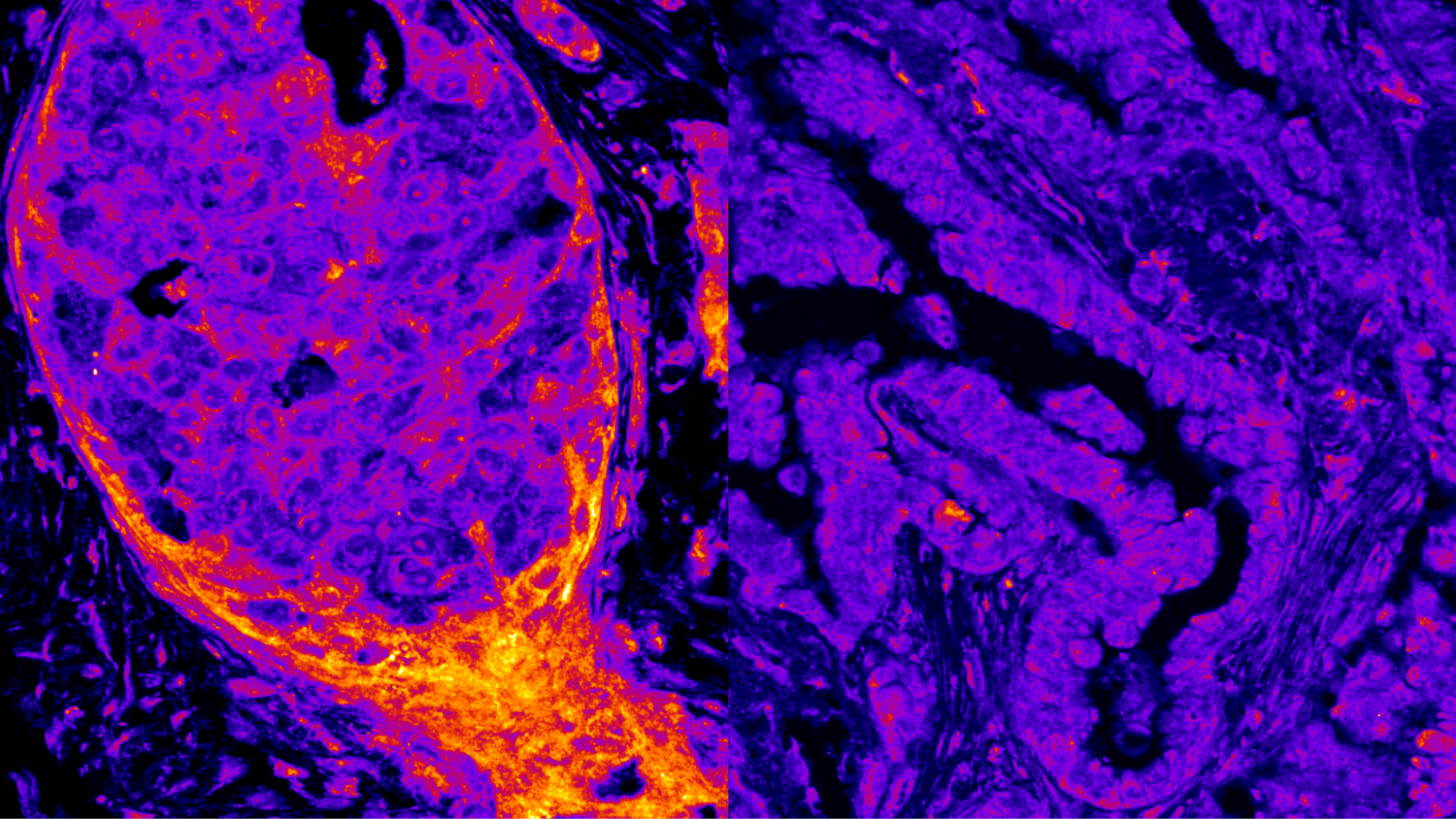
One of the most notable observations is that these enzymes do not appear in the same way across all types of cancer. For example, enzymes related to oxidative phosphorylation — a key process in cellular energy production — were more enriched in the chromatin of breast cancer cells and less present in lung cancer samples.
This difference suggests that the nuclear localisation of these enzymes could be related to the identity of the tissue or tumour. Although the study does not show that this fingerprint can currently predict a patient’s response to treatment, it does open new questions about how metabolism, chromatin and cancer may be connected.
DNA damage and repair
The study also explores the relationship between some metabolic enzymes and the response to DNA damage. Specifically, the team studied a group of enzymes involved in producing components needed for DNA synthesis and repair, and observed that they accumulate around chromatin when DNA is damaged.
This point is relevant because many cancer treatments cause genotoxic stress, meaning damage to the genetic material of tumour cells. If some metabolic enzymes located in the nucleus participate in the response to this damage, this could help us better understand how some cancer cells respond to treatment.
During these experiments, the team also observed that localisation matters. The enzyme IMPDH2 behaved differently depending on whether it was found in the nucleus or the cytoplasm: when it remained in the nucleus, it helped preserve genome stability; when it was confined to the cytoplasm, it affected other cellular pathways.
What does this discovery open up?
The study offers a broad map of metabolic proteins associated with chromatin in healthy and cancer cells. According to the scientific article, this presence is extensive, varies by tissue and could be linked to non-canonical functions of these enzymes inside the nucleus.
In the long term, mapping the localisation and function of these enzymes could help identify new biomarkers or vulnerabilities in tumour cells. But first, researchers will need to determine what each enzyme does, whether all of them are active inside the nucleus and how they manage to get there. This last point is one of the open questions highlighted by the CRG: many of these enzymes are larger than what is usually thought to pass through the nuclear pore.
Overall, the research shows that the nucleus is not only the place where DNA is stored. It may also be a space where metabolic enzymes, chromatin and the cellular response to damage interact more closely than previously thought.
Kourtis, S., Gañez Zapater, A., Elbæk, C. et al. “Native chromatome profiling reveals hundreds of metabolic enzymes in the nucleus across tissues”. Nature Communications 17, 1655 (2026). https://doi.org/10.1038/s41467-026-69217-2