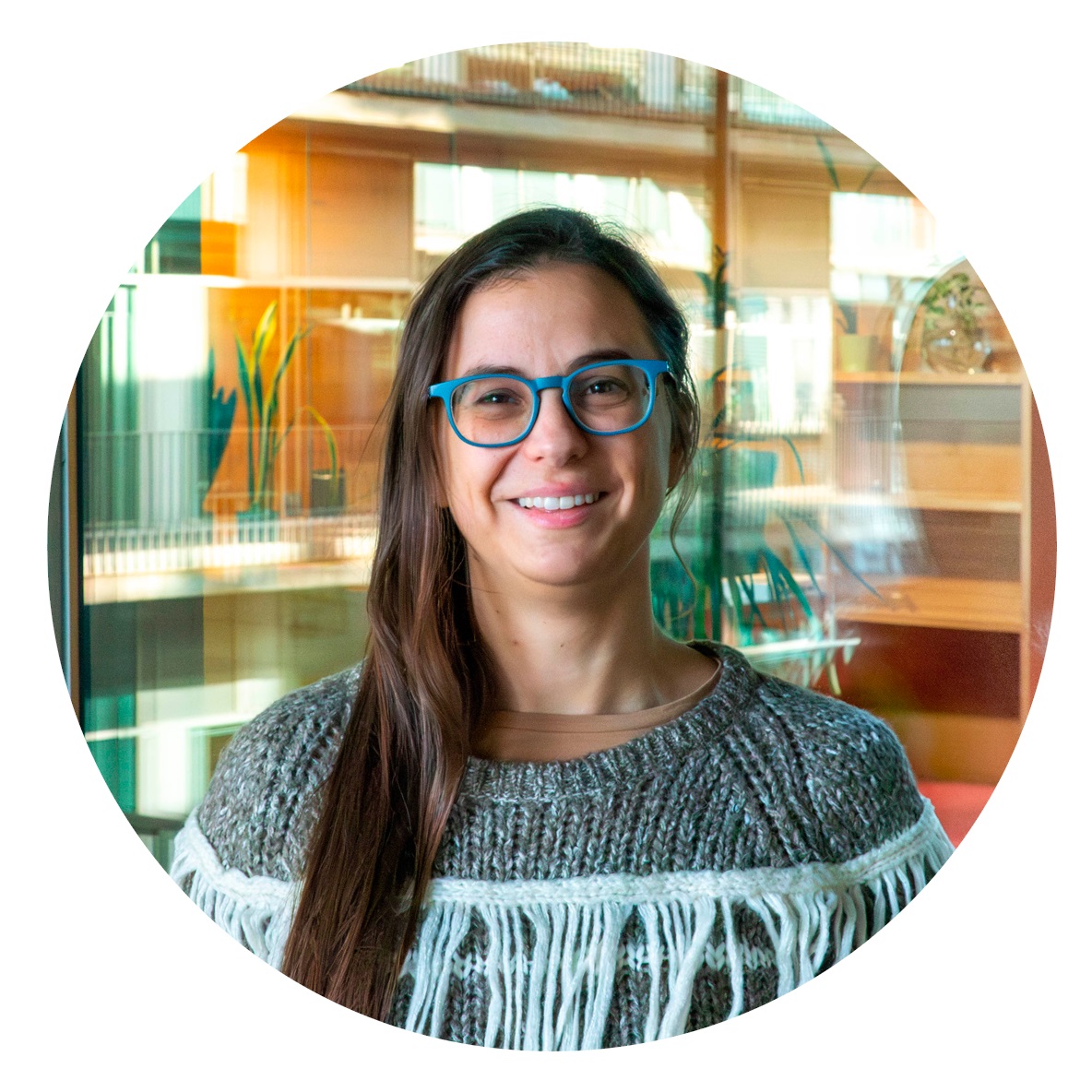
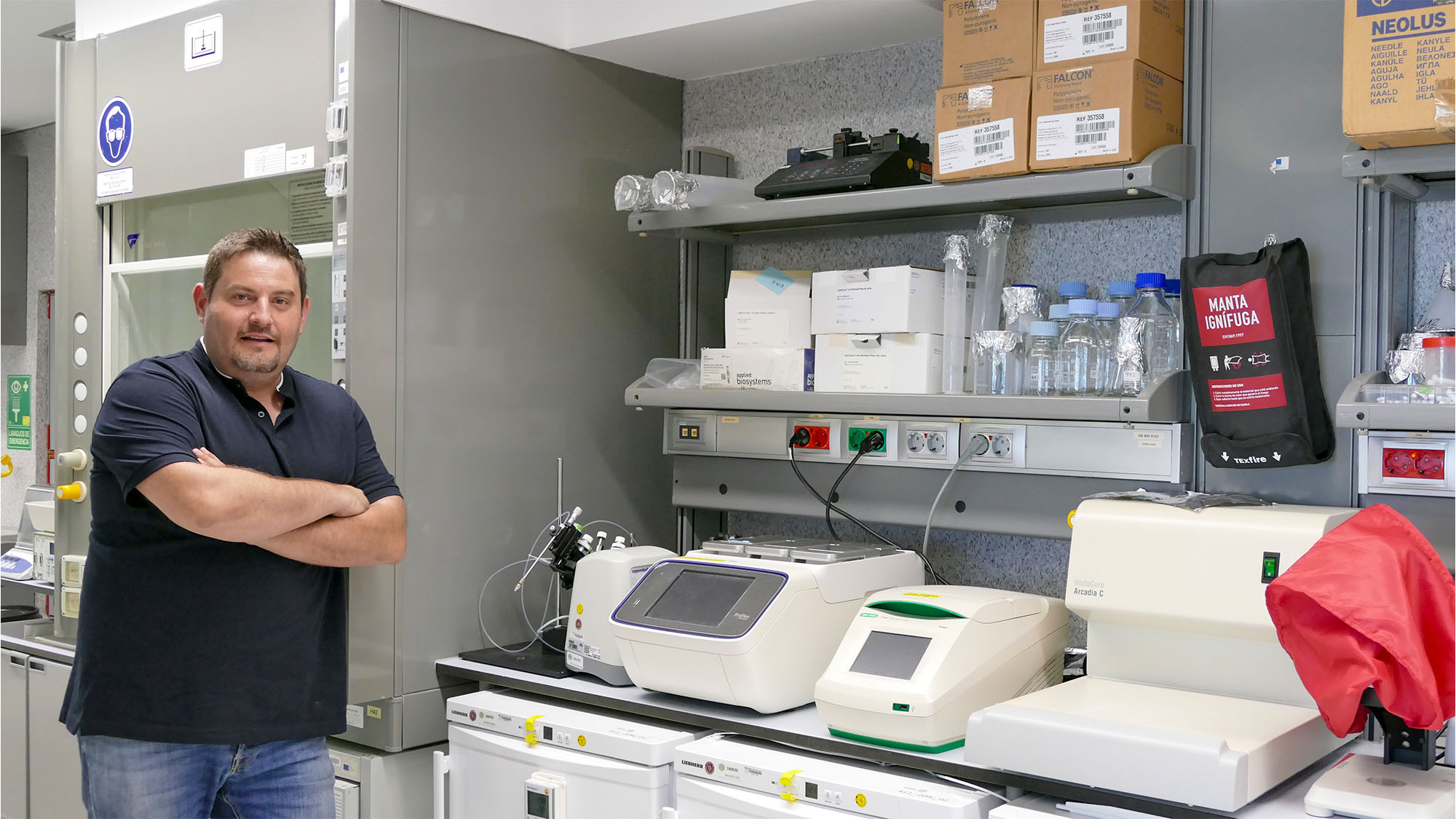
Àlex Robert Moreno knows the Barcelona Biomedical Research Park (PRBB) like the back of his hand. This is natural, since he joined in 2007, a year after the building was constructed. Trained in biology and with a PhD from the Bellvitge Biomedical Research Institute (IDIBELL), he first did a postdoc in the Department of Experimental and Health Sciences at the Universitat Pompeu Fabra (now MELIS-UPF), before moving to the Centre for Genomic Regulation (CRG) as a laboratory manager. With the creation of the European Molecular Biology Laboratory in Barcelona (EMBL Barcelona) in 2017, the group where he was based moved and gave him the opportunity to manage the entire start-up of the new centre. Since October 2019, he has a dual role of facilities manager and safety officer.
To close this Career Month 2025, Àlex talks to us about his day-to-day life in the two complementary aspects of his work.
What does your work involve?
It is a dual role. As Facility Manager I am in charge of managing the spaces and the purchase of equipment. It’s about finding a balance between the needs of the research staff and the spaces in which they have to work. As Health and Safety Officer, I work on occupational risk prevention: I identify, monitor and assess the risks that may occur during work. Among other things, I am responsible for the evaluation of projects in terms of biosafety. Due to the idiosyncrasies of the intergovernmental body that is the EMBL, in the case of the Barcelona Unit, these positions go together, but this is not the norm. “I am a rara avis”.
How did you get here?
After finishing my postdoc, I realised that I didn’t have the motivation or the skills to pursue a career as a principal investigator. So I joined Dr James Sharpe’s group at the CRG as Lab Manager. I was in charge of purchases, running experiments and supporting the post-doc and pre-doc researchers in the group. When EMBL was set up and James was appointed director of the Barcelona site, the whole group moved. At that time, James needed someone to take care of buying scientific equipment, coordinating with the PRBB and making sure the building works ran smoothly, so I oversaw the lab works from a researcher’s point of view. As the centre got bigger, it gave me the opportunity to move into the position where I am now.
How many people are in your team?
On the Facility Manager side, there are two of us. Me as the Manager and Laura Siles, who is also a biologist, as assistant. On the Health and Safety side, it’s just me. But I don’t work alone, I am always in communication with the head of Health and Safety in Heidelberg, the EMBL headquarters; with PRBB’s general services, with the other Health and Safety Managers, with the prevention managers of all the institutes that make up the park…
One person alone cannot do anything. You always need the collaboration and help of other people, different visions.
What is your day-to-day at work like?
I start by going round the spaces to check that nothing has happened during the night so that when people get to work, they will find everything ready. Once I’ve done that, I get on the computer. I have meetings with the PRBB’s occupational risk prevention committee, with those responsible for biosafety, with my colleagues at Heidelberg… Of course, it is a job where you always have to be on site. As per remote working, little or not at all, because it is complicated to manage alarms or any incident that may occur from afar.
What do you like most about your job?
That it is not monotonous. Every day is a different challenge. One day you’re working on a protocol to improve worker safety and the next you’re talking to building maintenance because the temperature in the rooms has risen. It’s not an “eight hours in front of the computer” job. Because of the way I am, if I have to take a wrench and tighten a couple of screws, I’m happy to do it. I like it because it get me up from the computer.
And what are the long-term challenges for you?
My great challenge is to ensure that EMBL Barcelona can continue doing the quality and safe science that it is doing now. We have grown from 20 to 90 employees! I am proud because I have been involved in the creation of a new research institute and I have done my bit in terms of protocols, purchase of equipment, supervision of works…
How do you see the future of the kind of work you do?
Everyone is thinking about the impact that artificial intelligence can have on their jobs. But assessing the risks, finding measures to control the risk, both biological and occupational… I don’t think any artificial intelligence can do that on its own – at least not yet. Therefore, a person will still be needed to monitor equipment and spaces and control risks.
What would you say to someone who is considering working in this field?
Like everything else, it is vocational. When people thank me for anything I have done or for having helped them, I feel satisfied. They will need dedication and effort, but also willingness and knowledge. I have taken courses in biosecurity and many other aspects, but I have no formal training for the job.
“My background in biology gives me the knowledge to assess risks and view scientific projects from a biosafety perspective, as well as understand the needs of research staff”
You have a PhD. How has doing research and having a scientific background helped you in the development of your work?
Well, in a fundamental way. My background in biology gives me the knowledge to be able to assess the risks in our spaces, as well as the scientific projects that are carried out from a biosafety point of view. And much of the scientific equipment I have purchased for EMBL researchers is the same equipment I have used during my scientific career. Finally, when building work had to be done in our spaces, such as the culture room we built, I had no engineering knowledge for its technical design, but I did bring to the project the vision of the researcher, what were the needs that they would have in the development of their work. Therefore, I was in continuous interaction with the engineers and builders. After all, the more interdisciplinary a team is, the more likely it is to succeed.