Testosterone, estradiol, progesterone, cortisol. They are all steroid hormones, and they have a very important physiological role in the development, growth, maintenance and regulation of the organism and its reproductive system.
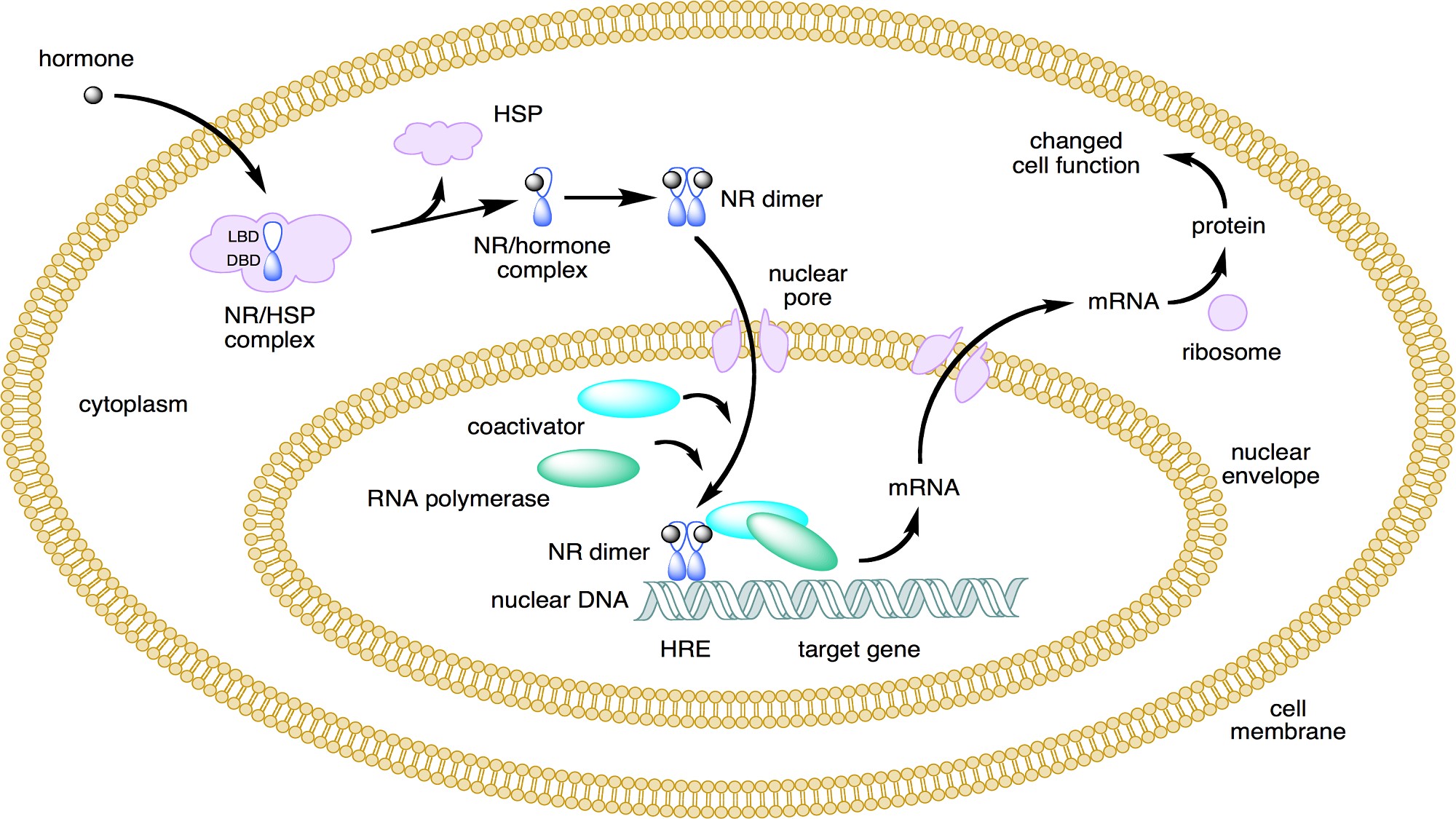
At the molecular level, hormones are chemical messengers that transport a signal from one cell to another. In contrast to other messengers that activate the receptors at the level of the cell membrane, steroid hormones are of lipid origin and can enter into the cell through the membrane. Once at the cytoplasm of the cell, the hormones bind their specific receptors, which were until then attached to the HSP proteins (heat shock proteins) and therefore inhibited. When the hormone binds its receptors, the HSP are liberated and the new “hormone-hormone receptor” complex travels to the nucleus. There, it binds DNA and regulates gene expression, activating or repressing the production of specific proteins that will eventually generate a response to the hormone signal.
Furthermore, steroid hormones are able to activate the kinase signalling pathways from the cytoplasm, which will also end up having an effect on gene regulation.
In this way, the signalling via steroid hormones is more direct and faster than the signalling via many of the other messengers that stay at the cell membrane and must send a signal through a long cascade of molecules.