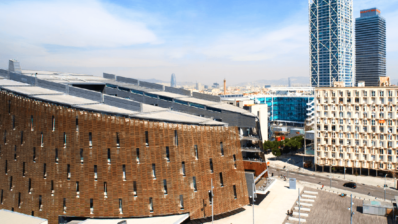
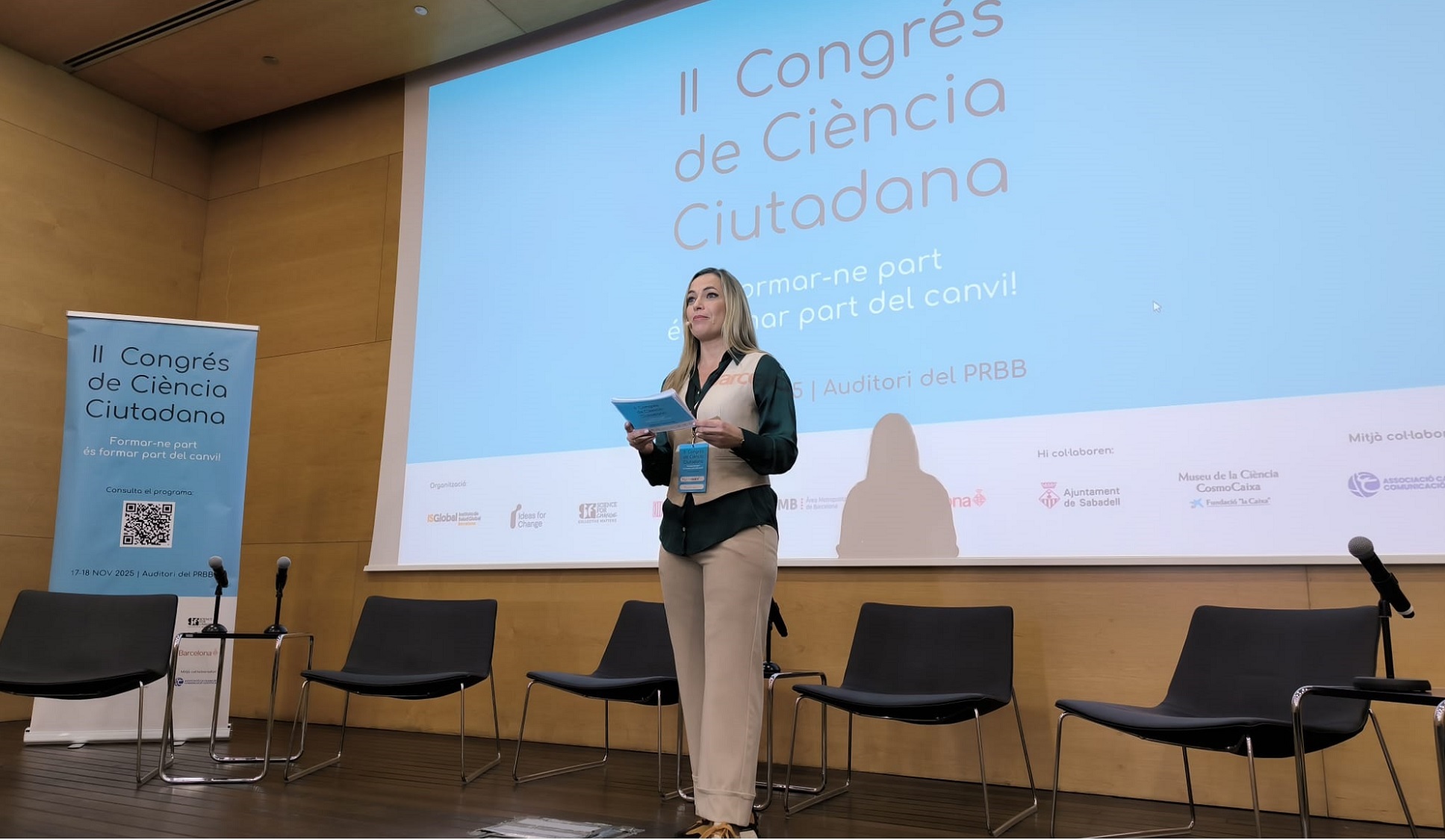
On 17 and 18 November, the 2nd Catalonia Citizen Science Congress was held in the auditorium of the Barcelona Biomedical Research Park (PRBB).
Co-organised by the Barcelona Institute for Global Health (ISGlobal), one of the PRBB centres, and by Ideas for Change and Science for Change, two institutions that develop European citizen science projects, the conference aimed to ‘consolidate the citizen science movement and harness its potential to address the global and local challenges of our time’.
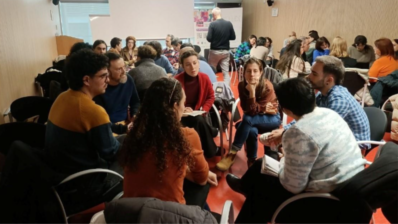
More than 200 attendees from the worlds of science, education, technology, public administration and civil society enjoyed 31 micro-talks, 10 round tables and 9 practical workshops. These addressed the contribution of citizen science to different areas:
- health; environment, biodiversity and sustainability
- social inclusion, communities and participation
- technology, data and infrastructure
- marine environment
The main round table, which opened the event, discussed the current and future state of citizen science in Catalonia. Moderated by Raül Toran (ISGlobal), it featured contributions from Rosa Arias, from Science for Change, Anna Higueras, from Ideas for Change, and Diana Escobar, head of the Citizen Science Office at Barcelona City Council.
We spoke with Raül Toran about the issues discussed at the round table.
What do we mean by citizen science?
Citizen science involves public participation in the scientific process. Citizen science is scientific research that is carried out partially or completely by amateur or non-professional scientists. It is made possible by the participation of hundreds of people, who play a key role in data collection or interpretation. Some citizen science research has been published in journals such as Nature and Science!
Projects must meet one of the following four levels of citizen participation:
- Crowdsourcing. Citizens collect or process data.
- Distributed intelligence. Citizens interpret data.
- Participatory science. Citizens participate in defining problems, challenges, objectives and data collection.
- Collaborative science. Citizens work with scientists to design the research to be carried out.
In addition, research groups must communicate the results of their research to citizens who participate in the set of experiments or fieldwork. The aim is to bring the results and the research process closer to non-expert citizens. Projects should, as far as possible, adhere to an open data and open code policy. Citizen science projects also tend to have a social and socio-environmental impact.
Citizen science involves public participation in the scientific process, with the aim of bringing the results and the research process closer to non-expert citizens and achieving a social or socio-environmental impact.
In which areas of knowledge can it be applied?
There is a wide variety of citizen science projects. However, this research methodology follows the protocols and principles of scientific research and can be applied in all areas of knowledge to solve both environmental and social challenges, for example. Some examples of projects we are working on at ISGlobal are the CitieS-Health project, where we are going to develop the Citizen Science Toolkit to inspire new citizen science projects, and the PULSE-ART project on education through art and participation, which is currently underway.
What are the main challenges when undertaking a citizen science project?
There are many challenges when planning a citizen science project. One of them is reaching citizens who do not usually participate in science – even though they may be affected in some way by a particular challenge – or under-represented population groups. One way to try to do this is to contact associations and organisations that are already working on the issue in the area. A map of stakeholders must be drawn up to try to include all the important agents in the area and contact people who are interested in the issue but do not usually participate.
Ultimately, citizen science projects use different participation strategies. Some seek large numbers of participants who perform small, repetitive tasks on their computers or mobile devices, while others promote a more horizontal relationship between scientists and citizens, which is methodologically framed within the areas of collaboration and co-creation.
And how can we get scientists themselves and their research institutions more involved?
Research teams need to see citizen science as Science, with a capital S. It adds value to their project, as it allows them to involve citizens in their field of study. Furthermore, the perspective offered by citizens can complement their research and reach places that experts would not be able to reach.
What is the state of citizen science in Catalonia compared to the national and European context?
Catalonia has research groups from research centres, universities and private entities with various citizen science projects. Proof of this is the presence of more than 200 professionals at the conference. Catalonia leads projects for data validation, promotion of citizen science projects, etc.