On 26 January, the Barcelona Biomedical Research Park (PRBB) hosted a working session on intersectionality in research centres and universities, organised by ISGlobal, PRISMA, and the CISA Research Group in Applied Social Sciences at the University of Girona.
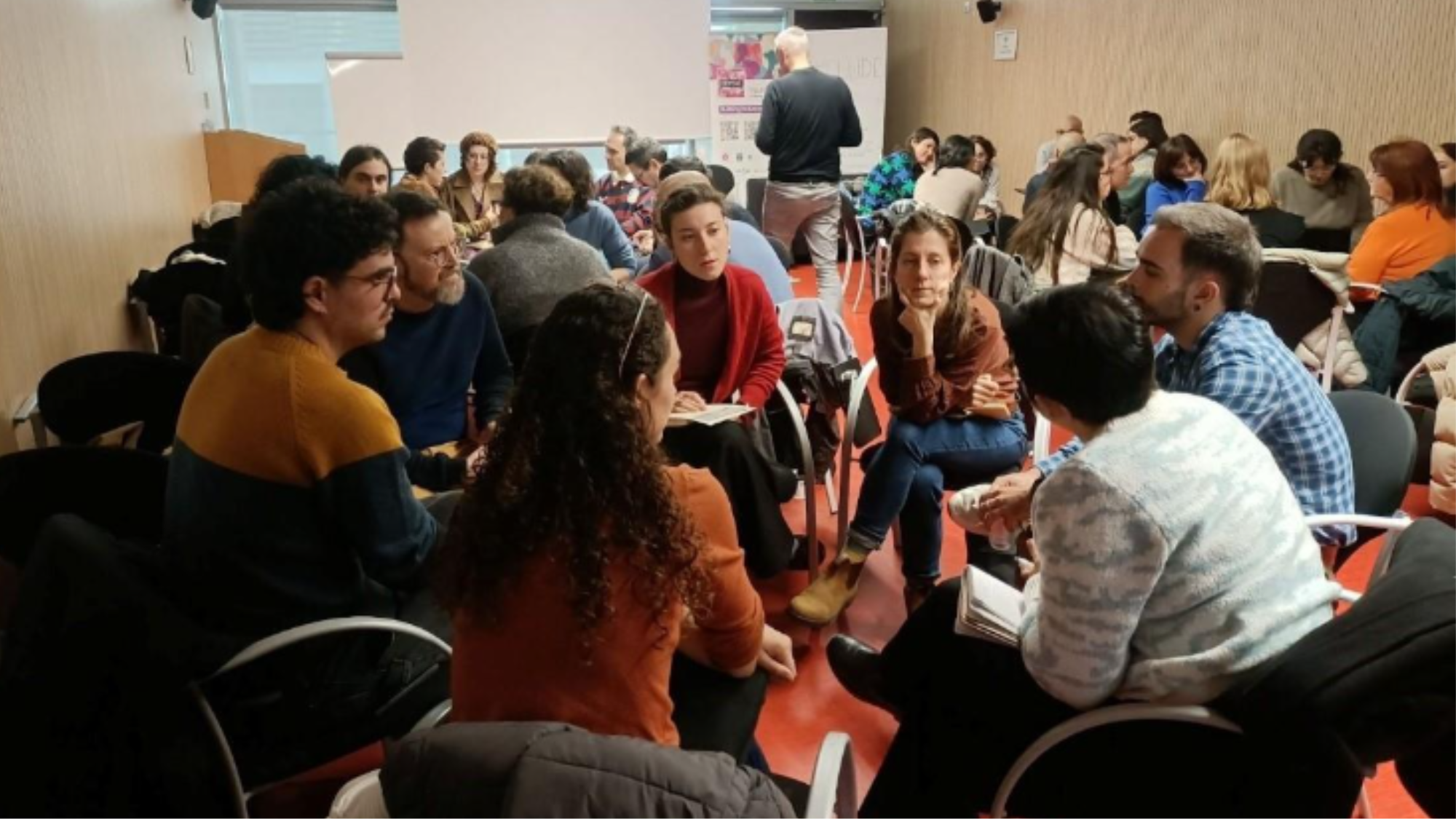
The meeting, framed within two European projects – INCLUDE and GEPINC – brought together around 40 participants from different universities, research centres and institutions (including AGAUR and ACUP), with a shared objective: to improve working environments and scientific practice through an intersectional perspective.
Why talk about intersectionality in research
Applying intersectionality means looking at inequalities together: gender, affective and sexual orientation, gender identity, origin, social class, and other diversity axes. During the session, it was highlighted that intersectionality is not only about values: it is also a matter of quality and scientific excellence, because it helps research to be better designed, more representative, and with real impact across society.
The LGTBIAQ+ perspective in science
The session started with an introduction by Simón Perera del Rosario (PRISMA), who explained why it is important to address LGTBIAQ+ topics in science and academia. Perera described how bias and invisibility can affect LGTBIAQ+ people working in research, and also those who are users of the technologies and innovations being developed.
In this context, he presented the “10 PRISMA measures for equity in scientific research organisations” as a starting point to move from intentions to concrete actions.
“The inequalities experienced by women, LGTBIAQ+ people and other minoritised groups mean that science and innovation cannot be excellent.”
Simón Perera del Rosario (PRISMA)
Experiences and initiatives from inside institutions
The session continued with speakers from different settings sharing their experiences and initiatives: Gonzalo Iturregui-Gallardo (UAB), Fabio Debbia (Queer Clínic – Hospital Clínic), Raül Toran (ISGlobal and PRBB), and Javier Quirós Gómez (UOC).
One of the key messages was the importance of creating internal community spaces within institutions, to bring more voices, share needs, and build safer environments.
“It is important to create working groups within research spaces, such as the PRBB LGTBIQA+ group or the Queer Clínic group. It is a way to build community and create safe spaces inside institutions.”
Raül Toran (ISGlobal and PRBB)
Current challenges and action proposals
The second part of the session took the form of a practical workshop. In groups, participants shared experiences related to equality plans, current legislation and everyday barriers, and produced an initial map of priority actions.
Among the main points, participants highlighted the need to:
- Include an intersectional and transversal approach in institutional equality plans (gender, LGBTIQ+, origin, social class, and other diversity axes).
- Ensure this approach is known and shared across all staff (not only specialised teams).
- Provide high-quality training and resources for all professional profiles.
- Strengthen coherence, follow-up and evaluation so that measures have continuity.
The workshop ended with a call to action: placing inclusion and diversity at the centre, both at institutional level and within teams and research practices. It was also stressed that claiming intersectionality requires questioning power structures and inequalities inside and outside academia
Next activities: INCLUDE final conference at the PRBB
Linked to this topic, the INCLUDE final conference is planned at the PRBB on 12 and 13 November, with the aim of presenting the final results and amplifying transformative initiatives in research environments.
If you are an institution or an individual interested in receiving information on how to improve equality or introduce a gender perspective in research and work settings, you can contact cisarecerca@eina.cat or sign up here: https://include-geps.eu/newsletters/.