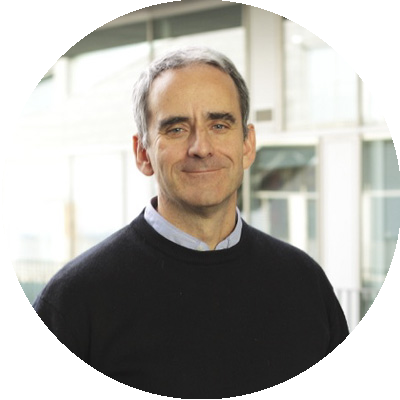
An emerging concept for research that mingles the logical steps of the scientific method with the cultivation of intuitions and chaotic ideas was presented by Juan Valcárcel, group leader at the Centre for Genomics Regulation (CRG) and member of the PRBB Good Scientific Practice working group, last December 3, 2025. The talk about “Day science, Night science”, was organized by the PRBB Intervals programme and mobilized about 50 people from the different PRBB centres. In this article, Valcárcel shares a summary of this “Day science, Night science” concept.
In his wonderfully written autobiography “The statue within”, François Jacob described his personal experience with the process of being a scientist trying to reveal the mechanisms of Nature. He contrasted two distinct types of experiences. On one hand, the process of precisely defining a problem, carefully designing experiments to test a hypothesis that potentially solves the problem, systematically collecting and analysing the data produced by the experiments, and finally rigorously assessing whether the results validate or falsify the hypothesis, looking for a reductionistic explanation of Nature’s phenomena. Science marches on a safe, pristine, linear path of discovery, driven by successive steps with transparent logic. He defined this approach, which pretty much follows the Scientific Method described by Descartes back in 1637, as “Day Science”.
One the other hand, Jacob described the process of generating new, disruptive ideas as typically chaotic, emerging at unexpected times (often out of “working hours”) as vague intuitions, leading to surprising links between previously unconnected threads that do not follow an entirely logical path, producing global views illuminated by out-of-the-box thinking. He defined this approach as “Night Science”, which is somewhat reminiscent of the merge between mind and body that Baruch Spinoza realized in the second half of the XVII century.
Scientists can be at their best when cultivating the right balance between Day Science and Night Science
Following on Jacob’s footsteps, Itai Yanai (Computational Medicine Institute, NYU) and Martin J. Lercher (Departments of Computer Science and Biology, University of Düsselforf) have written a number of commentaries in various Journals (the majority as Editorials in Genome Biology) developing these concepts. With suggestive titles like “What is the question?”, “A hypothesis is a liability” or “Make science disruptive again”, they argue that scientists can be at their best when cultivating the right balance between Day Science and Night Science.
When thinking as experts during day time and as Renaissance people during the night. When adopting tools that can help to push creativity, such as building a narrative in metaphorical language, embracing the outlier or welcoming “timed ignorance”. It is in this interplay between rigour and imagination that scientific breakthroughs are more likely to occur. As Carl Sagan wrote “We wish to find the truth, no matter where it lies. But to find the truth we need imagination and skepticism both. We will not be afraid to speculate, but we will be careful to distinguish speculation from fact”.
Given the interest raised among the participants, Ero Jiménez, coordinator of the PRBB Intervals Programme, has contacted the Night Science Institute, inspired on the work by Lercher and Yanai, to explore the possibility of organizing a workshop on the topic for PRBB residents. Stay tuned for further news!