When cells undergo mechanical compression, DNA is subjected to stress that can lead to the breaking of its chains. However, it is known that metastatic cancer cells are able to slip through tumour tissue, pass through the blood and lymphatic streams, and reach new tissue where they can establish themselves.
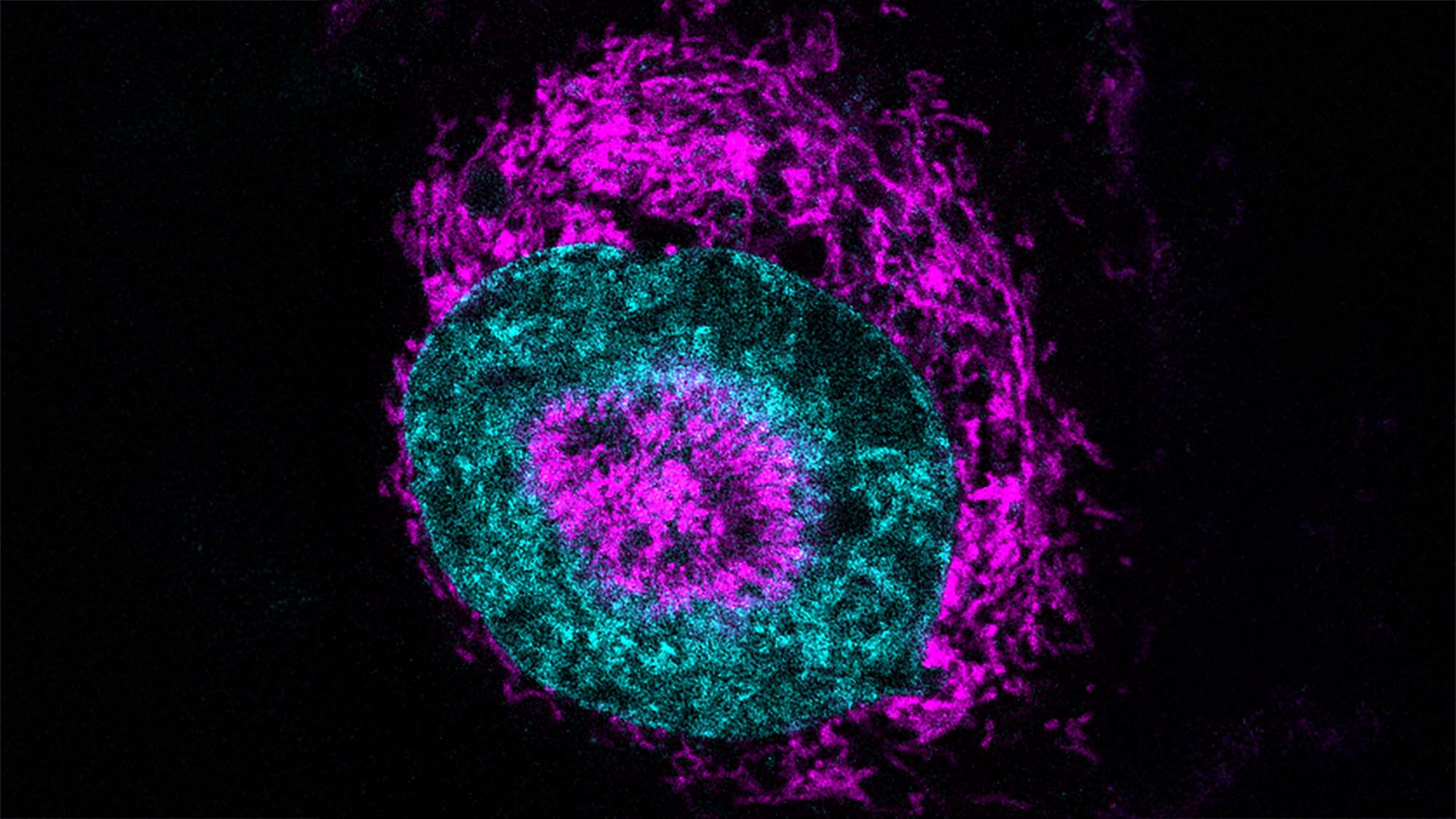
Now, a study by the Centre for Genomic Regulation (CRG) details that when these cells are subjected to high compression, the mitochondria move towards the surface of the nucleus to pump ATP, the molecule that provides cells with energy. This causes a spike in energy production that allows DNA repair complexes, which require a lot of ATP, to act quickly and maintain cell stability.
In addition, the team has verified the potential clinical impact by analysing breast tumour biopsies from 17 patients. The results show that NAM halos (mitochondria that attach to the surface of the nucleus with such tension that they enclose it) appeared at the invasive fronts of the tumour. They have also verified that the internal cellular scaffolding that maintains the shape of the cell is reconfigured to adapt to the new shape.
‘It is a clear sign that the cells are adapting to stress and reconfiguring their metabolism’ Fabio Pezzano, co-first author
This finding highlights the functioning of metastatic cells and opens the door to developing new therapies that target exclusively the scaffolding they generate to move, reducing the invasive capacity of tumours.
In the words of Verena Ruprecht, co-author of the study, ‘it is a completely new layer of regulation in cell biology, marking a fundamental shift in our understanding of how cells survive periods of intense physical stress’. As the study points out, we are probably dealing with a universal phenomenon in biology that could occur in embryonic cells, in the branching of neurons, or in immune cells that travel through the lymph nodes.
Ghose, R., Pezzano, F., Badia, R. et al. Mitochondria-derived nuclear ATP surge protects against confinement-induced proliferation defects. Nat Commun 16, 6613 (2025). doi.org/10.1038/s41467-025-61787-x