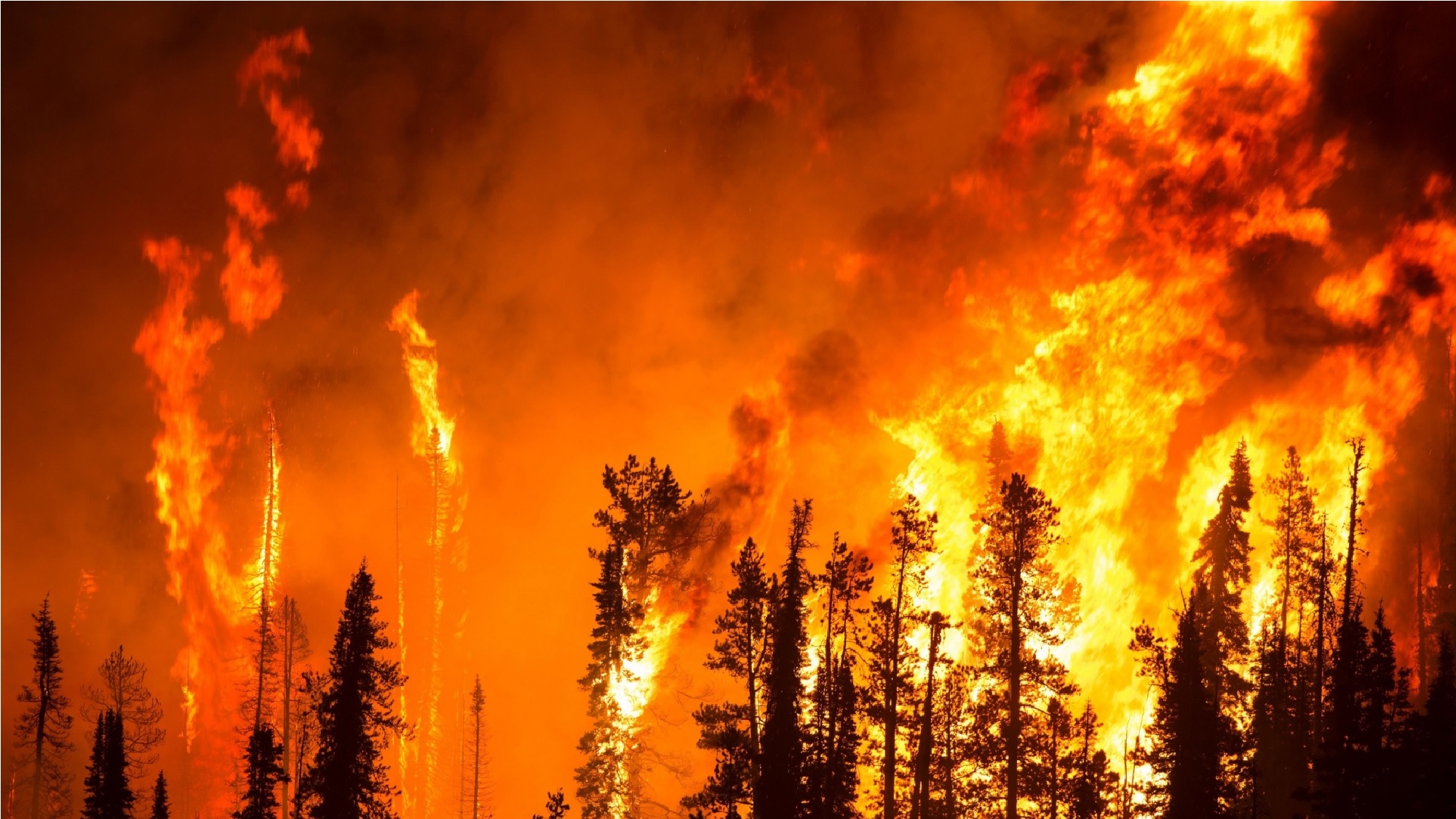
This summer, the fires in the country have had a more devastating effect than ever. But the consequences of the fire go beyond the immediate loss of forests.
A recent study by the Barcelona Institute for Global Health (ISGlobal) provides evidence that fine particulate matter (PM2.5) from forest fires poses a greater risk of mortality than previously believed.
The study analysed daily mortality records in 654 regions in 32 European countries, comparing them with daily PM2.5 estimates – both those related to forest fires and those from other sources – between 2004 and 2022.
“Exposure to high levels of fine particulate matter increases the risk of death within seven days of exposure”
Statistical models showed the importance of distinguishing the source of the PM2.5 particles.
While short-term exposure to PPM2.5 from all sources would have resulted in an average of 38 deaths annually during the period studied, PM2.5 derived from wildfires were responsible for an average of 535 deaths annually.
This indicates that PM2.5 particles derived from forest fires are more harmful, and that the mortality associated with this type of smoke could be underestimated by 93%.
These results are especially important considering how “global warming due to climate change is contributing to the increase in the frequency and intensity of forest fires”, says Anna Alari, ISGlobal researcher and first author of the study.
Alari, A., Ballester, J., Milà, C., Benmarhnia, T., Sofiev, M., Uppstu, A., Hänninen, R., Tonne, C. Cuantificación de los efectos a corto plazo del humo de incendios forestales sobre la mortalidad en Europa: un estudio epidemiológico multinacional en 654 regiones contiguas. The Lancet Planetary Health, 2025. PMID: 40818484. DOI: 10.1016/j.lanplh.2025.101296