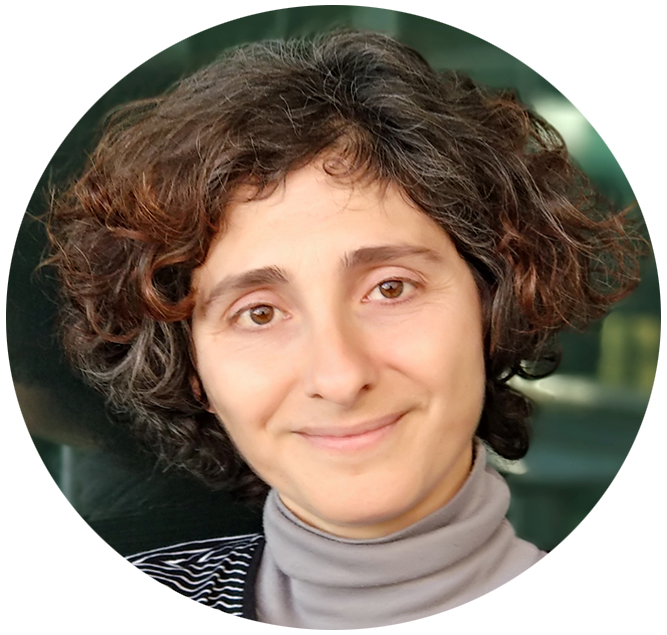
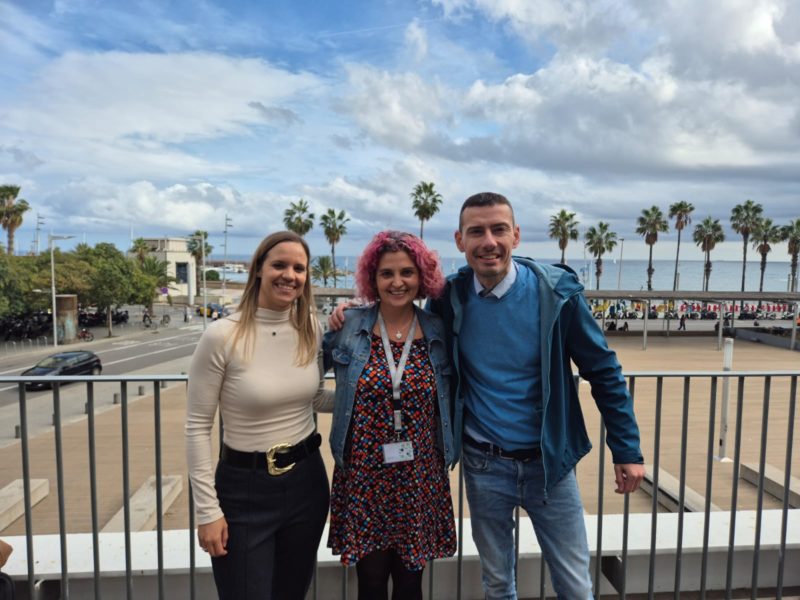
Research Management is one of those essential tasks that often go unnoticed. But there are more and more professionals (and they are increasingly necessary) who are dedicated to it: from looking for scholarships or helping to write projects, to making justifications, measuring its impact, managing collaboration agreements or communicating research results. “Anyone who makes research possible, without dedicating themselves directly to research, is a research manager“, says Núria Parera, coordinator of Preaward (those who ‘seek scholarships’) at the Barcelona Institute for Global Health (ISGlobal).
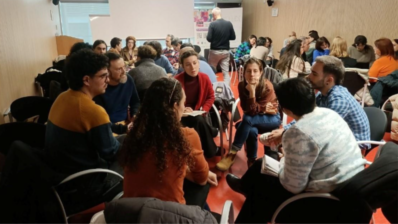
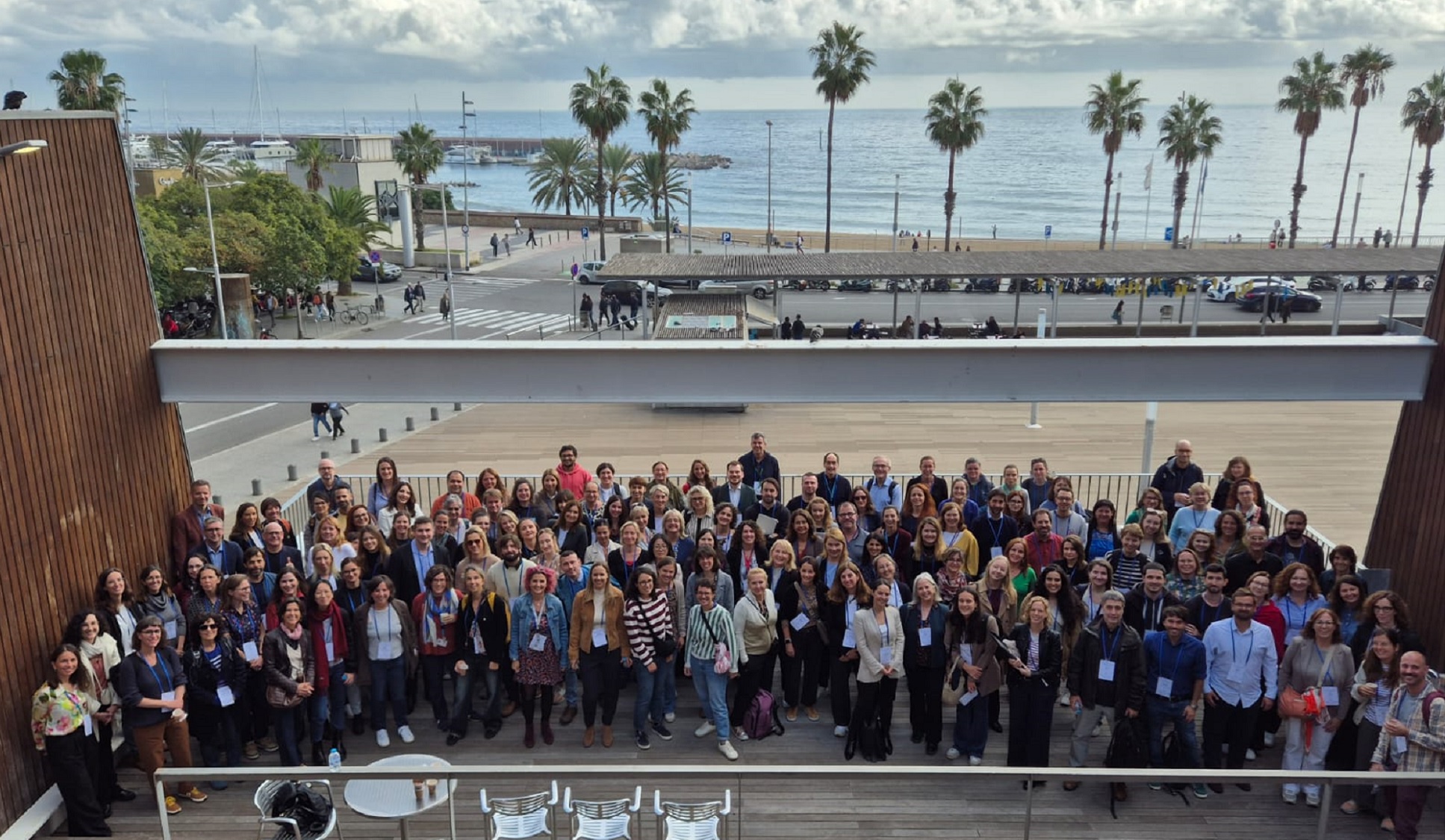
Parera is also the chair of BESTPRAC, an organisation that brings together research management professionals from all over Europe. BESTPRAC celebrated their annual meeting on October 27 and 28 at the PRBB auditorium, with about 200 people from all over Europe– the second major European meeting of this sector in the park after the visit of the INORMS Study Tour research managers last summer.
We spoke with Parera about this association and the recent annual meeting at the Barcelona Biomedical Research Park (PRBB).
What is BESTPRAC and how was it created?
BESTPRAC is a group of people who are dedicated to the management of research at European level. It started in 2014 as a COST Action – interdisciplinary networks of research professionals funded at European level to work on a specific topic for 4 or 5 years. Research management professionals came together to share good practices; they created a website to disseminate relevant information and updates for our roles at European level, etc.
As most of us who work in this field are ex-researchers, I think we have this culture of sharing information, of working together… And that led to the creation of this network, which now has more than 1000 professionals, and for which there is no cost to be part of; it is free and open to all those interested .
“Most of us who work in research management are former researchers, and we have this culture of sharing information, of working together”
Núria Parera (ISGlobal)
But after 5 years it ran out of budget…
Indeed. But it was then decided to continue with the group, and it was integrated into EARMA (the European Association of Research Managers), made up of about 9,000 members.
EARMA currently has several subgroups: one dedicated to ethics – ERION, in which the PRBB is very involved -, one to impact, one to open science, etc. Now BESTPRAC is also a thematic group within EARMA – the largest of all and with a wider range of topics. But we joined on the condition that our members would not have to pay to be part of EARMA, because we already had a lot of people from “widening“ countries (countries that are EU members or associates, but have a lower-than-average level of R&I), such as Turkey or Croatia, and we wanted to keep them. That is why we believe it is important that BESTPRAC continues to exist, to give voice to those who would be left out and to broaden perspectives.
Why is it important to be part of BESTPRAC?
We hold one face-to-face meeting a year (last year in Lyon, France, this year here at the PRBB, in Barcelona, and next year in Split, Croatia) and at least one online, where we talk about topics of interest to our members, from whether we need more courses and training, to how AI affects our work,…
Personally, I think it is very important to be part of this association to be up to date on the day-to-day. It is also mind-opening to see how other institutions work, different ways of doing things, etc.
In addition, it gives us the opportunity to participate in decision-making! Research management is a fairly new profession – when I was young it didn’t exist, I never thought I would work in this field. So right now we are defining our profiles, the jobs we do and how we do them,… It’s very interesting to be part of this from the front row.
How long have you been part of the leadership of BESTPRAC and what does it mean for you and your institution?
I’ve been co-director for a couple of years now (we’re a team of five people, too few!). It’s a big responsibility, people ask us to do things, organise evvents, and it’s all voluntary. It’s a lot of work, and of course, you want to do it right! But I’m very happy. I am meeting people from all over, receiving a lot of interesting information, we have the opportunity to jointly ask for European projects to improve our profession…
I left research to start working as a manager in 2015, but it wasn’t until I arrived at ISGlobal, in 2021, that I was told about all these European organisations and I got fully involved in them. The truth is that in this sense ISGlobal is a very open institution, it gives us flexibility in the workplace so that we can grow.
And obviously, the fact that I am part of the leadership of BESTPRAC is also positive for the institution – when we have to look for collaborators for research projects, for example, the fact that I personally know research managers from many European institutions makes it much easier; it is very different to send a cold email than to write to a person you know. It also gives us visibility as a center. In addition, just a few months ago Joana Porcel, also from ISGlobal, was elected as board member of EARMA!
Being part of the leadership of BESTPRAC opens up many opportunities, both for me, for my institution, ISGlobal, and for the PRBB in general.
All this is also good for the PRBB, where we have our own group of Research managers – many of whom are also in EARMA, or follow BESTPRAC activities – with whom we share and collaborate. For example, some of the managers of the other centers such as the CRG or the IBE helped me in the organization of the BESTPRAC meeting at the PRBB.
Focusing on this meeting, what topics were discussed?
Many! One of the main topics was how to close the gap between project managers, often hired by an individual research team to carry out a specific project, and structural research managers, who are part of the institutions – because sometimes the external person is not familiar with the institution’s policies or systems. It’s a complicated issue and I don’t know if we’ve solved it! But we talked a lot, we’ve seen different ways of doing things in different places, etc. and it’s been useful.
Another important issue was the new funding system for Horizon Europe, which they are changing in order to, in theory, simplify it. They now start paying a fixed amount (a ‘lump sum‘) once each ‘work package’ is finished, i.e. they pay you in full when the work is done, instead of reimbursing specific costs against individual invoices. In principle, the idea is fine, it is more flexible and gives more freedom by not having to justify every little thing, but it adds other pressures. For example, if the task is long-term, you won’t get paid until it’s completely finished! That is why deadlines are now more relevant, shorter tasks must be prepared, and collaboration is important, everyone must do their part or nobody gets paid! We have to sit down with the researchers so that they understand this, because the way of requesting projects will be very different from how it was done until now.
Also relevant for the meeting was Artificial intelligence: how it is affecting our work, what can be used and what cannot; which funders are already using AI to evaluate proposals and what that entails, etc.
And finally, but importantly, the management of emotional well-being. Research managers are in the shadows, with researchers often not really seeing why we are needed. And when your work is not appreciated, despite being incredibly busy… It can be very frustrating.
Anything else to highlight?
That I am really very grateful to be able to do this work and very happy that so many people came to the meeting – we put a limit of 200 participants, and in 2 weeks it was full, we had a lot of people on the waiting list! To see that people need these meetings, that they need to share experiences, to see that otheres have the same problems as you, to see how they manage them in different places… In the end, what fullfills me about this work is being able to help others, and also learn from others; this exchange of information is very productive. And we have received very good feedback from everyone about the meeting, which is always a good sign.