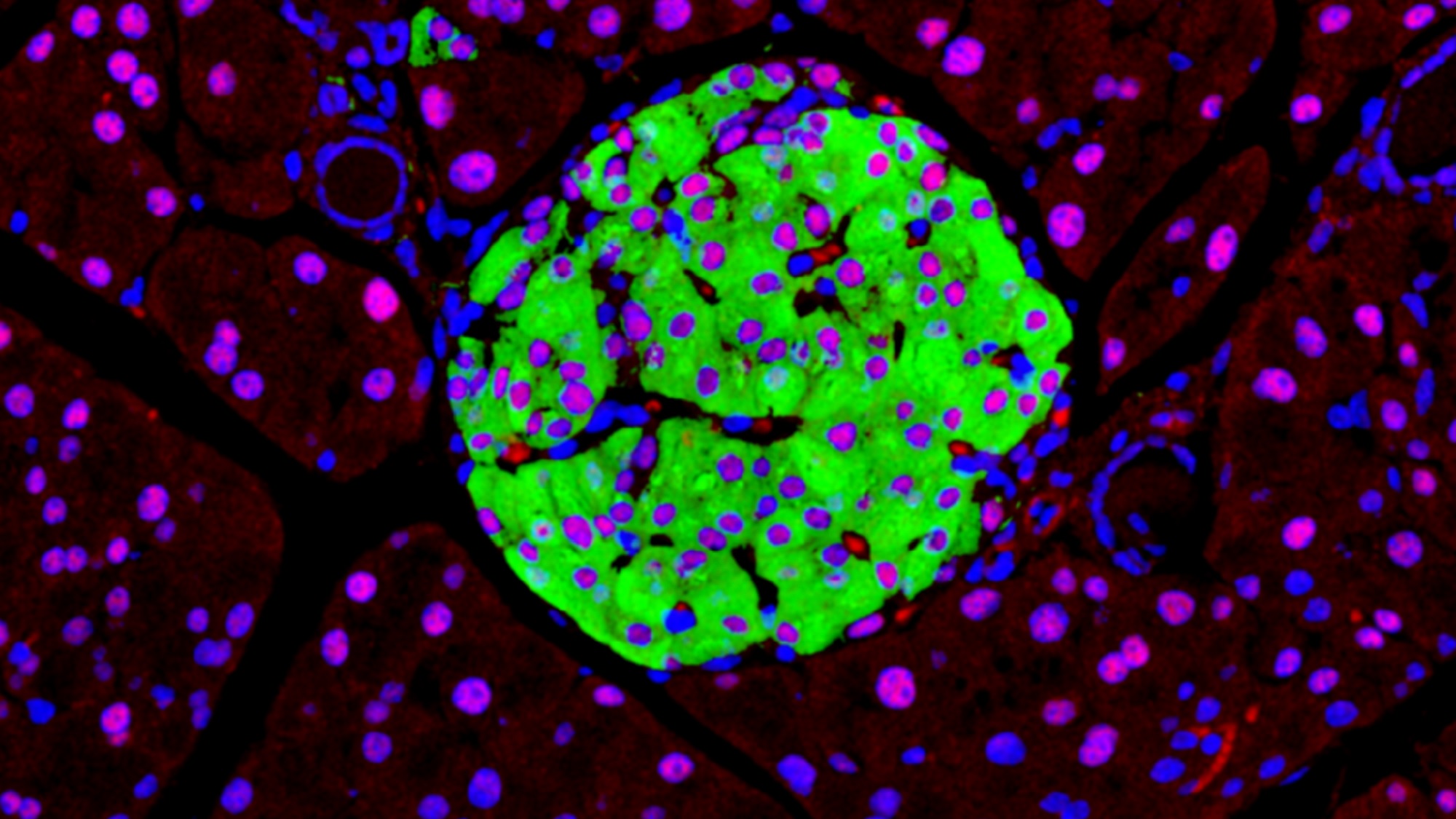
This image, by Miguel Angel Maestro Garriga, shows a mouse pancreatic islets, with β‑cells which are positive for insulin in green. In red is HNF1A, a protein that has been shown to be critical in regulating insulin-producing βcells. The cells’ DNA has been labelled in blue.
This microscopy image belongs to a new study by Centre for Genomic Regulation (CRG) researchers, led by Jorge Ferrer. The study focused on HNF1A (hepatocyte nuclear factor-1 alpha), a transcription factor whose mutations cause MODY3, a rare, early onset form of diabetes. Other types of mutations in this same gene are also common and increase the risk of suffering type-2 diabetes.
To understand how it does that, the researchers used mouse models and switched HNF1A off in different tissues and cell types. They saw that blood glucose levels were only affected when the gene was deleted in βcells in the pancreas. In these cells, deleting HNF1A affected the expression of more than one hundred genes, many of which required to transport and release insulin.
You can read more about this study here.
Edgar Bernardo et al. HNF1A and A1CF coordinate a beta cell transcription-splicing axis that is disrupted in type 2 diabetes. Cell metabolism, Volume 37, Issue 9p1870-1889.e10September 02, 2025 Open access. https://doi.org/10.1016/j.cmet.2025.07.007