
The mental health of the population has become a public health priority. In order to understand the current state of mental health at the population level and how it is evolving, it is essential to be able to measure and monitor it. One of the main tools for doing so are health surveys, which are usually conducted by official entities and which collect information directly from the population through personalized interviews.
These surveys not only include mental health information but also other aspects related to health in general: socio-demographic variables (educational level, employment status, etc.), self-reported chronic diseases, lifestyle (diet, physical activity, substance use), general health status, and use of health services.
However, despite their usefulness, the great diversity and heterogeneity of these surveys often limits the comparability and applicability of the results.
The diversity and heterogeneity of mental health surveys often limits the comparability and applicability of the results. The INSTRUMENTAL project aims to address this challenge.
For this reason, the Health Services Research Group at the Hospital del Mar Research Institute is leading the INSTRUMENTAL project with the aim of analyzing and optimizing the instruments used to measure mental health in population studies.
The project, funded by the Carlos III Health Institute and launched in 2024, involves the participation of the Subdirectorate General for Addictions, HIV, and Viral Hepatitis. The results will be shared with key players in the health sector to reach consensus on best practices for monitoring mental health.
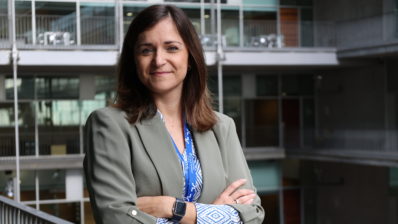
We spoke with Gemma Vilagut, one of the project coordinators along with Jordi Alonso, both researchers at the Hospital del Mar Research Institute.
How many mental health surveys are there?
There is a wide variety of official surveys that include mental health content, at the local, national, and international levels.
- At the Spanish level, the National Health Survey in Spain (ENSE, Encuesta Nacional de Salud en España), promoted by the Ministry of Health and the National Institute of Statistics (INE), has been conducted every 2 to 7 years since 1987 and collects representative data from across the country.
- The European Health Interview Survey (EHIS), also coordinated by the INE and the Ministry, is conducted every 6 years as part of a harmonized project among EU countries.
- At the regional level, the Catalonia Health Survey (ESCA, Enquesta de Salut de Catalunya) is conducted annually by the Department of Health of the Generalitat, as well as others conducted in other communities.
- Internationally, many countries conduct their own population surveys to assess mental health, often using different instruments and approaches. Some use screening questionnaires for common mental disorders, such as the GHQ-12, PHQ-9, or CES-D, or mental wellbeing scales, such as the WHO-5.
This generates a wide variety of questionnaires and methods, as there is no standard instrument for assessing mental health. Even within the same country or region, the instruments used to measure mental health change over time. This heterogeneity makes it very difficult to compare results between countries and autonomous communities, as well as to assess the evolution of the population’s mental health over time.
That is why you have started the INSTRUMENTAL project—what exactly is your aim?
With the INSTRUMENTAL project, we are reviewing the questionnaires or scales that are used (or could be used) in these surveys to assess the mental health of the population. The objective is two-fold: a) to identify which instruments are available and which dimensions of mental health they measure (depression, anxiety, wellbeing, etc.), and b) to evaluate which instruments have the best properties (reliability, validity, comparability between countries or social groups).
The final product will not be a new survey, but a guide of recommendations, based on evidence and agreed upon by researchers, health authorities, and citizens. This guide will identify the most useful, reliable, and comparable instruments for measuring mental health and will make agreed-upon recommendations on the aspects of mental health to be measured (such as mental wellbeing, psychological distress, symptoms of depression and/or anxiety) and which scales are most useful for doing so.
The ultimate goal would be to help researchers, public health officials, and institutions that develop health surveys to use a minimum set of common indicators in future surveys.
What challenges are you encountering when analyzing data from such diverse sources?
One of the main challenges is precisely the heterogeneity of the surveys. Often, different questionnaires are used to assess the same construct—such as depression or psychological wellbeing—depending on the survey, region, or time period. This diversity means that the results obtained may vary in their sensitivity, underlying diagnostic criteria, or the way in which they operationalize the construct. For example, while the PHQ-8 measures depressive symptoms according to DSM criteria, other scales such as the GHQ-12 focus on general psychological distress. Both instruments use their own thresholds to classify individuals as “a possible case of major depression” or “at high risk of poor mental health”. This situation limits the ability to compare mental health over time or between territories and can lead to biased conclusions if differences between instruments are not taken into account.
To facilitate comparability between measures, the INSTRUMENTAL project aims to apply specific techniques, such as percentile equating or joint calibration based on item response theory (IRT) models, which allow correspondences to be established between scores obtained with different instruments. This helps us to create a common scale, or would allow us to move from scores on one scale to another, thus enabling more rigorous and consistent comparisons. This will contribute to improving the usefulness of surveys for mental health surveillance and public health decision-making.
Do you plan to do anything to ensure that the recommendations are actually applied in public health policies?
Yes, since the inception of the INSTRUMENTAL project, we have been very mindful of the effective transfer of results into practice and public health policies. In this regard, one of the key strategies of the project is the process of co-creating the recommendations, which will be carried out with the active participation of a diverse panel of people with relevant experience: health survey managers, public health professionals, health managers, policy makers, researchers, and people with lived experience in mental health. This direct participation ensures that the recommendations are applicable, realistic, and tailored to the real needs of the health system.
The project has an active dissemination strategy specifically aimed at policymakers, which includes the development of informative materials, such as executive reports and briefings, and collaboration with institutions.
One of the strengths of the project is that the members of the research team are part of different key institutions in both the field of research and healthcare administration, including: the Hospital del Mar Research Institute (HMRI), the CIBERESP – Instituto de Salud Carlos III (ISCIII), Pompeu Fabra University (UPF), the University of León, King’s College London, the Ministry of Health, the Government of Catalonia (Department of Health and ASPCAT), the Barcelona Public Health Agency (ASPB), and the Andalusian School of Public Health. This institutional diversity facilitates the alignment of recommendations with the real needs of public administrations and health information systems and is a facilitating factor for the effective translation of results into public policies.