
Research teams of the Department of Medicine and Life Sciences, Pompeu Fabra University (MELIS-UPF) and Stanford University have developed a new experimental screening system capable of identifying peptides with high therapeutic potential and extraordinary selectivity.
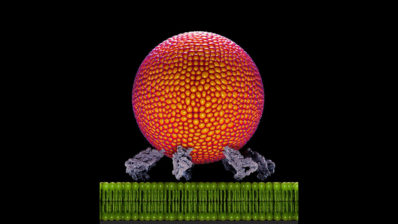
The method is based on the use of biologically and chemically modified bacteriophages that allow the analysis of up to a billion peptides at a time, detecting those that distinguish very similar proteins with great precision.
Thanks to two innovations in the existing phage display methodology, the research teams have managed to reduce non-specific binding and increase accuracy in protein detection. With this system, they have identified peptides capable of successfully differentiating the FAPα protein, overexpressed in 90% of carcinomas, from DPP4, a key protein in glucose control; two very similar proteins (with 70% homology), but involved in different diseases. This precision represents a major advance compared to current drugs, which often have cross-reactivity and unwanted side effects, according to Marta Barniol-Xicota, head of the Biological Chemistry Group at MELIS-UPF and co-leader of the study.
“With this technique we achieve a more accurate recognition of target proteins than can be done by some drugs that are currently being administered”
Marta Barniol-Xicota, MELIS-UPF
The applications of the new method are broad and range from the identification of prognosis biomarkers in cancer to the design of safer and more effective therapies for chronic diseases.
Faucher FF, Lovell S, Bertolini M, Blažková K, Cosco ED, Bogyo M, et al. Macrocyclic Phage Display for Identification of Selective Protease Substrates. J Am Chem Soc. 2025 Jul 30;147(30):26307-26318. doi: 10.1021/jacs.5c04424. Epub 2025 Jul 18.PMID: 40679920